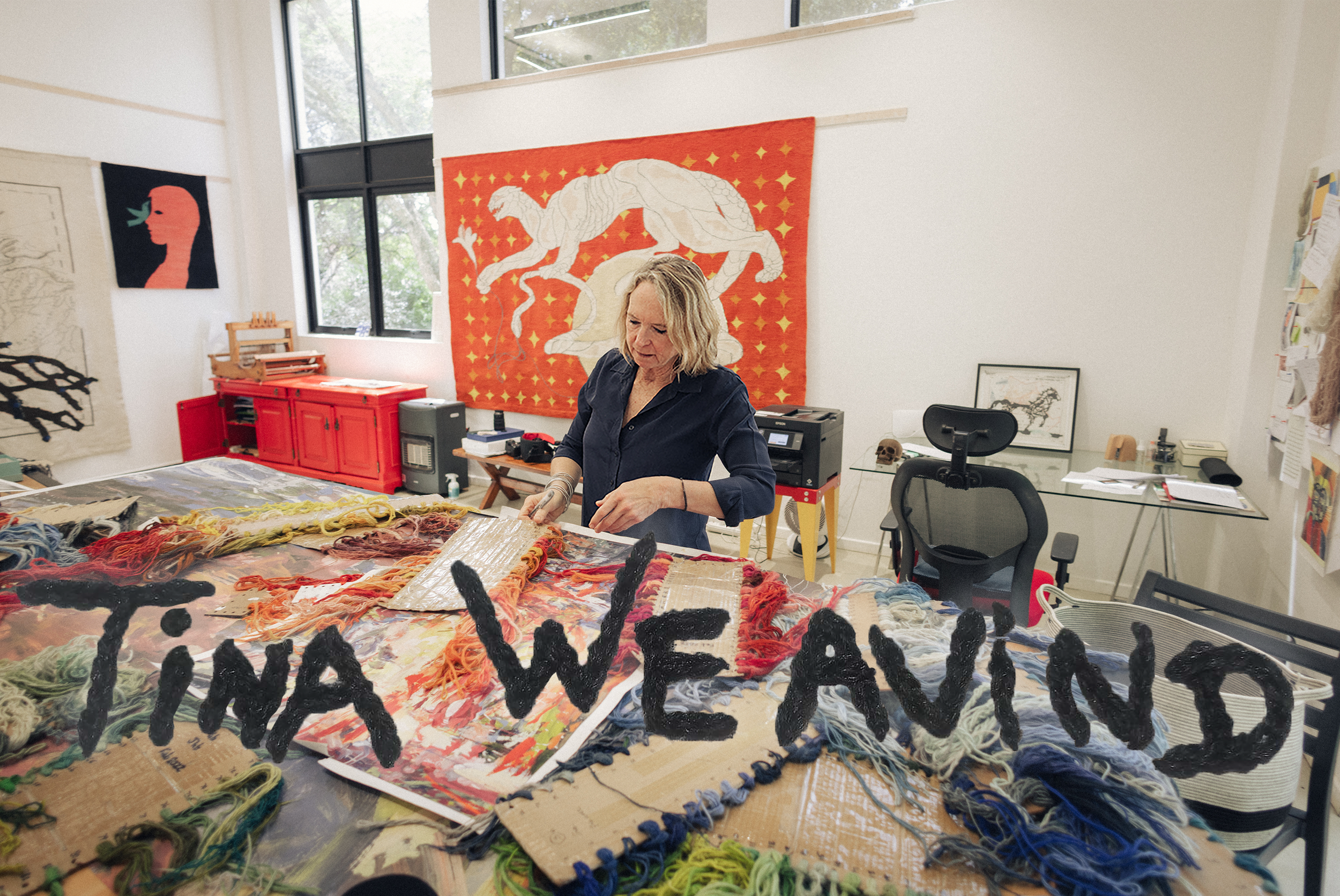
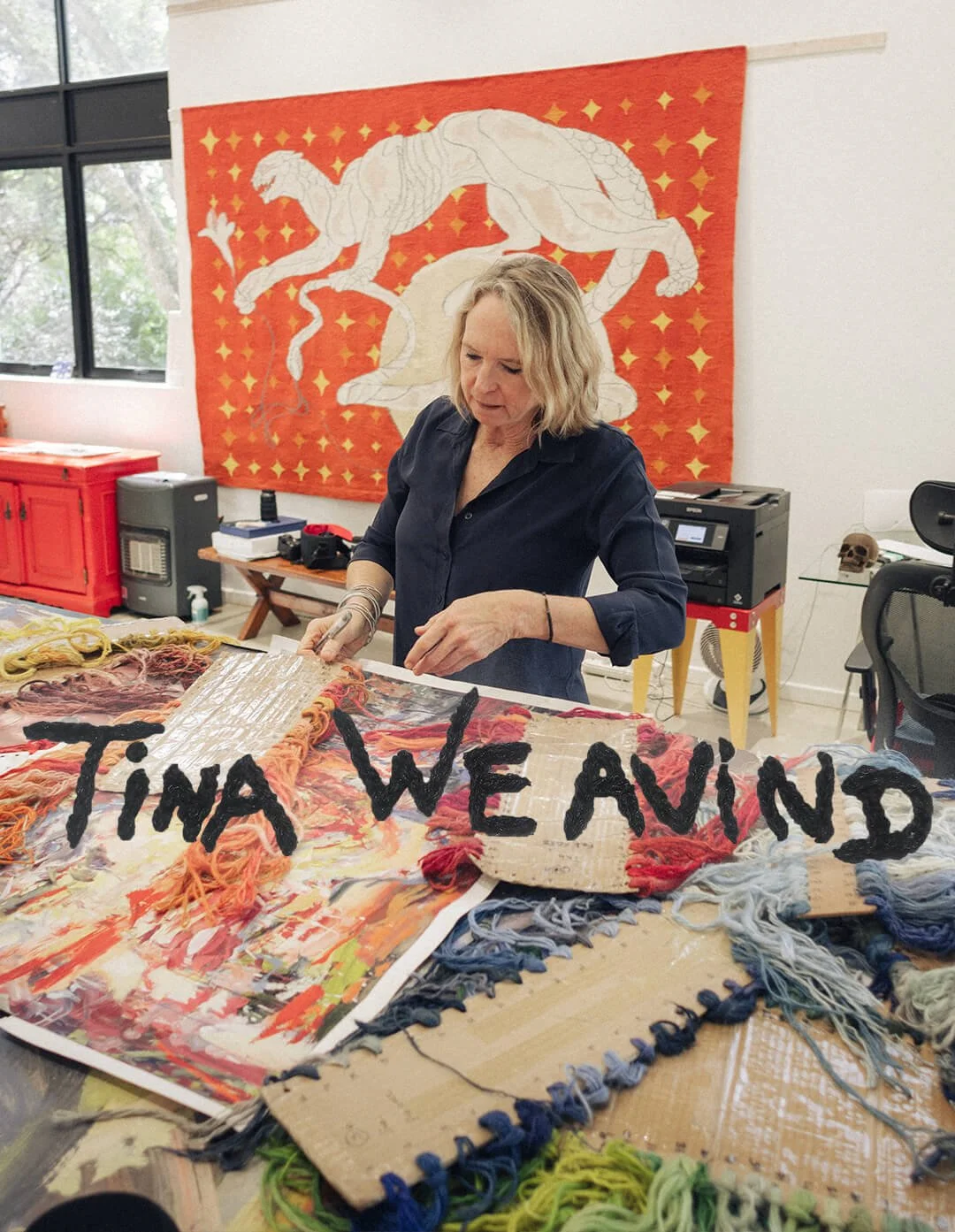
‘The house was always full of mohair. Colour everywhere. Beautiful things, beautiful art, beautiful artists. There was no way I couldn't be part of it somehow.’
Tina Weavind
In a quiet rural pocket on the outskirts of Johannesburg sits Stephens Tapestry, the family workshop run by Christine ‘Tina’ Weavind, where art, craft and sisterhood intertwine. For more than six decades, the studio has translated the work of leading artists into hand-woven tapestries, helping to bring South African contemporary tapestry to a global audience. Next door, her mother Marguerite ‘Mags’ Stephens's lively home holds a lifetime of art and memories – a living testament to how creativity, work and family can flourish side by side.
Tina comes from a long line of weavers. Her grandmother, Coral Stephens, moved from Johannesburg to Eswatini (then Swaziland) in the late 1940s, where a passion for weaving grew into a workshop renowned for its bespoke, avant-garde fabrics. Mags, who was a child when the business began, grew up surrounded by mohair, looms and weaving. In the early 1960s, after translating a woodblock by South African artist Cecil Skotnes into tapestry, Mags began her career as a tapestry weaver. This was the beginning of Stephens Tapestry, the studio she would go on to develop through collaborations with leading South African and international artists, including William Kentridge, whose ongoing partnership since the 1990s has carried its work into many of the world's best-known museums and galleries.
Although Tina grew up around the looms, learning to weave beside her mother from the age of seven, she first pursued a career in journalism before formally taking over the studio in 2016. Today, she continues to push the boundaries of contemporary tapestry, leading Stephens Tapestry into new territory with pieces created with artist Misha Kahn, tapestries after Catherine Goodman's bold, abstract paintings, and the studio's most ambitious undertaking yet – a woven interpretation of Raphael's Vision of Ezekiel, its first tapestry to be executed entirely in wool.
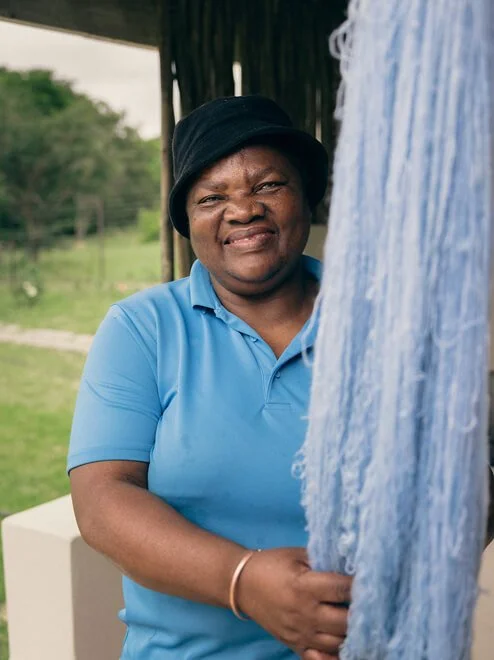
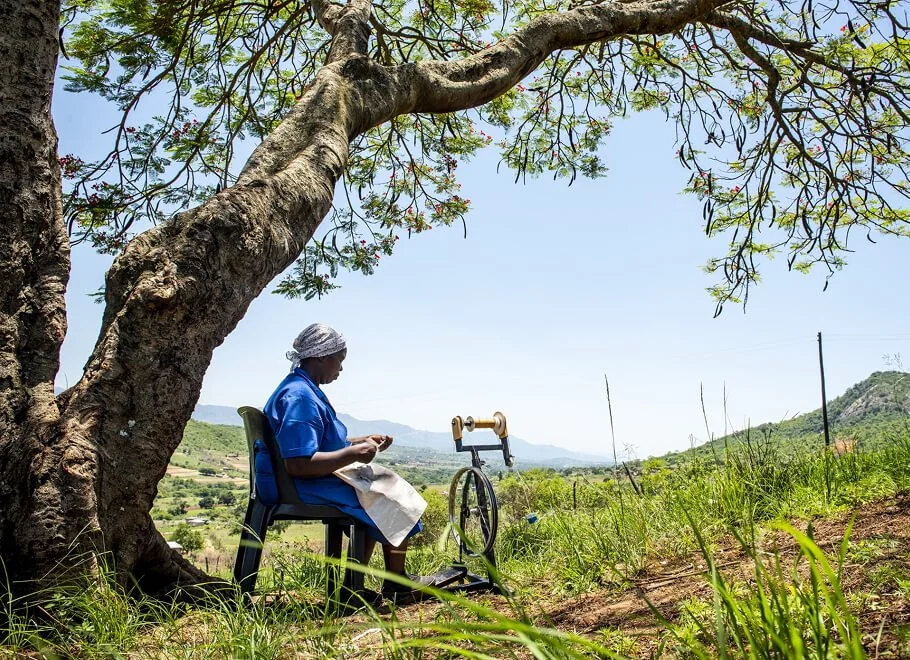
The workshop's story is also one of inherited craftsmanship. Grace Zulu wove for Coral in Eswatini before joining Mags in Johannesburg, while her daughters, Margaret and Zanele, became master weavers alongside her. The tradition continues through the generations: Margaret's daughter, Fortunate, Zanele's daughter, Treasure – now Tina's right-hand woman – and Treasure's daughter, Precious have each learned to weave at Stephens Tapestry. Today, the Johannesburg and Eswatini studios employ more than thirty women weavers, sustaining a legacy in which creativity, community, sisterhood and craftsmanship continue to be passed down through generations.
‘Weaving is all about learning new things every day. You have to love this. If you don't love it, it's not coming out.’ — Treasure Zulu
Below, Tina is in conversation with her mother, Mags, as they take us through the many hands, processes and skills behind the creation of a tapestry. Scroll down to watch the film.
Tina Weavind & Marguerite Stephens in Conversation
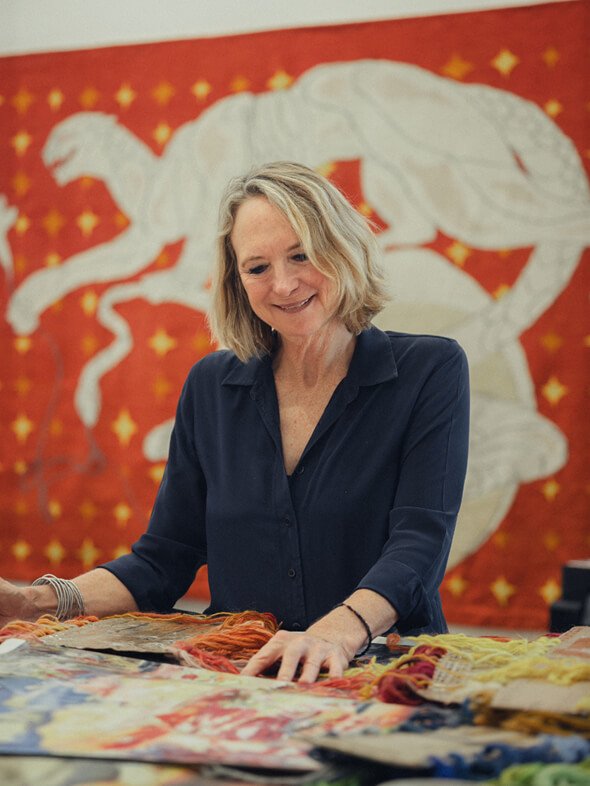
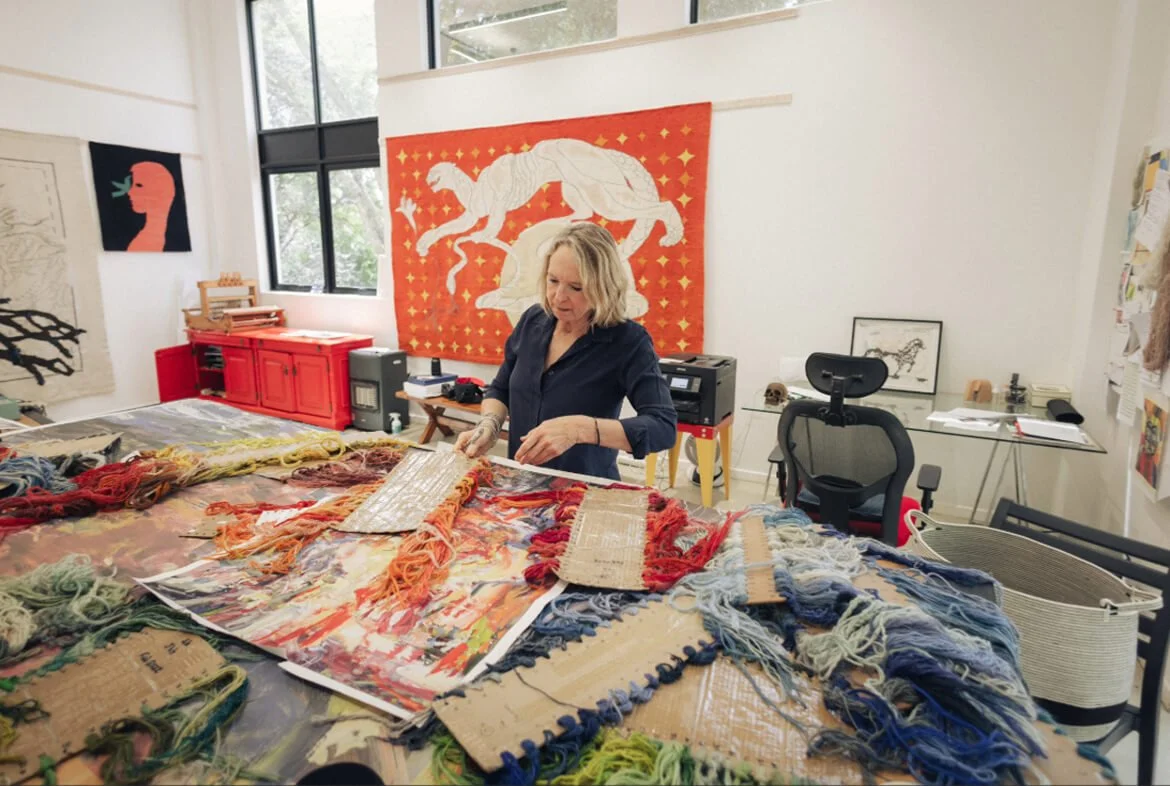
Tina Weavind in her office, designing the cartoon for one of the tapestries based on Catherine Goodman's painting Winged Garden.
Photo: Chloe Keleny
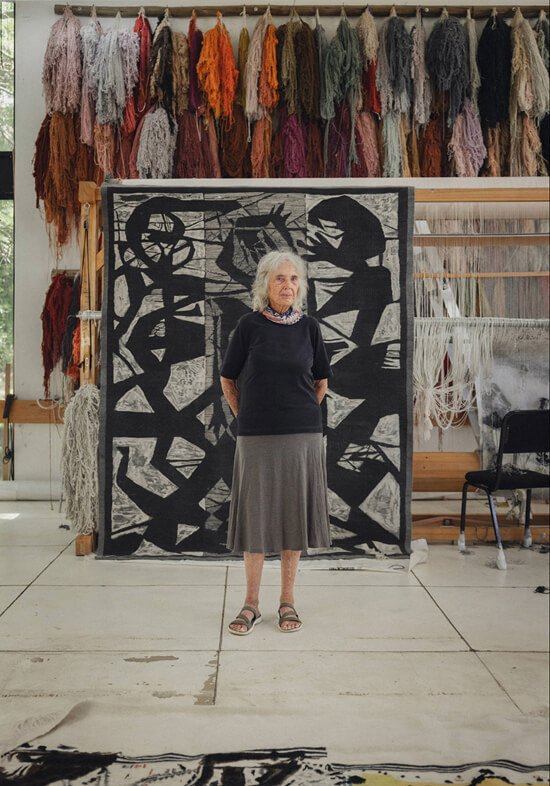
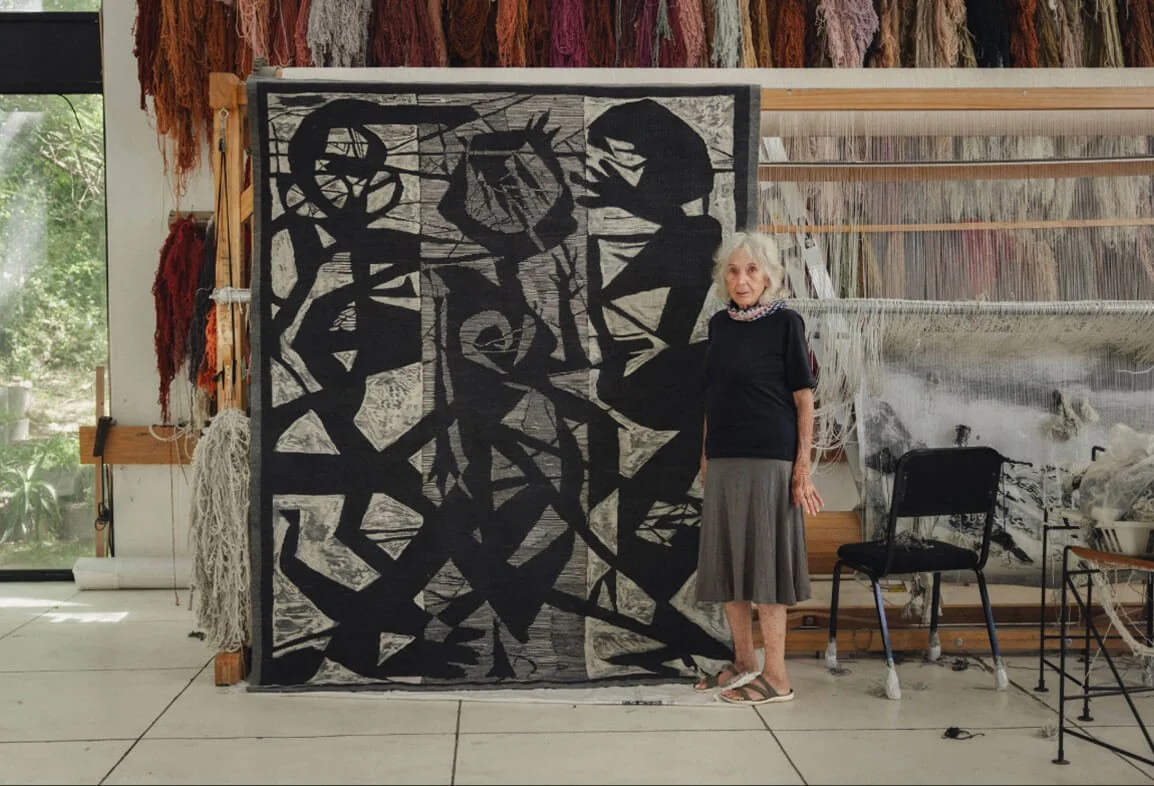
Marguerite ‘Mags’ Stephens in the weaving studio, standing behind a tapestry after Cecil Skotnes' woodcut Three Figures — the first tapestry Mags ever wove.
Photo: Chloe Kenely
The Process at Stephens Tapestry Studio
Sourcing the Mohair
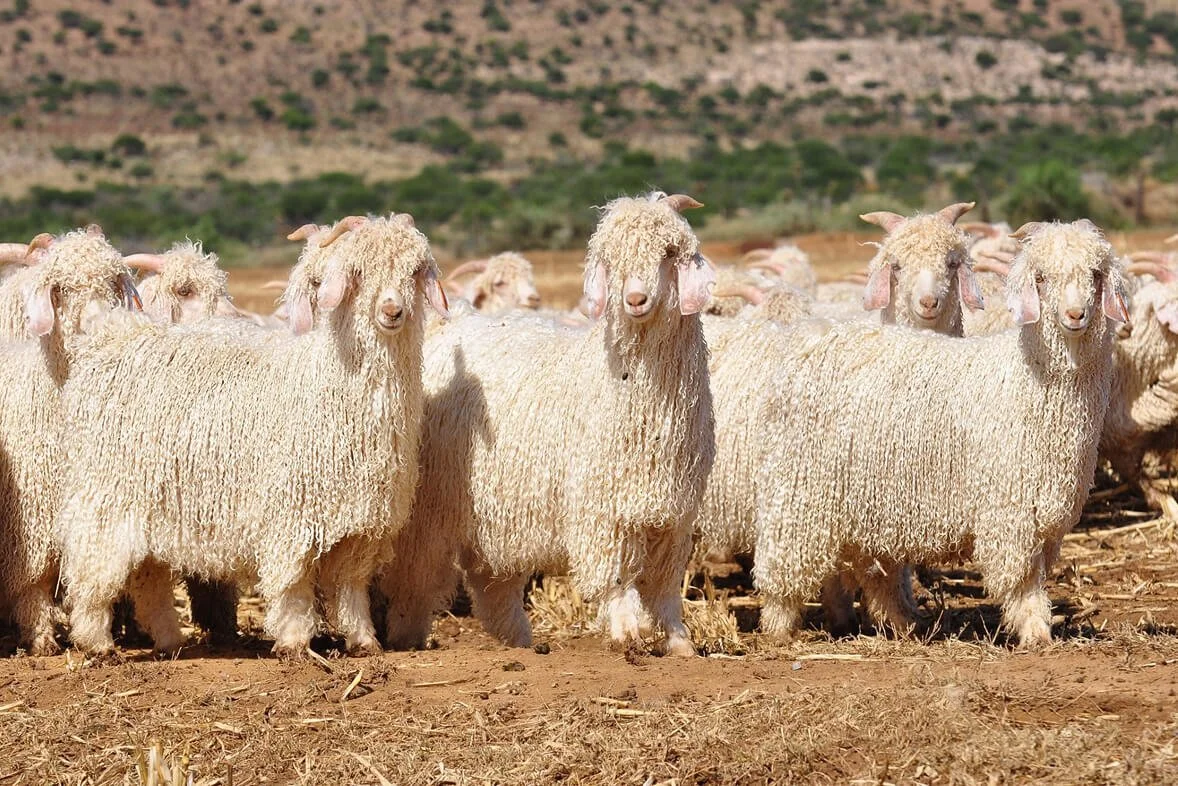
The studio's mohair comes from Angora goats raised in South Africa's Eastern Cape. It's still spun in Eswatini today, just as it was when the family's weaving tradition began there in the 1940s.
Building the Cartoon
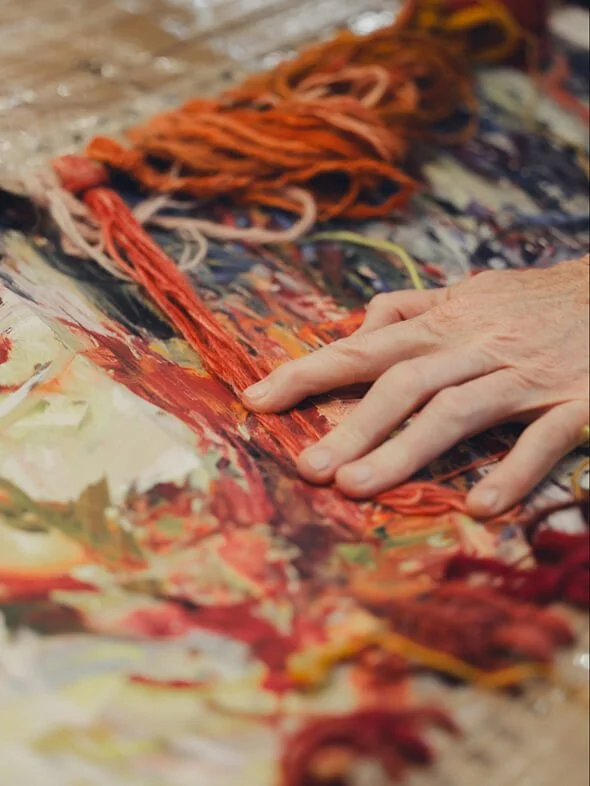
Tina works from the artist's original, having a high-resolution print made as her reference template for everything that follows. From there, she works shade by shade through the studio's colour library, matching each one to its place in the design. This becomes the guide the weavers will follow.
Dyeing the Colour
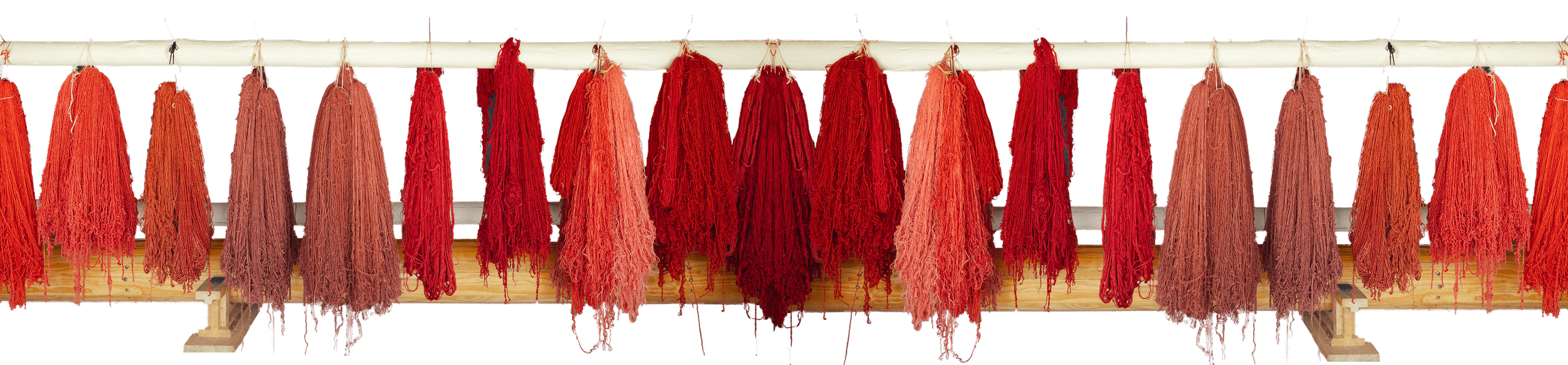
A single complex tapestry can call on 300 colours or more.
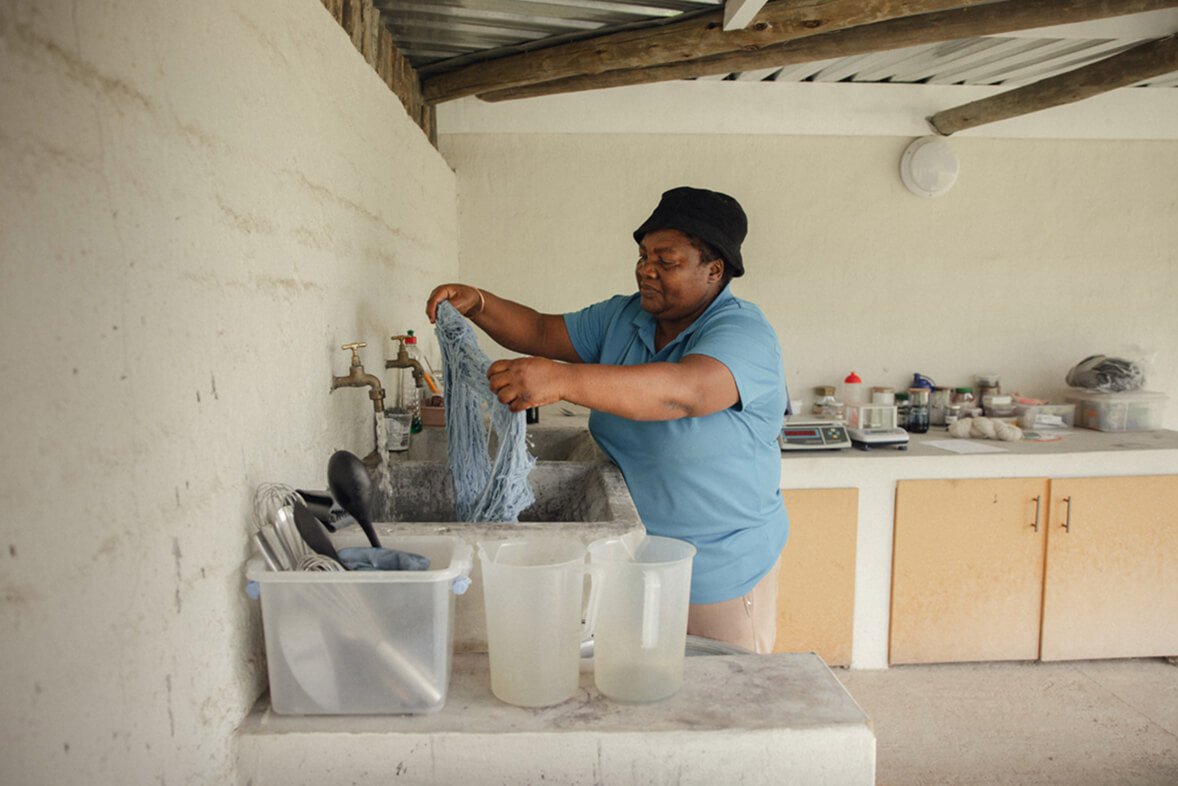
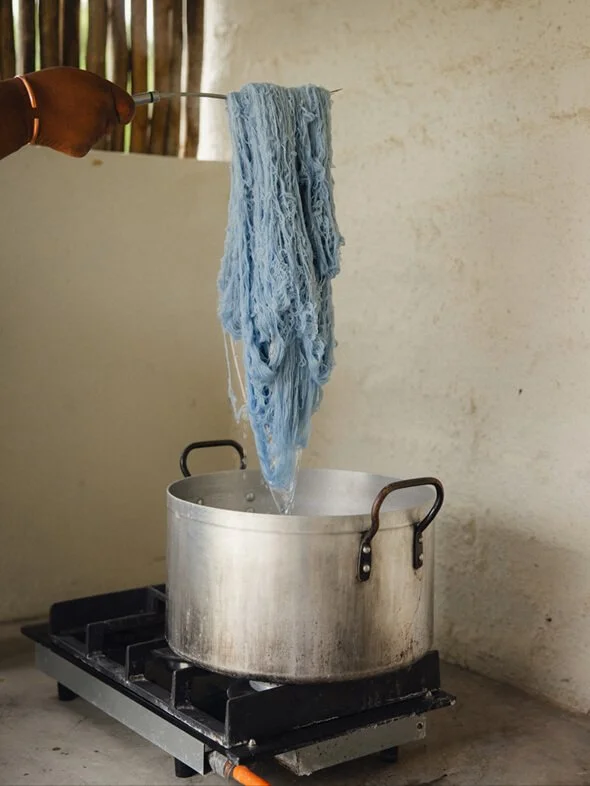
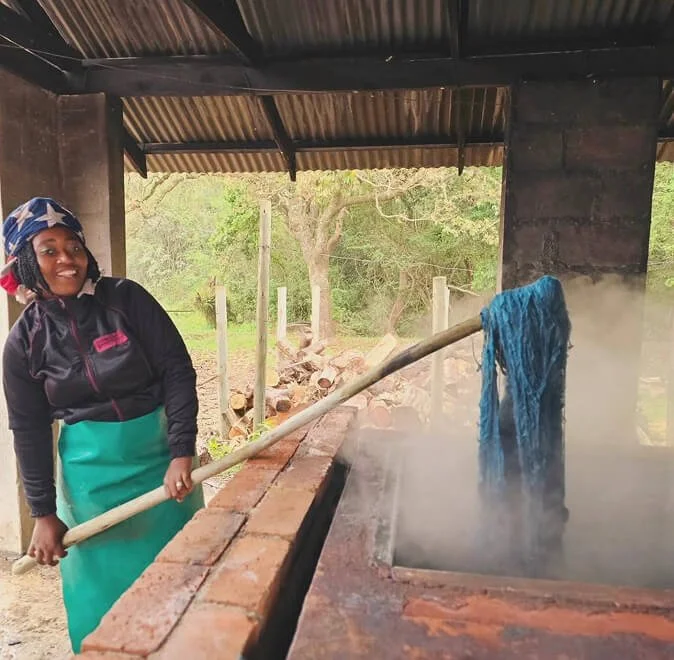
Every colour starts as a recipe, but Phelili, the studio's dyeing expert, often adjusts by eye rather than following it exactly, working in small, precise batches where even a stray trace of powder dye can throw off a colour. It's meticulous, almost chemical work, refined over decades until she can match nearly any colour asked of her. The spun mohair is fixed with an acid wash, then rinsed clean, ready for the loom.
Setting Up the Loom
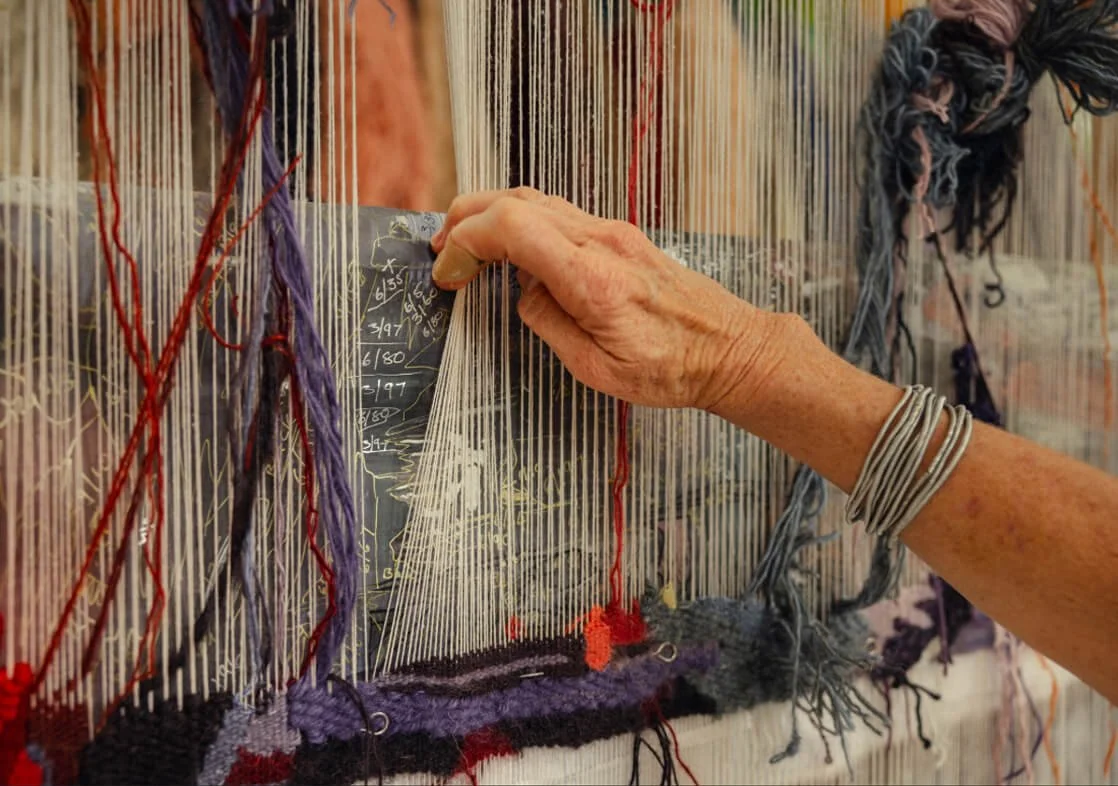
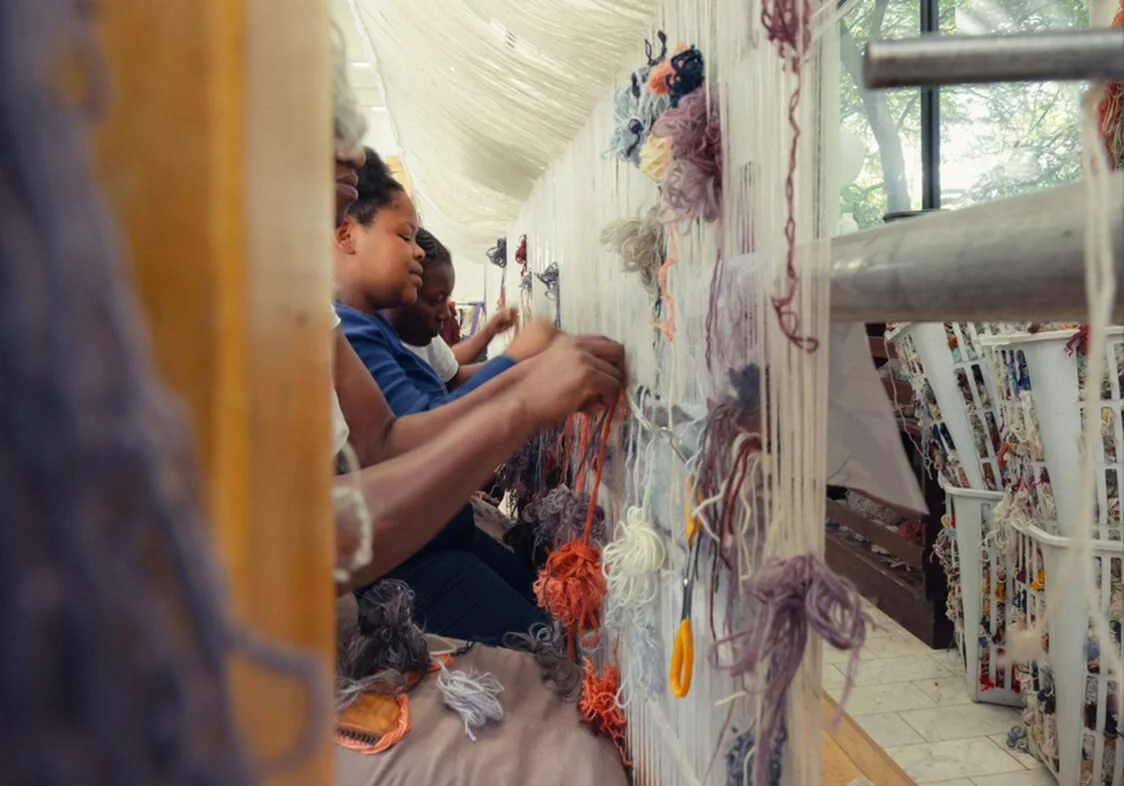
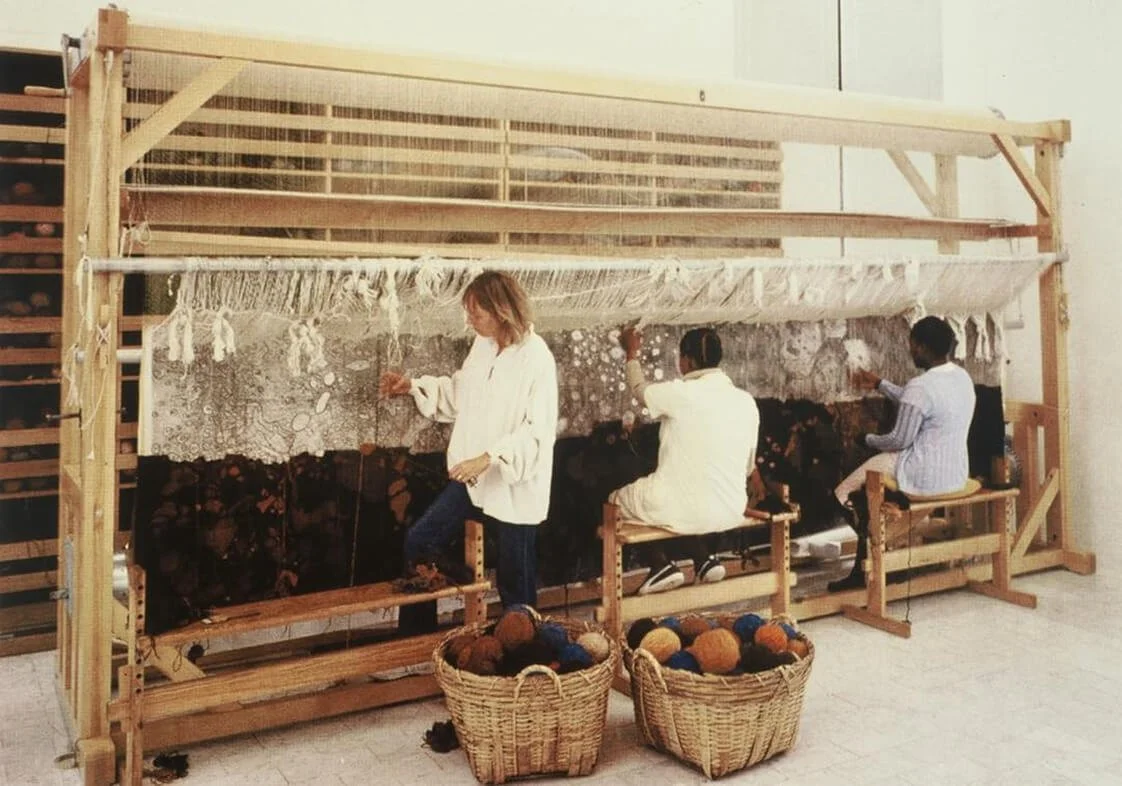
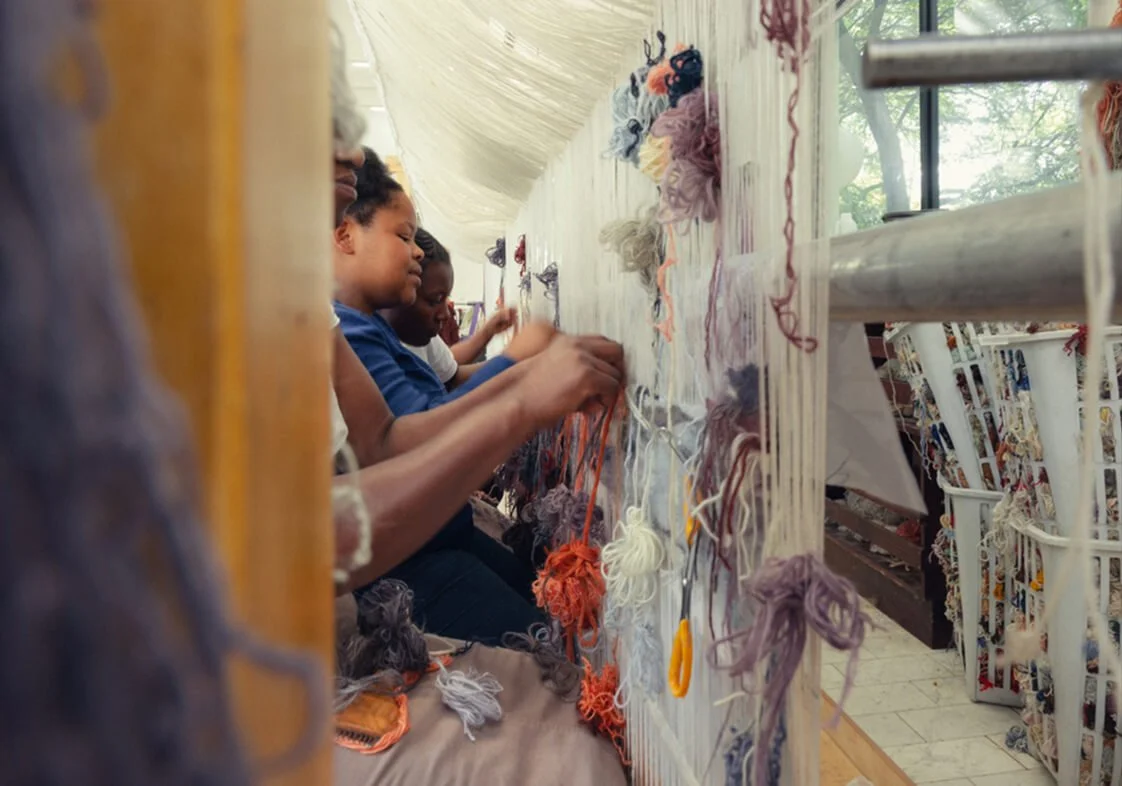
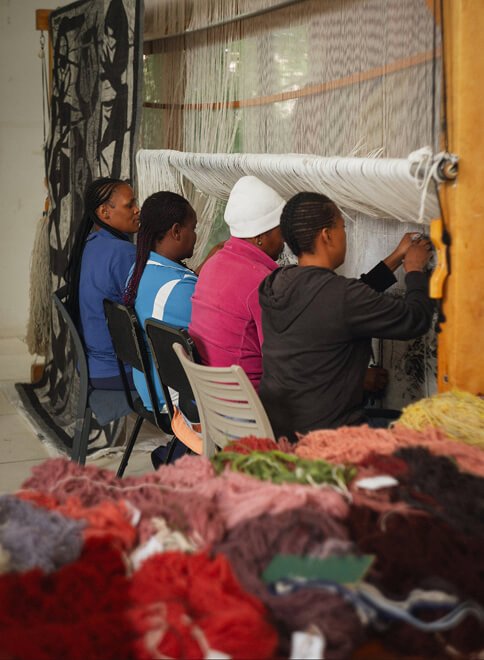
Before any weaving begins, the warp threads are strung vertically across the loom, forming the tapestry's skeleton. The cartoon is placed at the back as a guide, and the weavers begin building the design from the bottom up.
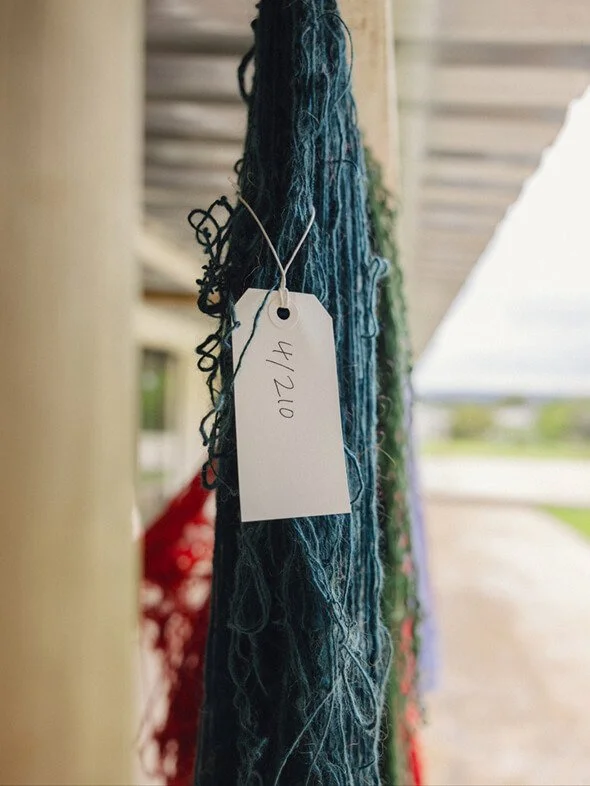
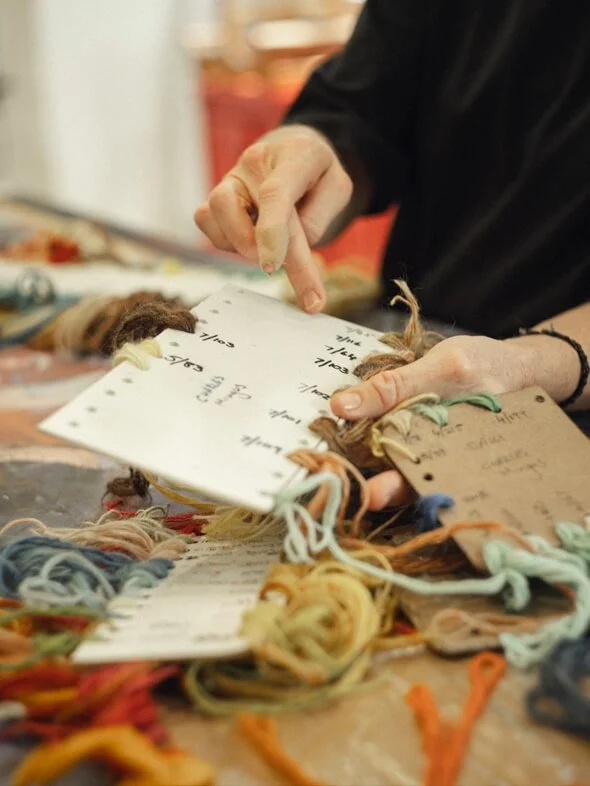
Every hank of mohair is tagged with the same number it holds on the studio's colour chart, the very number Tina marks onto the cartoon. When a weaver calls for a colour, that tag is how it's found.
Weaving
Across the warp runs the weft, the coloured mohair itself, worked horizontally from left to right. It's why weaving this way is easier than working vertically, which would mean building the design upward, one narrow thread at a time. As each section is finished, the tapestry is rolled down and out of sight, so the whole piece is never seen at once until it finally comes off the loom.
Stitching and Finishing
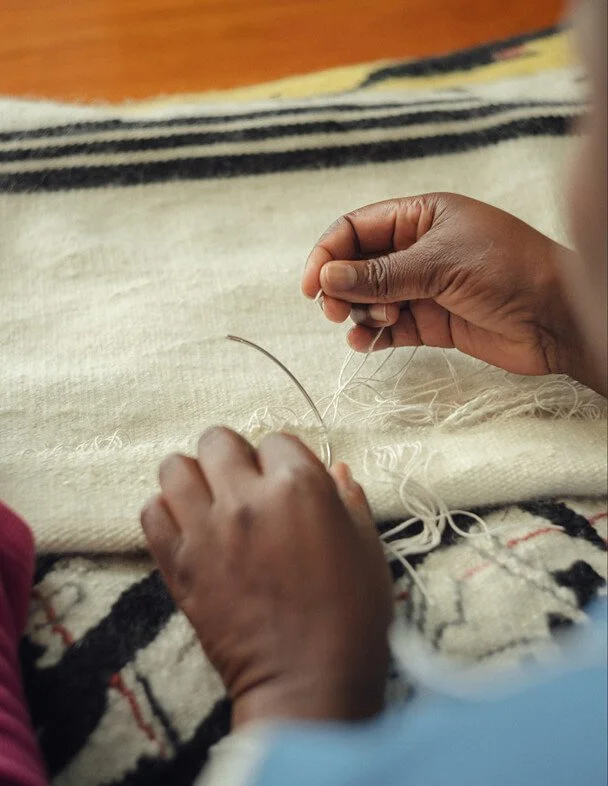
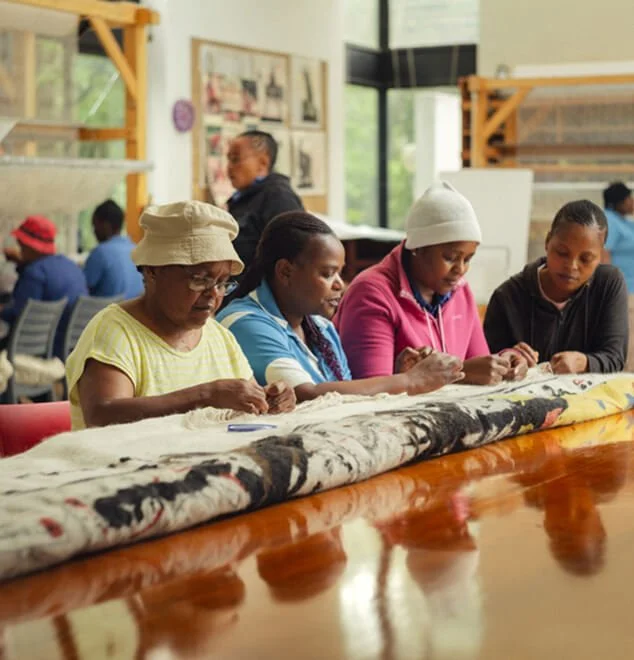
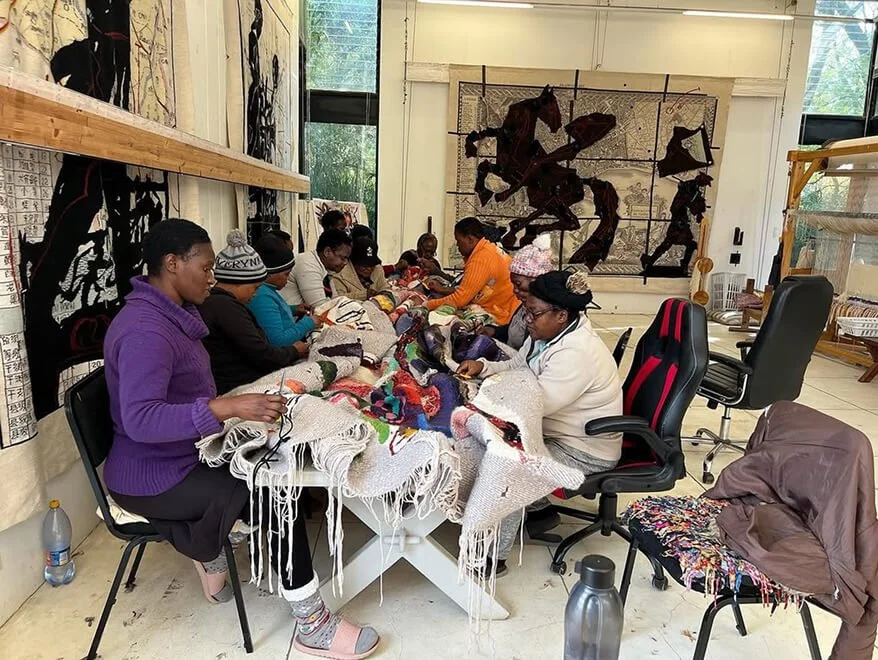
Wherever two colour areas meet along a vertical line, the seam is stitched afterward, since neighbouring warp threads won't hold together on their own. Once the tapestry comes off the loom, any loose warp threads left behind are stitched back in rather than hemmed, keeping the edge straight and avoiding ridges in the finished piece.
No two tapestries are ever quite the same, each one carrying the small, human variations of being made entirely by hand.
A house full of mohair
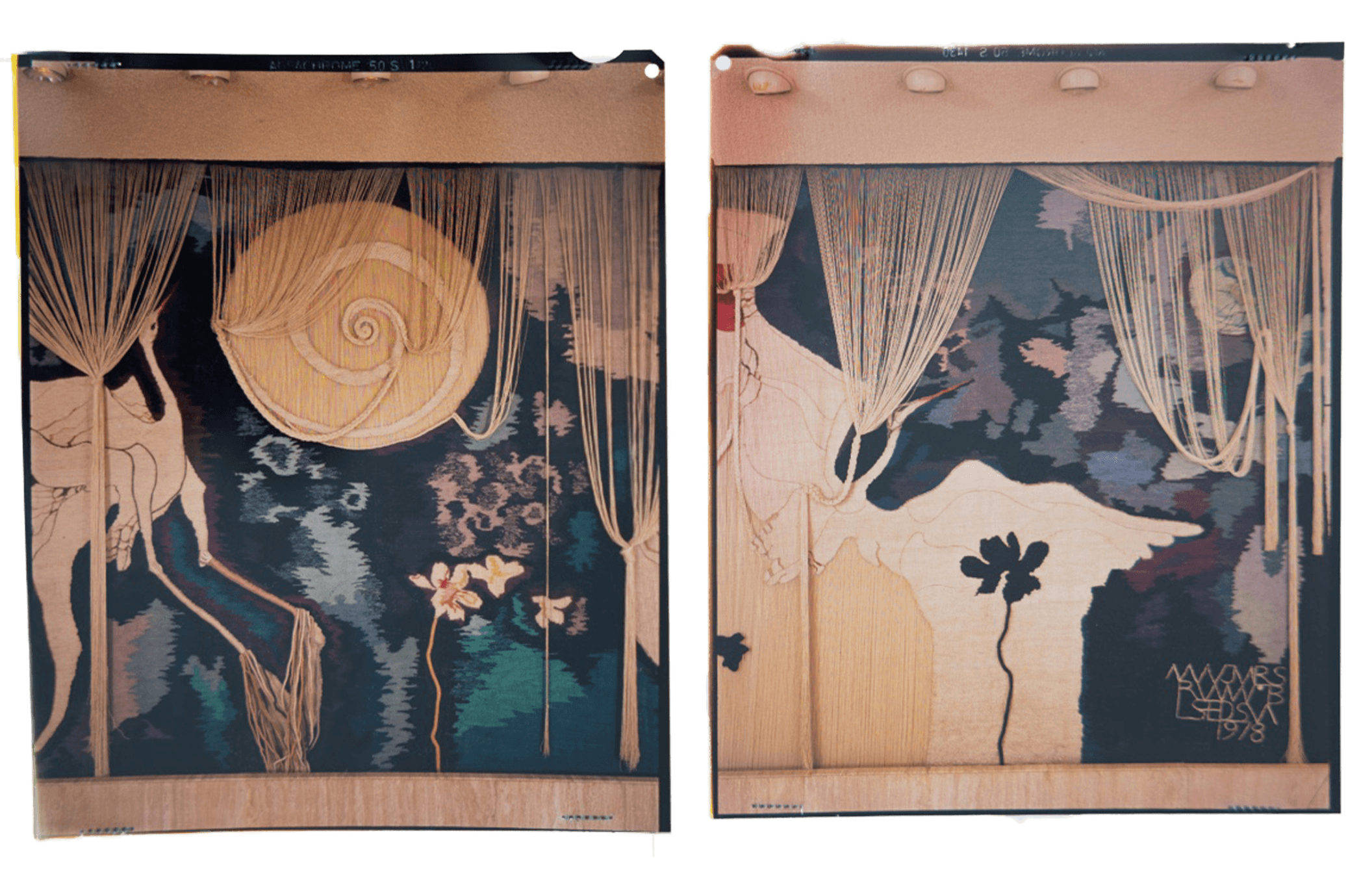
David Goldblatt's negatives of the tapestry by Mags Stephens and Judith Mason, made in collaboration for the Royal Hotel, Durban.
Tina: My first memories of weaving was during the tapestry you made with Judith Mason. That enormous tapestry for the Royal Hotel.
I must have been seven. I think I drove you mad until you made me sit next to you on the loom. Eventually, out of sheer desperation, you gave me some mohair and showed me how to weave.
Mags: That tapestry was woven in 1978. It was 33-metres, the biggest tapestry we have ever made.
The man who ordered it – Russel Stephens – gave us some money to build a real studio. Before that, I was working in a garage. It was made for this very long passage next to the open-plan dining room, so anyone sitting down to eat would see all of it. It had thick plaited and twisted warp thread hanging over the front so it was very three-dimensional.
I think it was quite chaotic for you as a child watching this thing being put together all over the floor and endlessly on the looms. You never saw it as a whole until it was exhibited at the Johannesburg Art Gallery. After the exhibition in Johannesburg it went to the Pretoria Art Gallery, and only then did it go to the Royal Hotel.
Tina: It is an amazing tapestry.
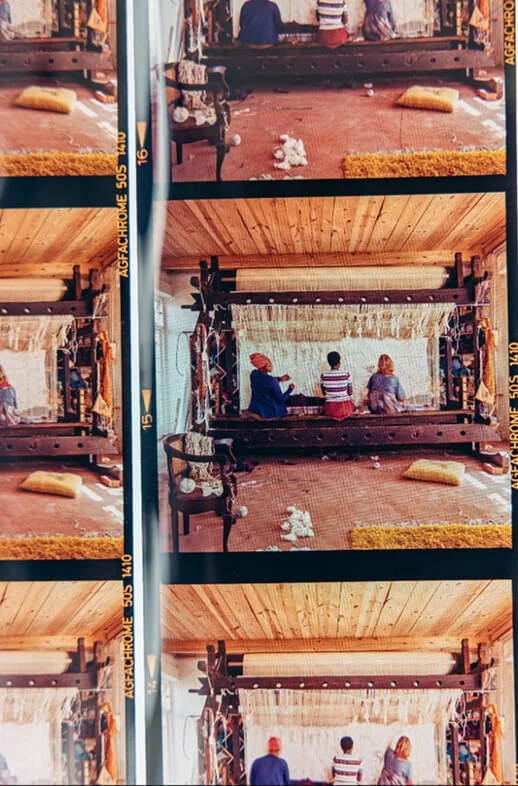
Mags, Judith Mason and Grace Zulu weaving the tapestry for the Royal Hotel (1978).
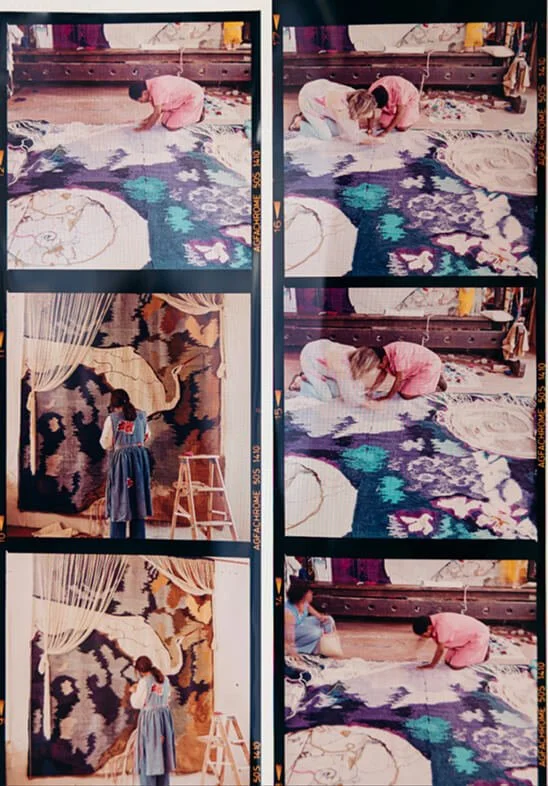
Mags: It was terrific. It certainly made a lot of noise for us in the art world. It was a tremendous effort — it took a year and a bit to weave that tapestry.
Tina: Who did you have working for you then?
Mags: I had myself and Zanele. Then Margaret came, Zanele’s sister, and she was terrific, but she wasn't permanent because she was having a baby. So, it was really just the two of us – myself and Zanele – who wove that tapestry.
Tina: I remember there were always people hanging around: artists that came in and out. Do you remember that David Goldblatt photographed the whole tapestry process?
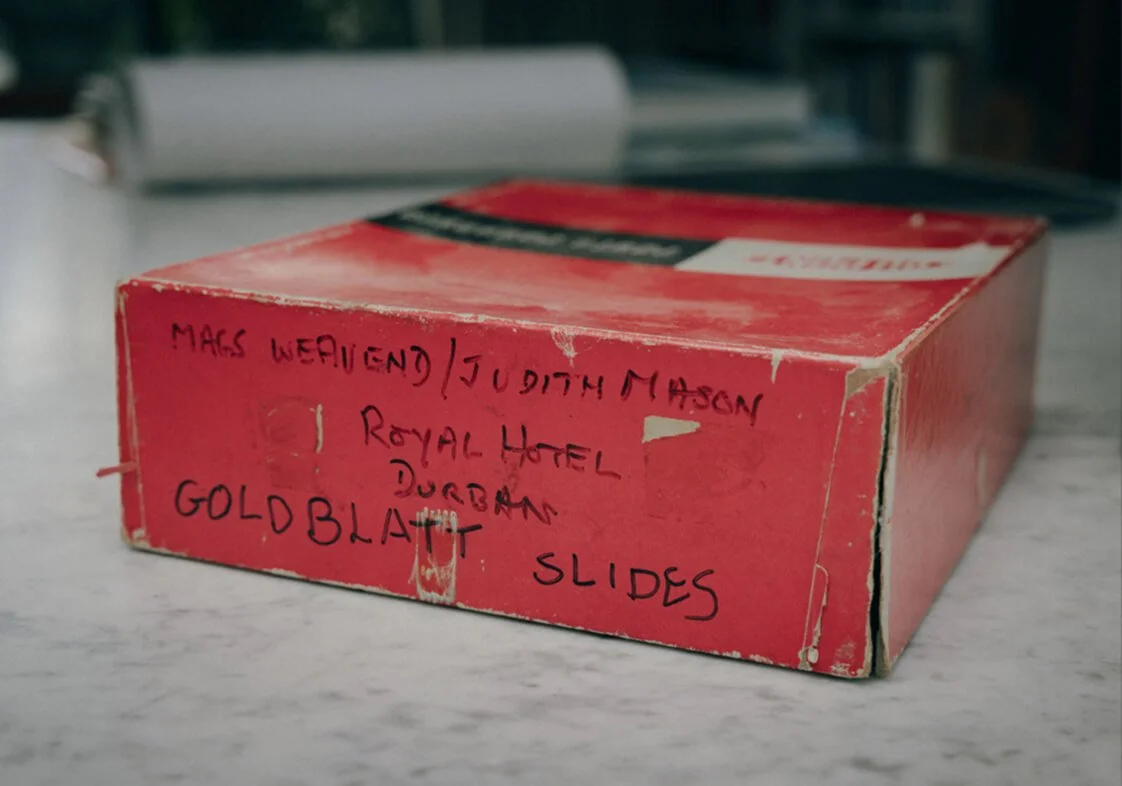
The box of David Goldblatt's negatives from 1978, at Mags' home.
Photo: Chloe Keenly
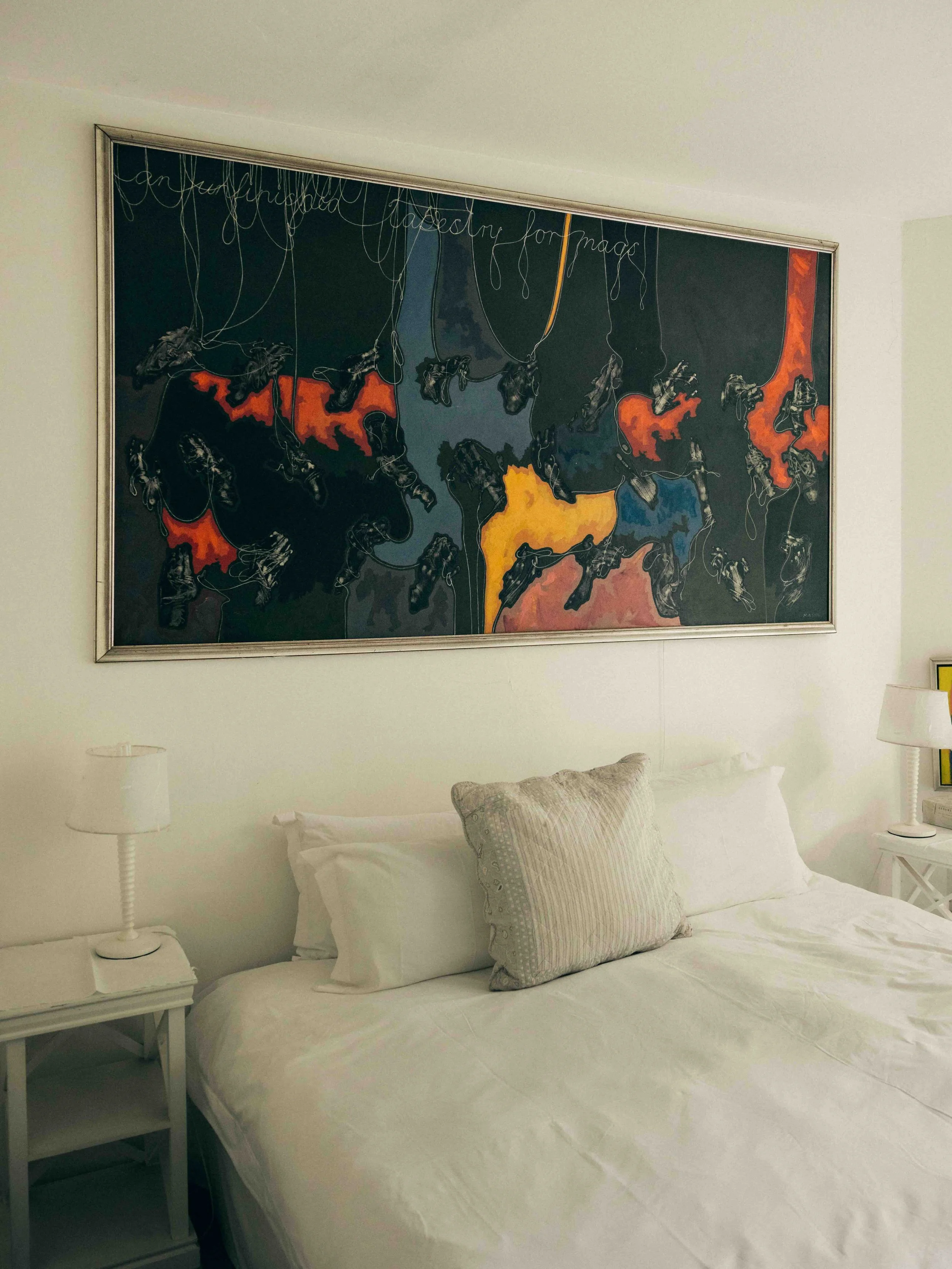
An Unfinished Tapestry for Mags by Judith Mason. A gift honouring their friendship and long term artistic collaboration. Photo: Chloe Kenely
Mags: Yes, he was wonderful.
When we did the installation in the hotel, he came as well. He did everything. He helped us put up the tapestry after first coming to the studio to photograph Judy and me on the floor. He was even more fun because when we arrived in Durban, he didn't take the bus from the airport to the hotel. He had brought his bicycle, and he rode everywhere.
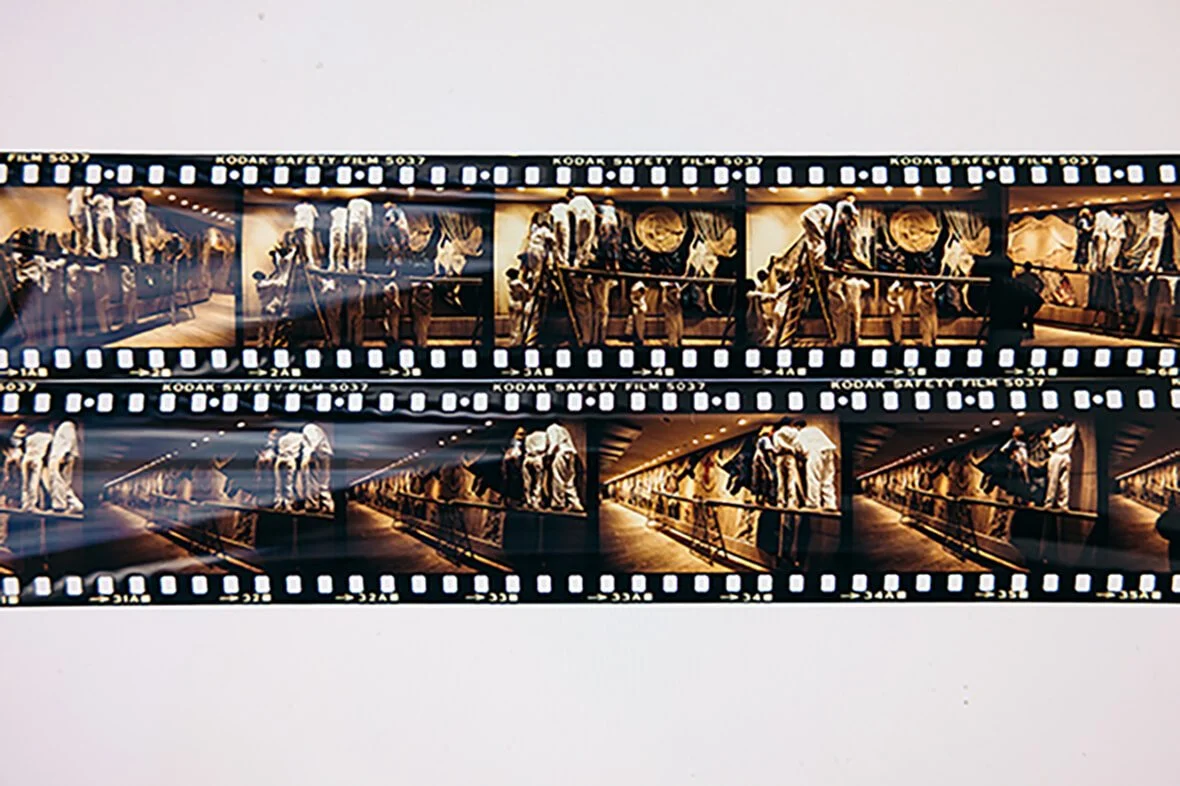
Mags, Judith Mason and helpers installing the 33-metre tapestry at the Royal Hotel.
Photo negatives by David Goldblatt.
Tina: Wasn't it around then that you also started working with Karel Nel? He used to come in when he was young.
Mags: He was a schoolboy, and he used to sit while I was working on the loom, and I'd say to him, “What do you want to do?” He said, “I don't know whether I want to be an artist or a museum director.” In the end, he became both.
The next biggest tapestry was also in Durban, at the ICC International Conference Centre, and it was 15 meters by 7, it was also enormous.
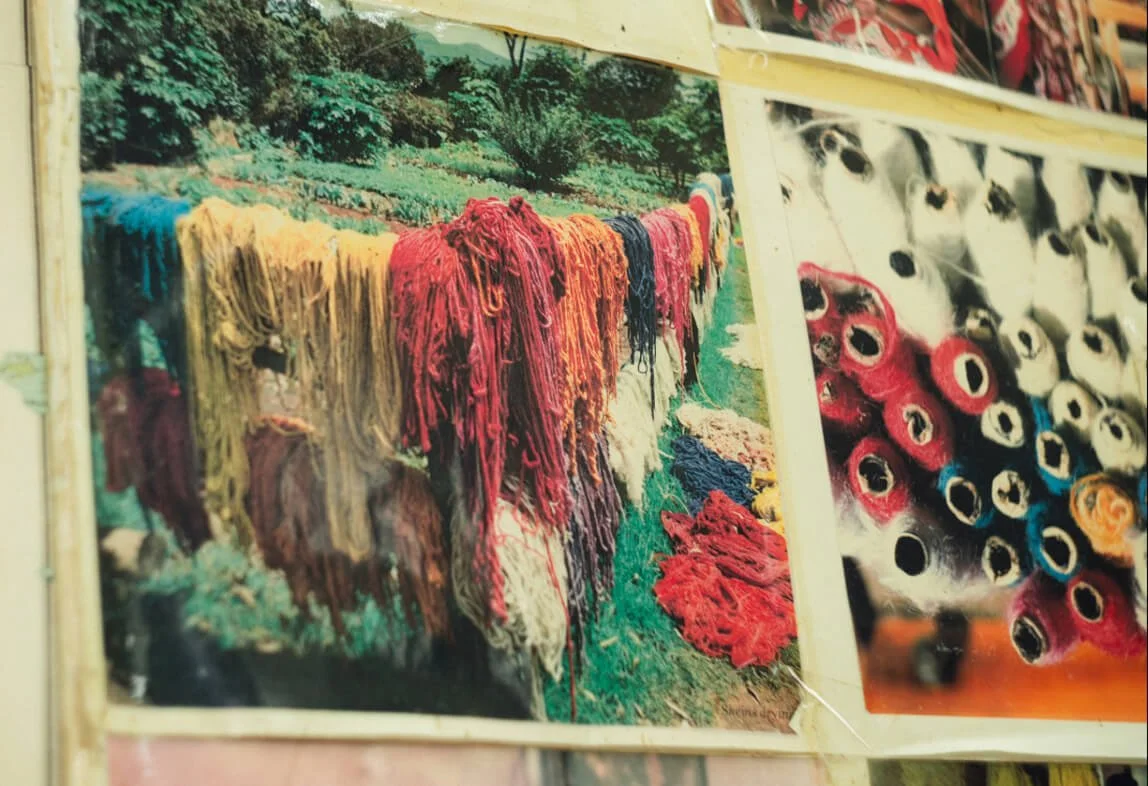
Dyed mohair skeins drying outdoors in Swaziland, and spun mohair wound onto bobbins ready for weaving.
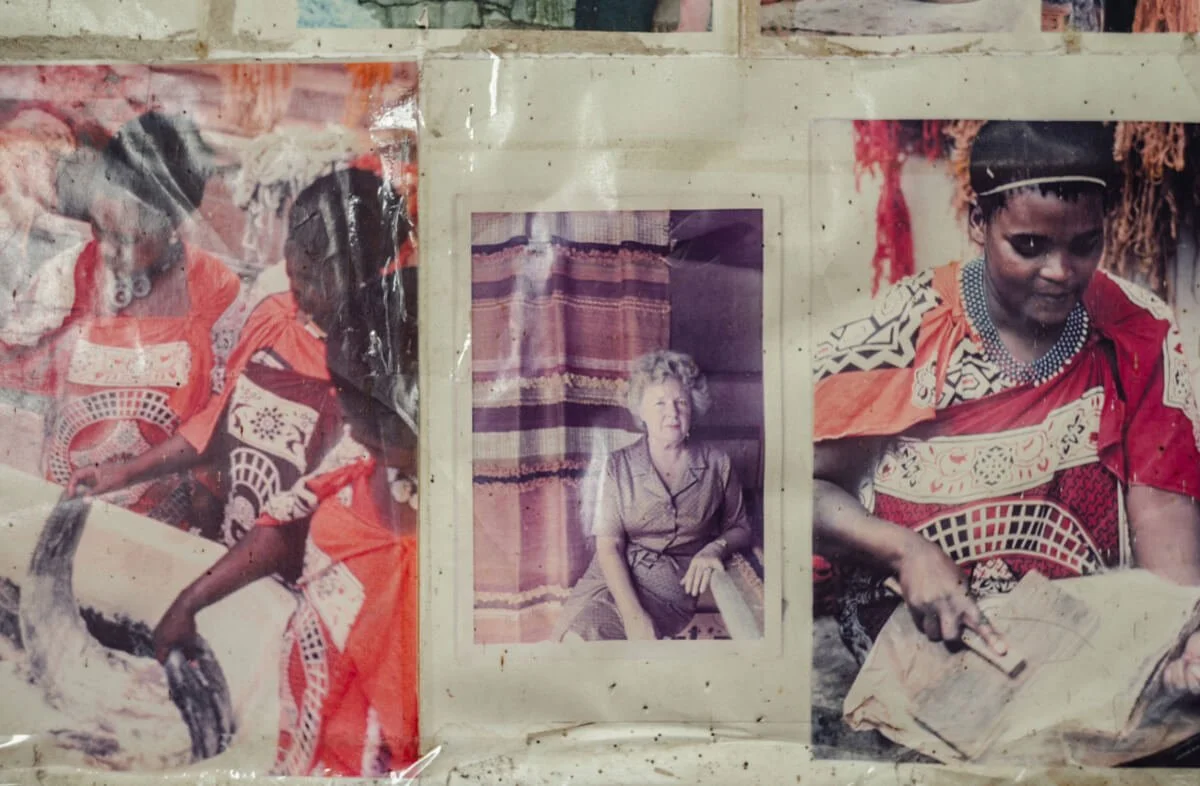
Women dyeing mohair by hand in Swaziland; a portrait of Coral Stephens; and a weaver working with a finished tapestry sample.
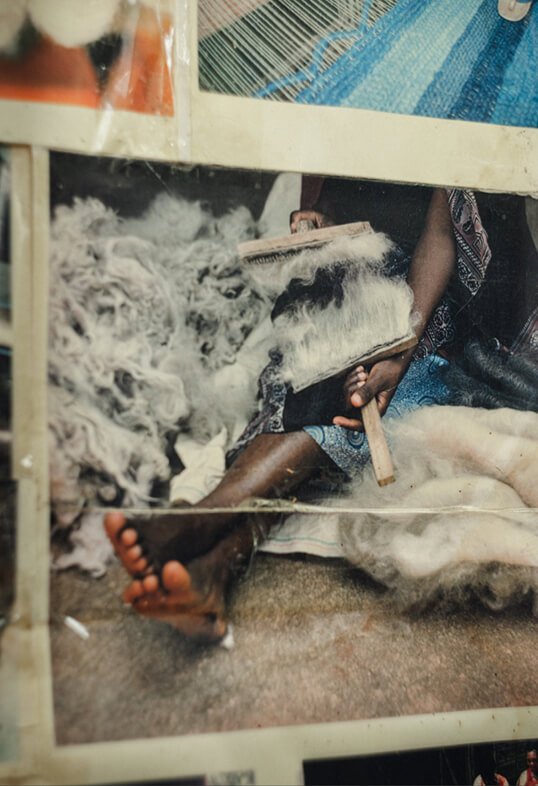
Hand-carding raw mohair with a wire brush in Swaziland, preparing the fibre for spinning.
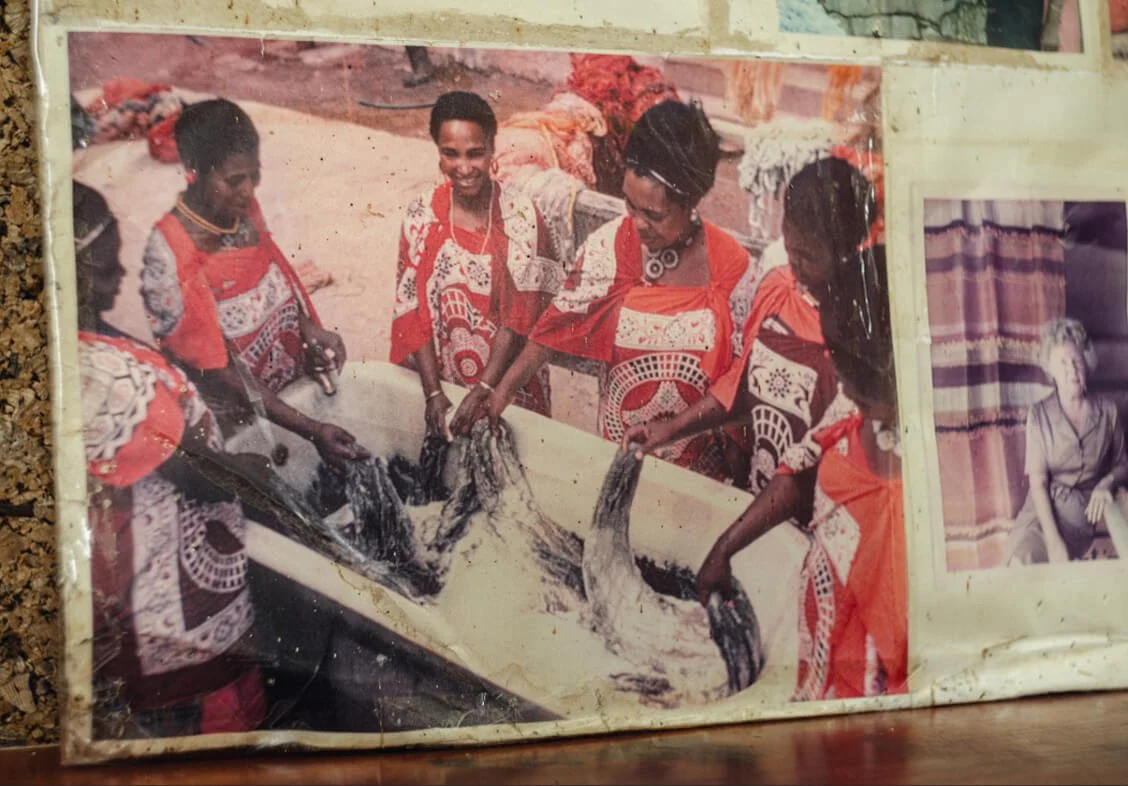
Women dyeing mohair by hand in a trough at the studio in Swaziland.
Tina: I don't remember that at all.
Mags: Andrew Verster designed that one. We did a lot of work for him between 1978 and 1980.
Then you got older, and you did a lot of work with us, too.
Tina: I did a lot of bobbins at first. The house was always full of mohair. And then, we'd go on holiday to Swaziland to go and see my grandmother, Coral, and the whole place there was also full of mohair.
Mags: You couldn't sleep late in that house because the weaving shed was built around the courtyard. Coral had 16 flying shuttle looms and the studio got going early in the morning.
It was really loud with all those looms – click, click, click, click.
I thought everybody lived the way we lived. We had a lot of action.
Tina: I’ll never forget. With that history and being so immersed in it there was no way I couldn't be part of it somehow. It really was so exciting. Colour everywhere. Beautiful things, beautiful art, beautiful artists.
Even when I became a journalist, which I was for about 12 years, there was always some kind of weaving going on in my life.
And it’s interesting – it was always only women who worked in the studio, never men.
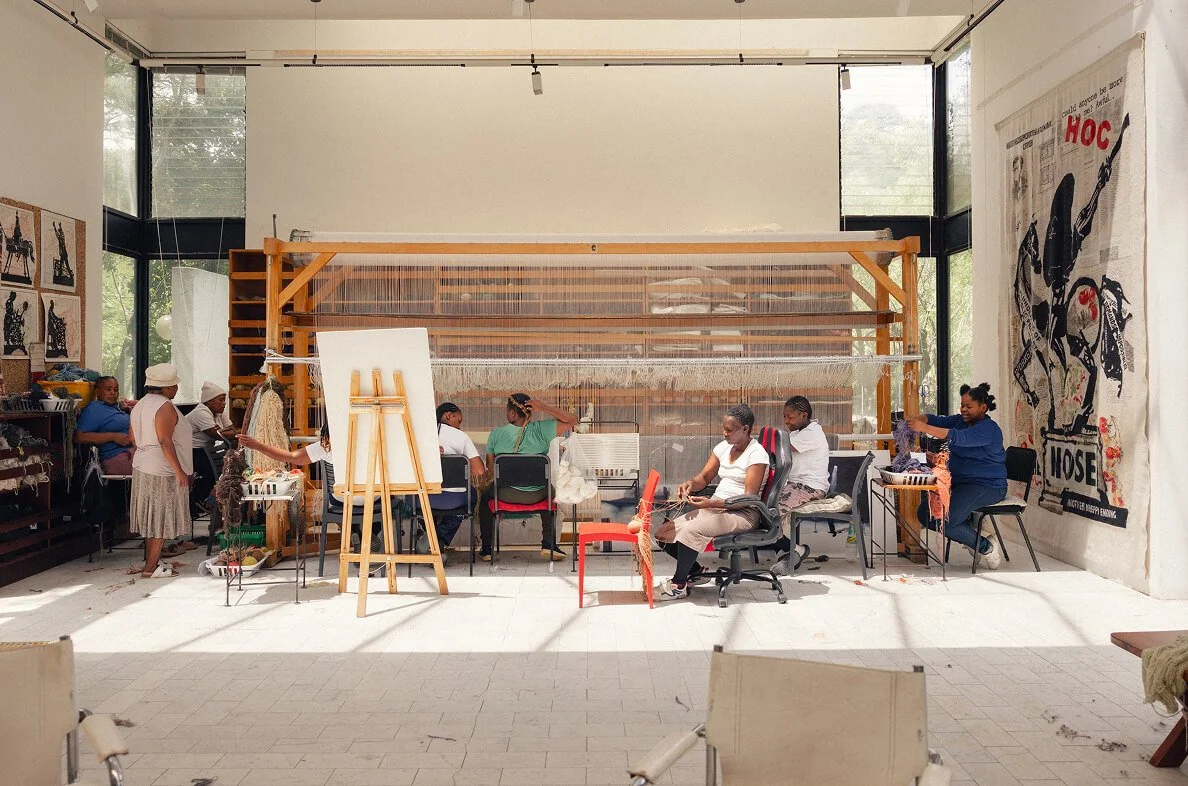
Weavers at Stephens Tapestry Studio working on Charles Mingus, a tapestry designed by Sam Nhlengethwa, on the loom in 2026. Photo: Chloe Kenely
Mags: There was, and still is, a very strong patriarchal system here, and it was easier for women to work on their own without having men around. There would have been a social power imbalance. It made more sense to have just women together.
Tina: The studio really grew during Judy’s heyday with you, and it never stopped. Once William (Kentridge) started making tapestries in the 1990s, the studio really began to take on a global footprint.
A matter of Interpretation
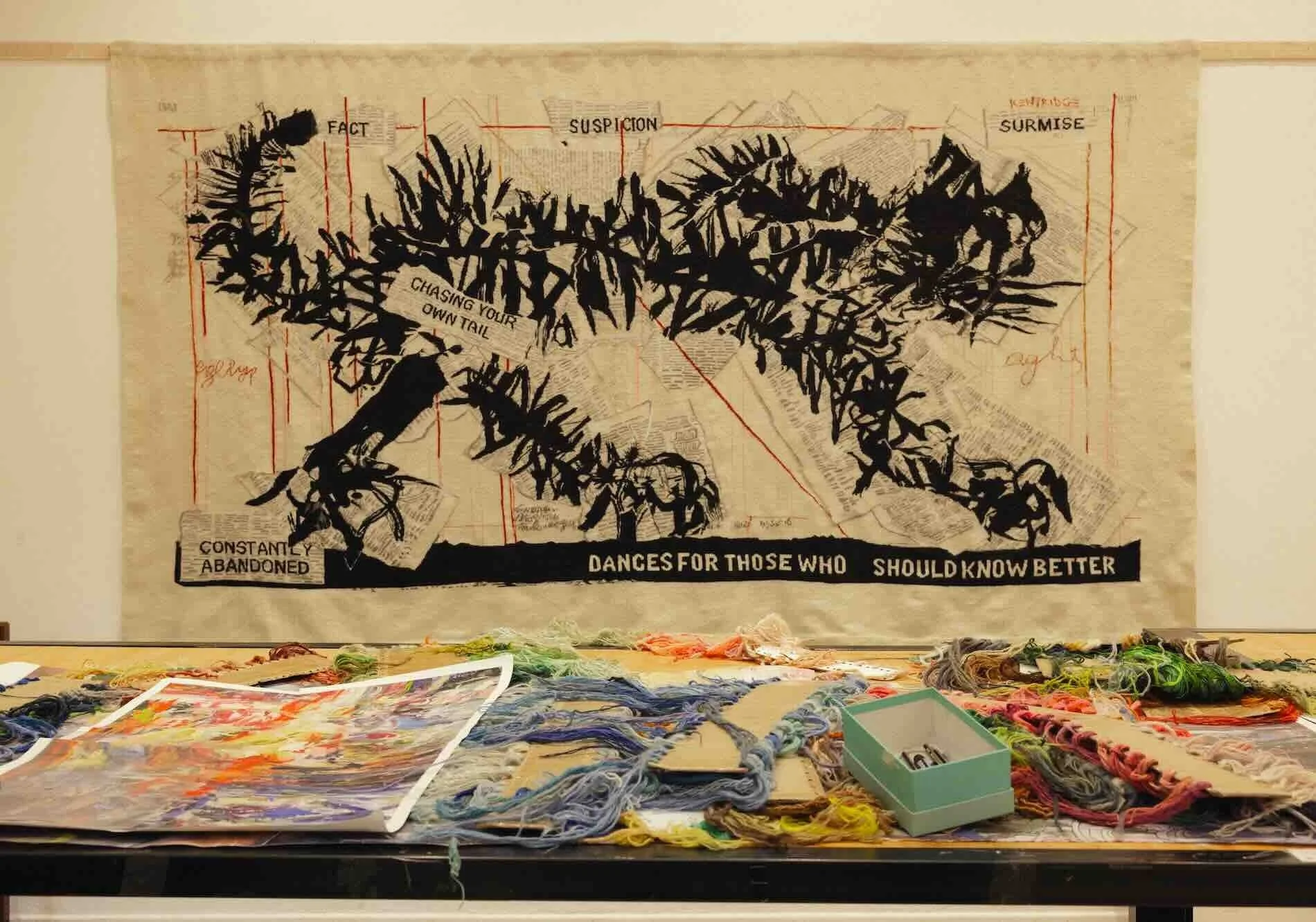
Scribble Cat (Chasing your own tail) by William Kentridge.
Photo: Chloe Kenely
Mags: A lot of artists saw William’s tapestries and realised the woven interpretation could do something unique to their work.
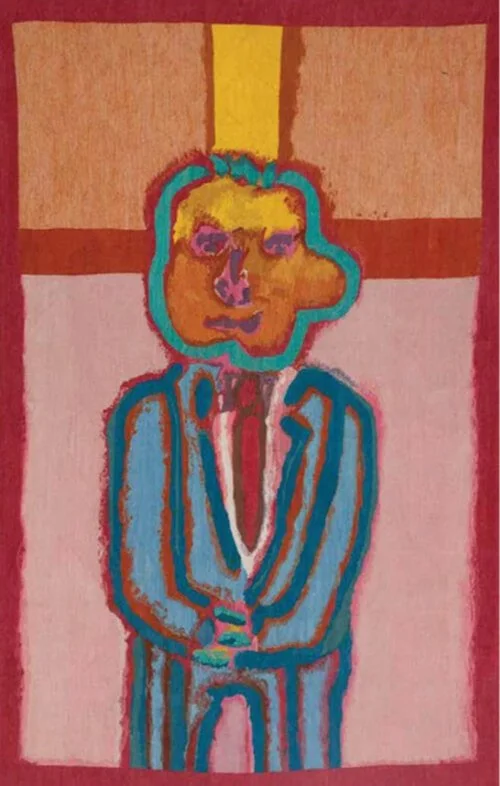
Blue Suit Guy, a tapestry after a design by South African painter Robert Hodgins.
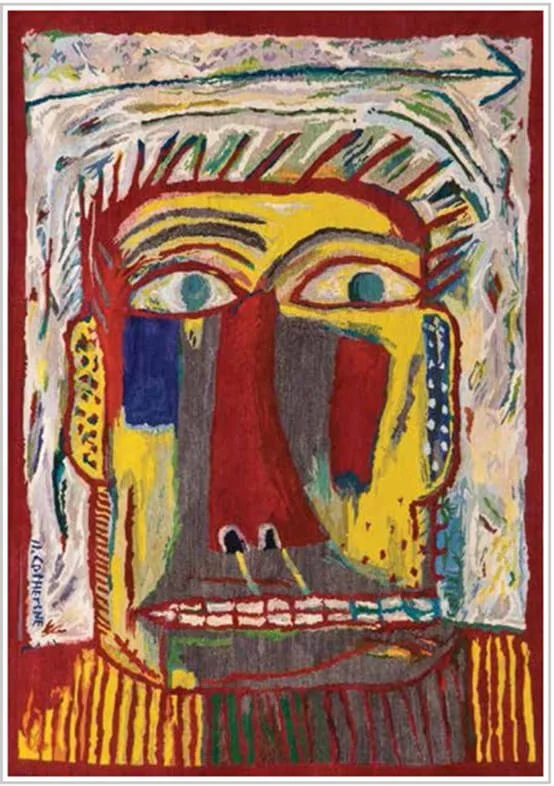
Wise Guy 2, a tapestry after a design by South African artist Norman Catherine.
Tina: Initially, it was mostly South African artists. A lot of what happened – and what continues to happen – is thanks to William, because he has increasingly been shown more and more and in really important galleries and museums internationally. So more US and UK artists have seen his work and then also want their work translated. Quite often, clients or interior decorators directly approach the studio.
I feel like sometimes you find that people who have grown up in Europe or the UK, in cultures where textile art is very much in your face, understand tapestry. Maybe generally more so than in the US. Tavares Strachan made this point some time ago. He said quite a few people didn’t really get what he was doing until they saw the tapestries for themselves.
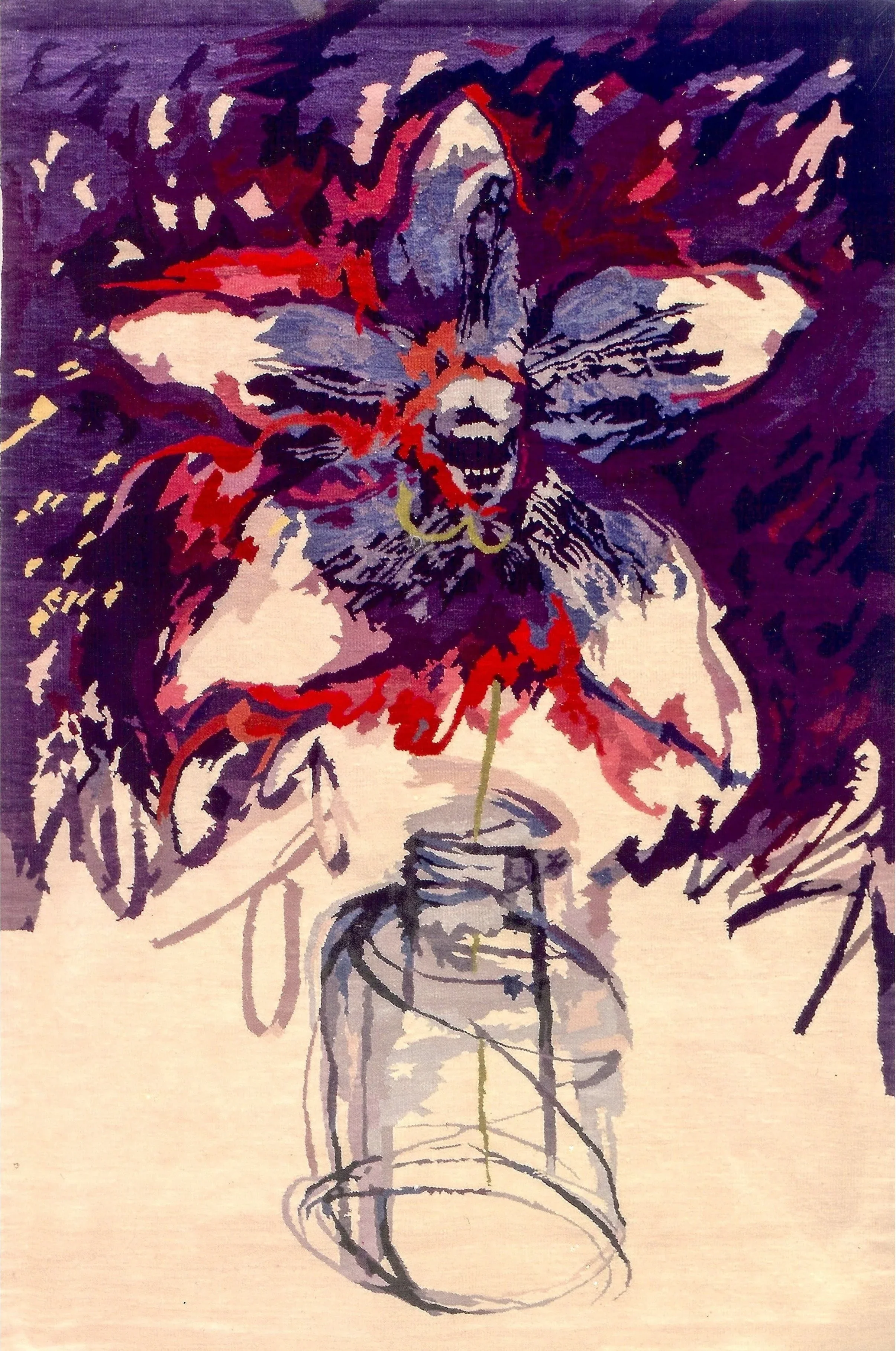
Flower in a Vase, designed by Judith Mason.
Photo: Courtesy of Stephens Studio Tapestry
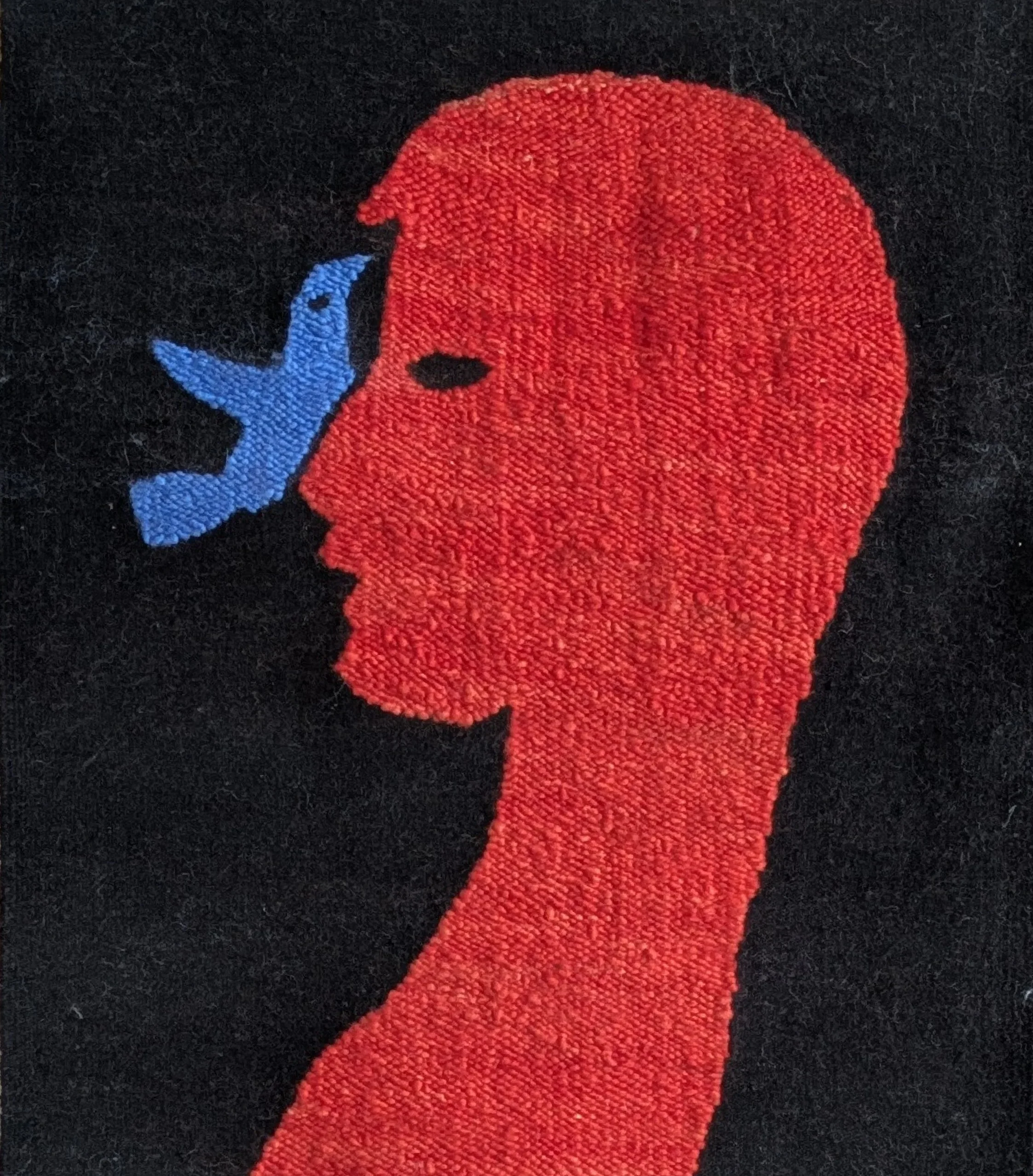
Bird on Nose, designed by Walter Battiss.
Photo: Courtesy of Stephens Studio Tapestry
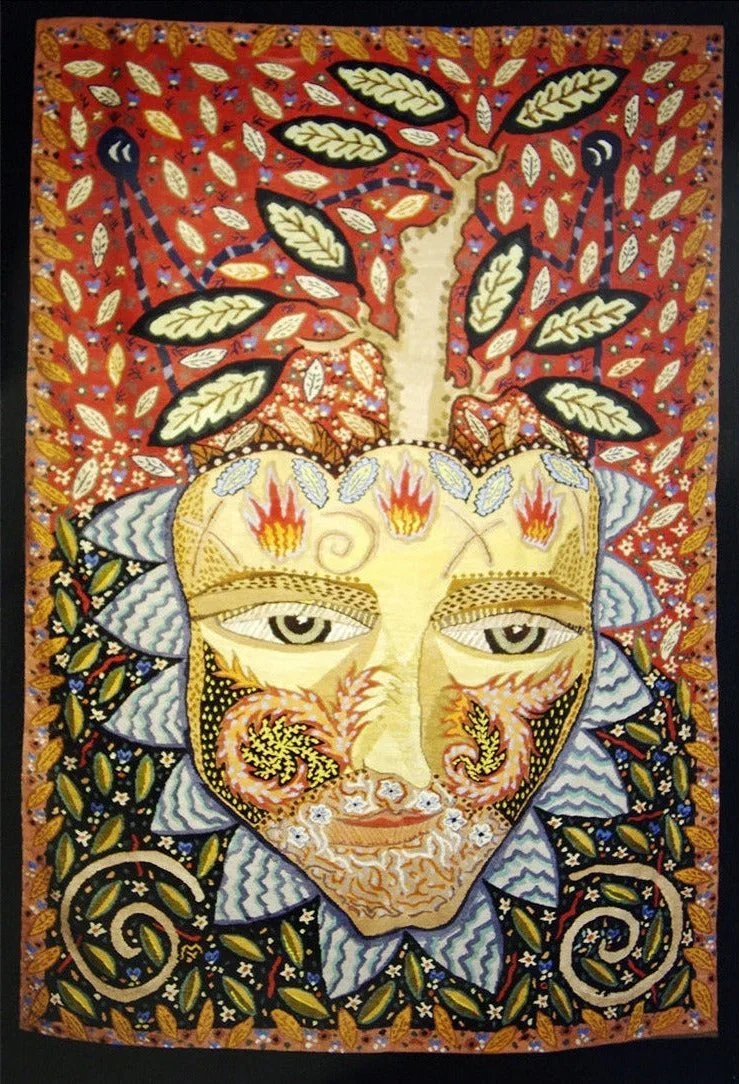
Untitled, designed by Margaret Vorster.
Photo: Courtesy of Stephens Studio Tapestry
Mags: The tradition is there. Weaving is an important art form in Mexico and South America generally. Also, one of the first tapestry exhibitions we had with William was in America, at the Philadelphia Museum of Art in 2007.
Then there was the Fabric Workshop, which is quite famous in Philadelphia. They were very instrumental in pushing a lot of our work.
Tina: But, I think textile art has made an enormous comeback. There was the whole Anni and Josef Albers moment, and all that was happening in the ’60s with the Bauhaus movement.
Then, it went a little quiet and became less cool, I think. Now, you go to any exhibition, art show or art fair, and there's a lot of textile art. It’s become very much more sought after in the past decades
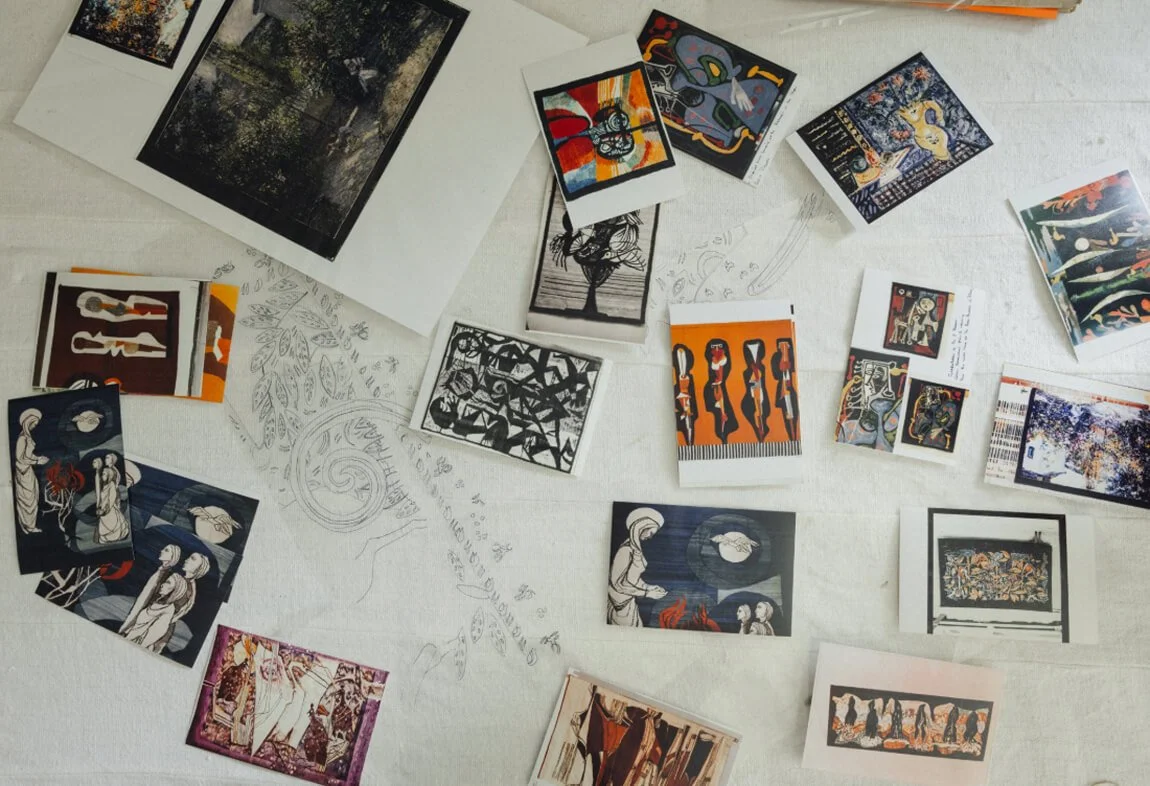
Postcards of several tapestries made by the studio and a detail from one of Mags’ cartoons.
Photo: Chloe Kenely
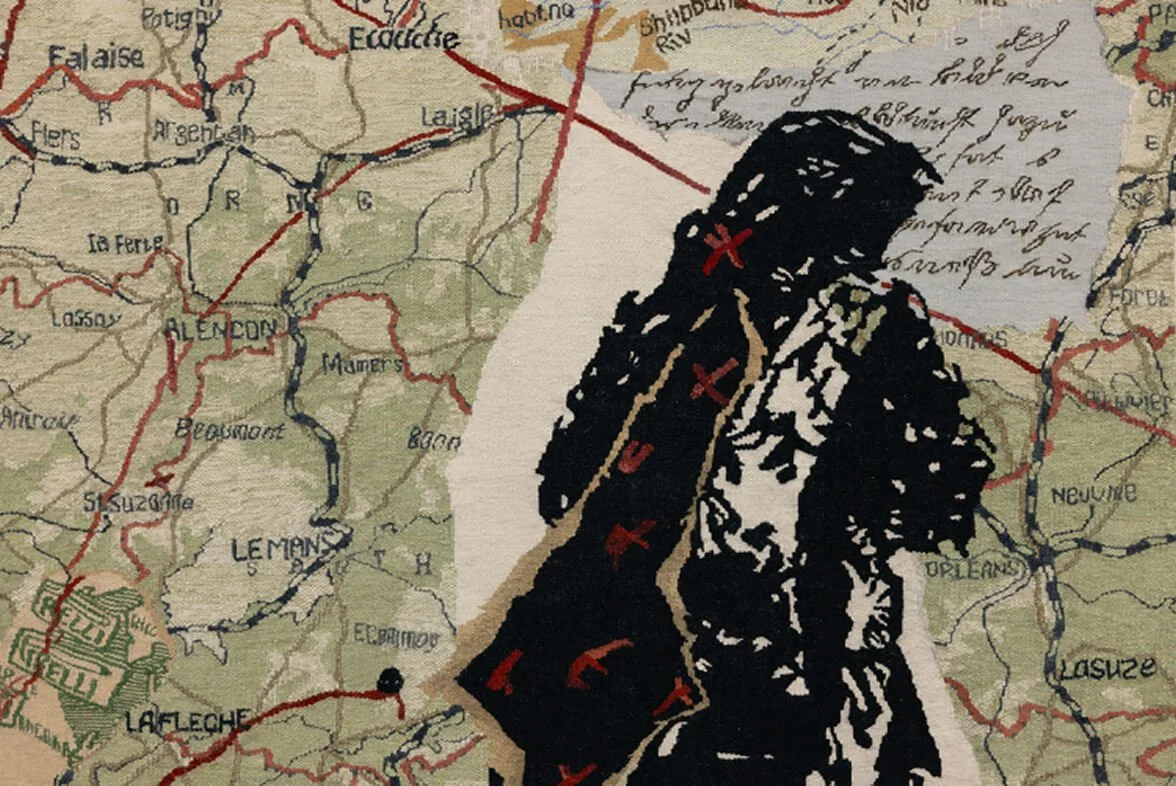
Detail of France: North-West Section, designed by William Kentridge, sixth and final tapestry for the Royal Academy show in London in September 2022.
Photo: Chloe Kenely
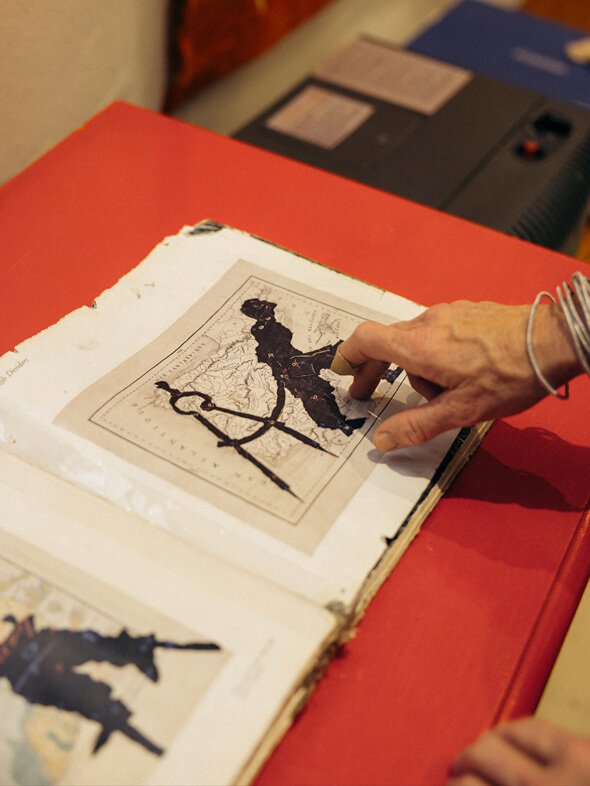
William Kentridge's catalogue at Tina's office.
Photo: Chloe Kenely
Mags: People are quite discerning about what they want.
Tina: They really are. When it comes to the work itself, it is obviously a translation. If you have a Raphael, the tapestry is after Raphael. It's not Raphael's work.
Mags: It's the interpretation. I would probably do it differently from you.
Inheriting the Loom
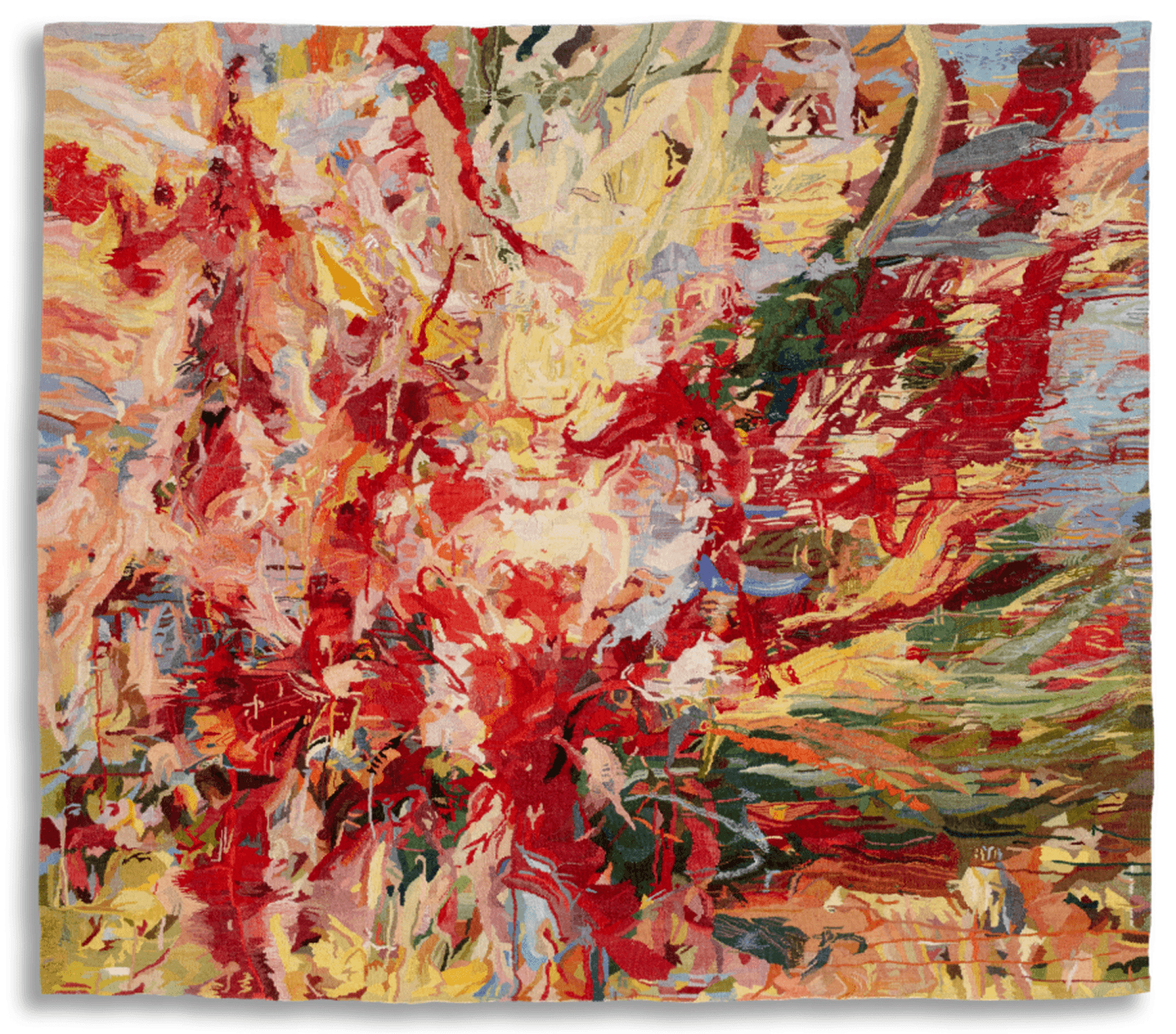
From Boughton to Volterra, tapestry after Catherine Goodman, from her exhibition In the House of Tapestries at Boughton House (2026).
Tina: How do you think I'm different?
Mags: You are much more detail-oriented, I'm much less detailed than you. It's very interesting, especially with the work you are doing now for Catherine Goodman. Also, the way you are understanding and interpreting the Raphael Vision of Ezekiel tapestry is much more in depth than the way I would have done it.
The possibility of working on a Raphael design would be frightening for me. I think you are very brave.
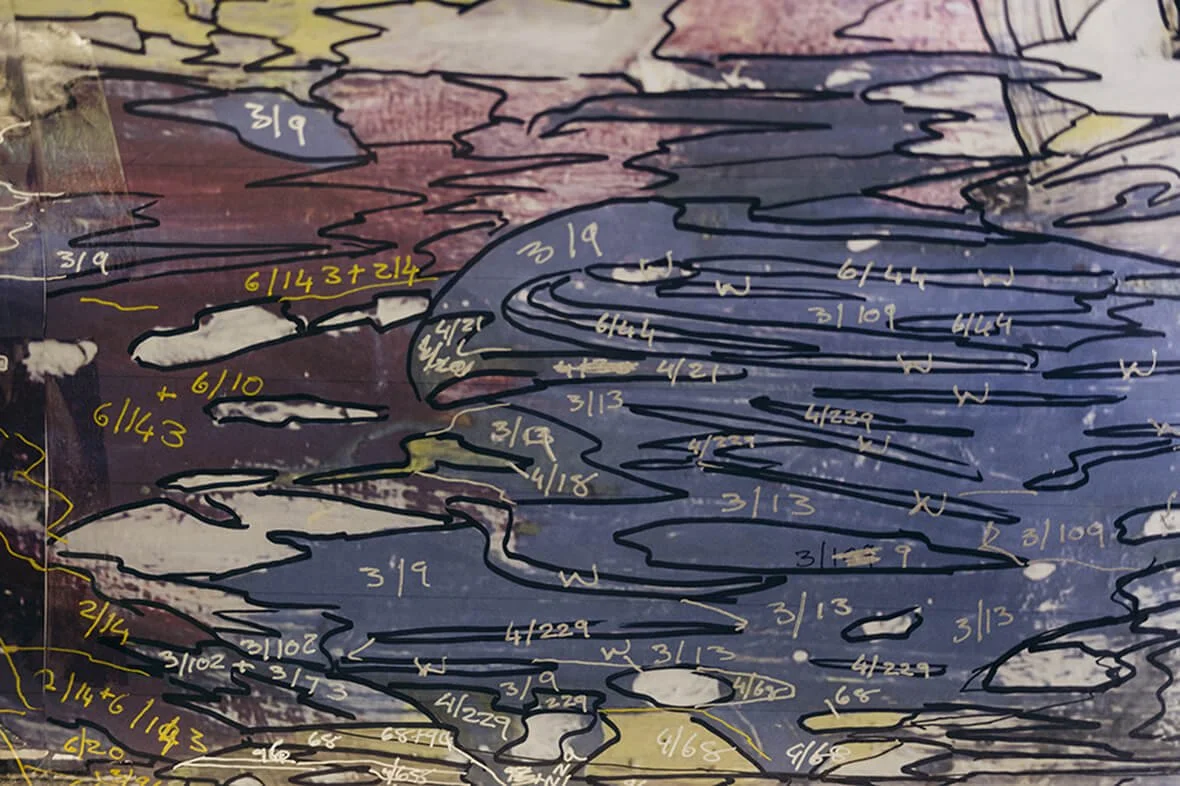
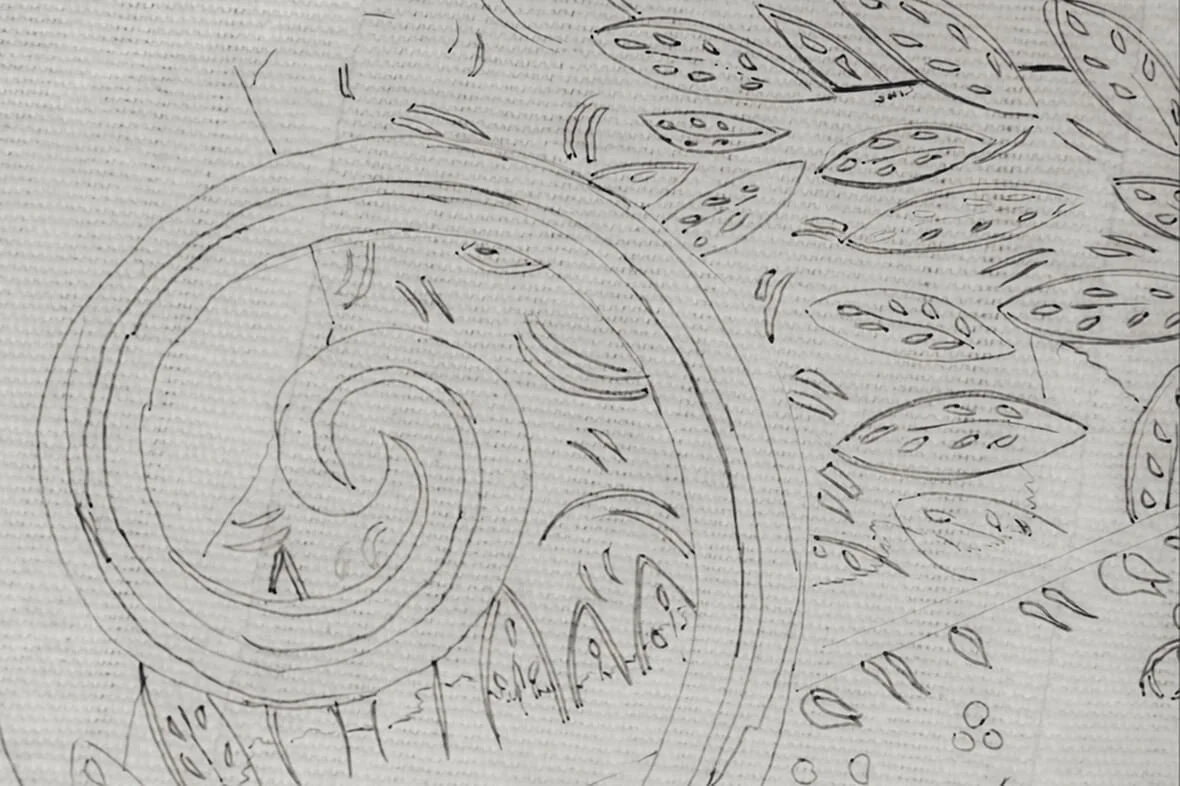
Detail of Tina's cartoon for Winged Garden, designed by Catherine Goodman, alongside Mags' cartoon, showing how differently mother and daughter approach making a cartoon. Mags preferred to trace the image onto acetate rather than work directly with colour, stripping the design down to line and number for the weavers to follow. Tina works differently, marking colour straight onto the print.
Photo: Chloe Kenely
Tina: Do you?
Mags: Yes. I did work for Misha Kahn. The early work, Return of Saturn: Coming of Age in the 21st Century, was a fantastic tapestry. But then you took it a step further with him, with those massive carpets and his later tapestries.
Those tapestries were very complicated, and became three-dimensional. You really had the idea, and the bravery, to do it. I was quite impressed.
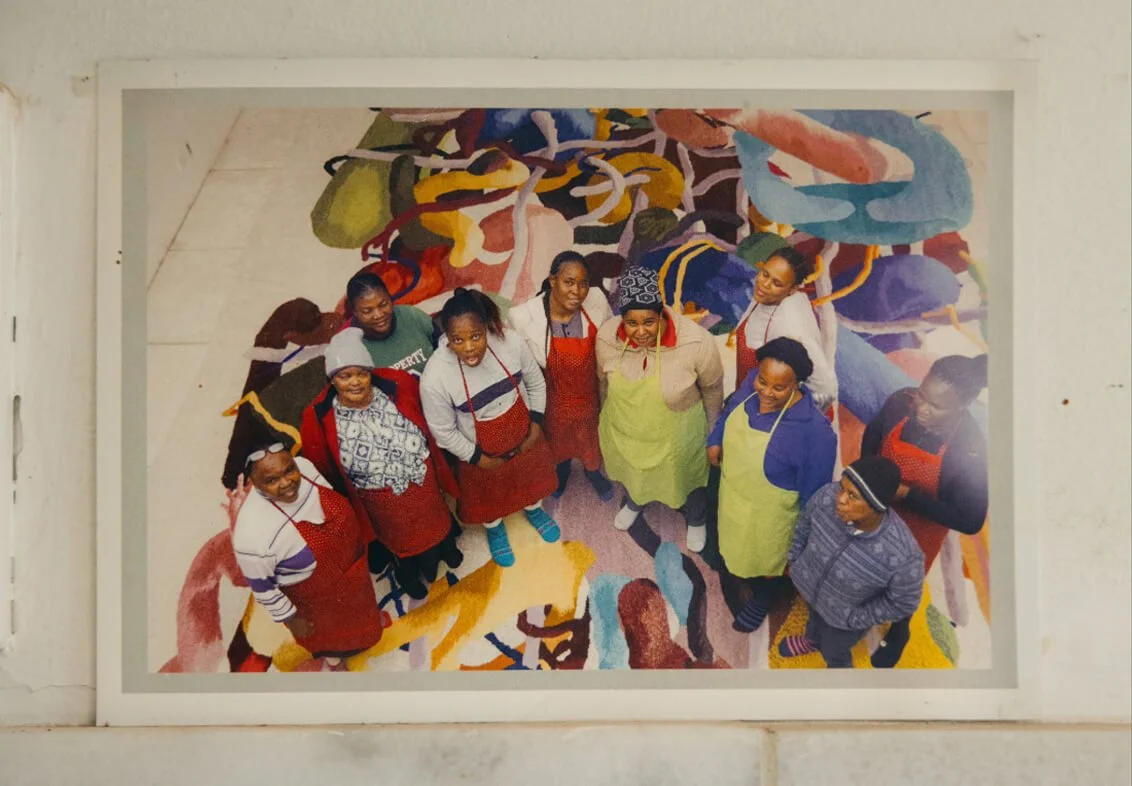
Weavers on Misha Kahn's Space Time Carpet.
Photo: Chloe Kenely
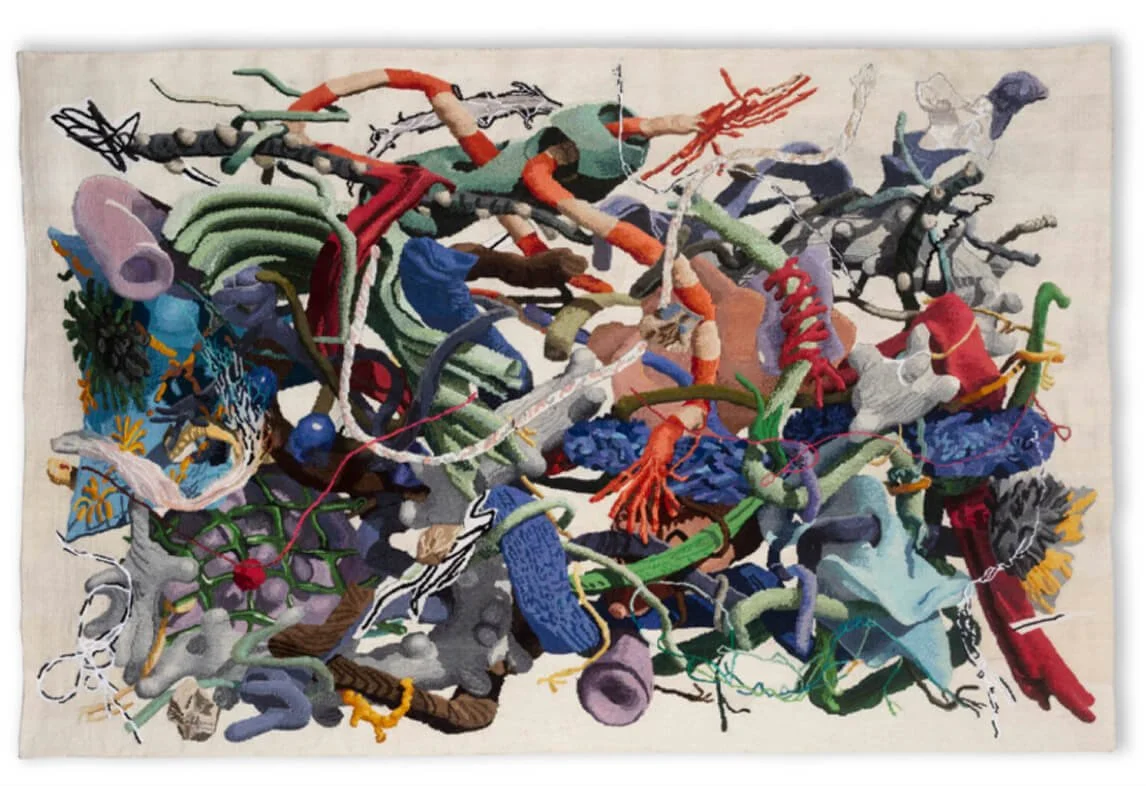
Swatching Space Time, a tapestry after a design by Misha Kahn.
Tina: Isn't that amazing? I hope you told everybody how impressed you were.
Mags: I did. I don’t know whether they were listening.
Tina: It's an enormous honour to have you, the greatest, say that you're impressed.
Mags: Well, certainly, I was given a head start because I was taught how to do a lot of weaving, even at university. So, the fact that I did it, gave me an advantage. And I had much more patience than you, especially when sitting at the loom.
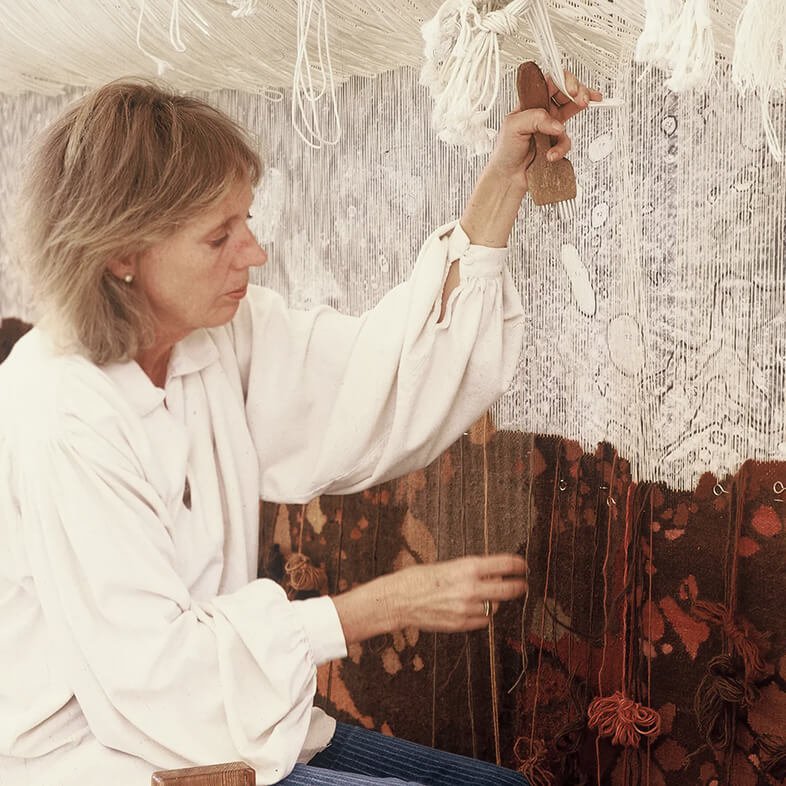
Mags working on the loom (1990s)
Tina: I've got no patience at all.
Mags: I could sit a whole day at the loom and be extremely happy.
Tina: I'm hoping that I've taken the studio a step further, in the production and the way things are happening, and also by bringing in new artists. But your history and understanding of craft are much deeper than mine, because you actually sat down and wove the first tapestries.
Tina working on the cartoon and colours for the tapestry Vision of Ezekiel, after Raphael — the first Renaissance design the studio has worked on, and the first one made in wool.
Photo: Chloe Kenely
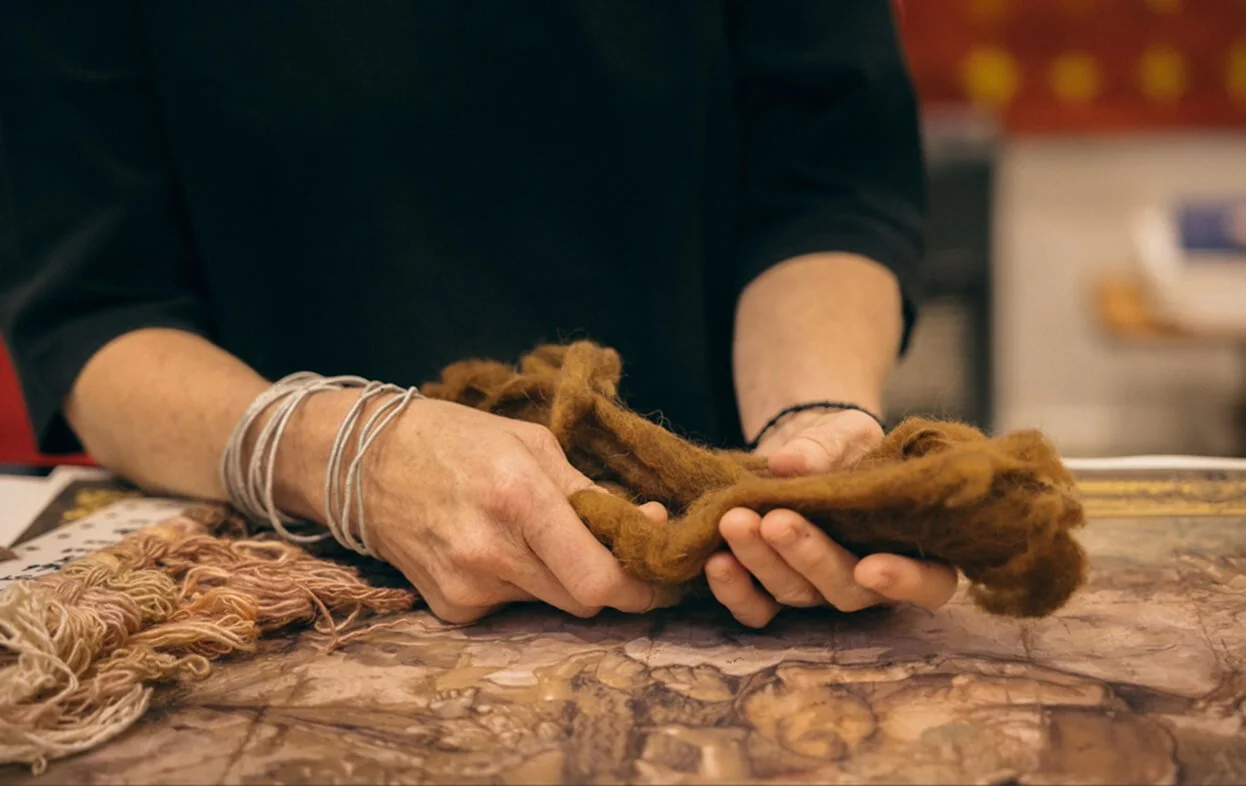
But it's interesting that you never used wool. This is the first time with the Raphael design that we are actually going to be using wool solely in a tapestry.
Mags: Wool was too expensive when Coral started weaving, and even when I started, wool was much more expensive than mohair. Coral and I also loved how silky mohair is and how it has a sheen that you can’t get with wool. It also spins so well. The strands tend to be longer than those in most types of wool. It also doesn't felt or mat as easily as wool does.
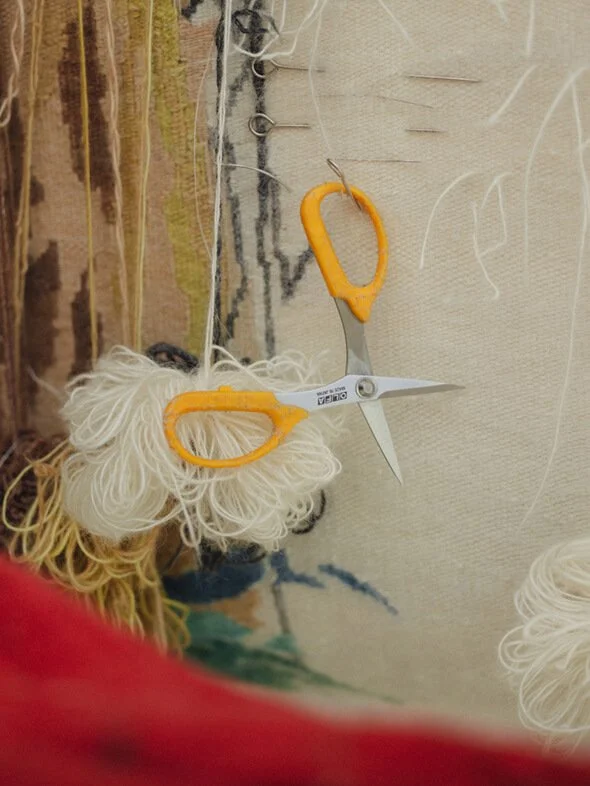
Detail of Charles Mingus, designed by Sam Nhlengethwa, on the loom.
Photo: Chloe Kenely
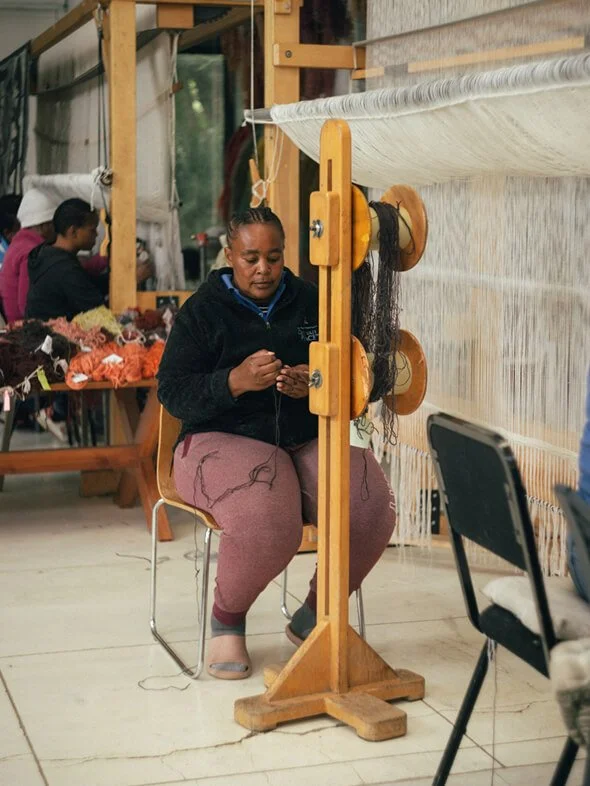
Mercy, bobbin winder at the studio, loading thread onto bobbins for the loom's shuttles. Photo: Chloe Kenely
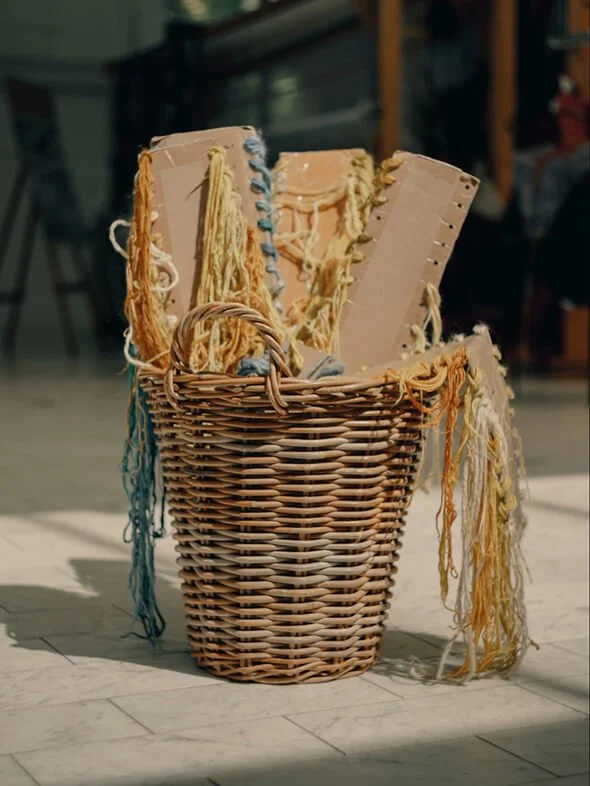
Basket with some of colours selected for Winged Garden, the tapestry designed by Catherine Goodman.
Photo: Chloe Kenely
Mohair is way more expensive now. The Chinese market has created a lot of demand because people started learning more about mohair and realising how luxurious it is. It took quite a lot of careful farming and selective breeding, though, because initially the goats were a variety of greys and blacks. Now there are mostly only white goats, and obviously this makes it makes desirable because it can be dyed more easily.
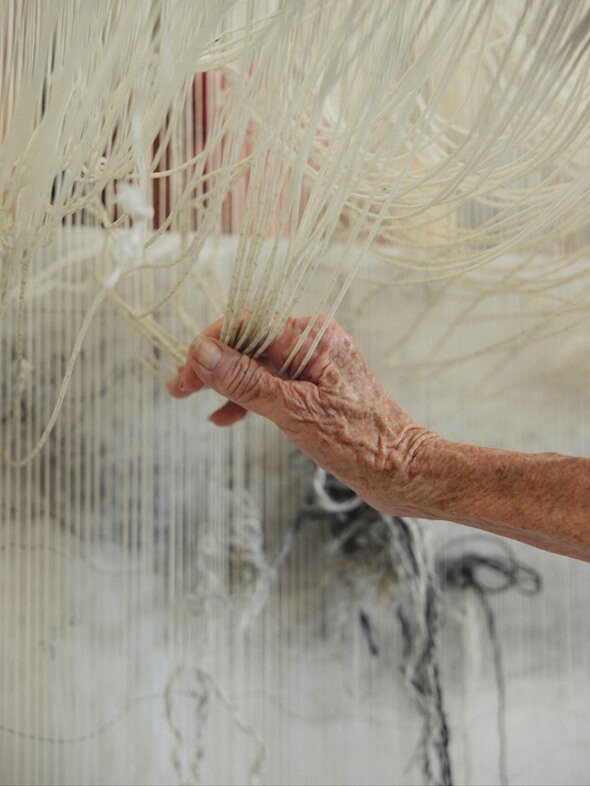
Mags at the studio.
Photo: Chloe Kenely
Mohair wasn't available to the average person who was weaving tapestries in the 15th century. But if it had been available, it probably would have been used for tapestries.
Tina: I’ve learned so much in such a short period of time. But I think you have forgotten more about weaving than I will ever know.
A utopia at Home
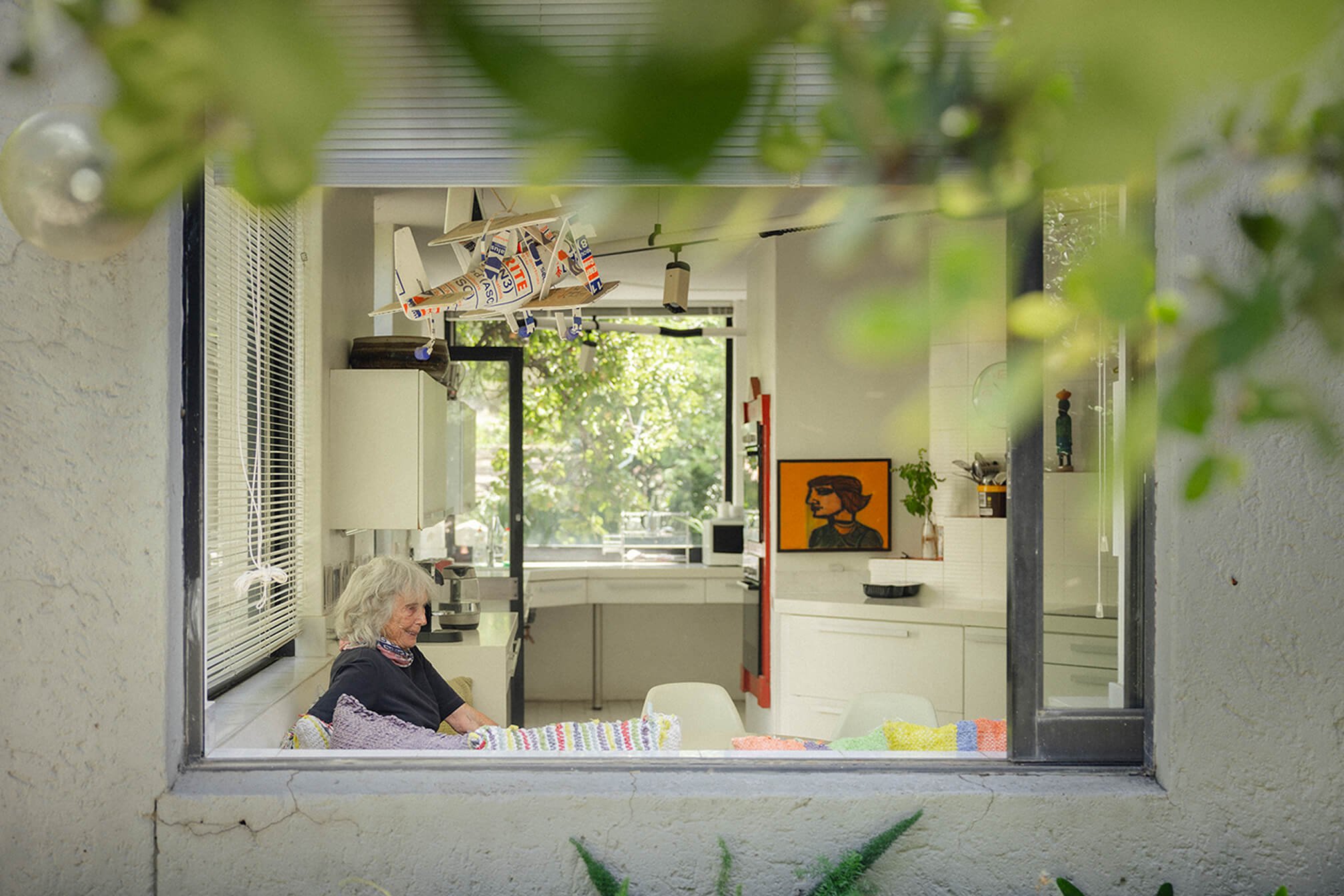
Mags in her kitchen, next door to the studio.
Photo: Chloe Kenely
Tina: In 2016, you asked me to join the studio on a full-time basis. I had children, and they were very small at the time. It made a lot of sense because I was already living on this property where we have the studio.
How do you find having me living here, running the studio in your face and doing all of this?
Mags: You really want to hear?
Tina: Yes.
Mags: It's fantastic. I'm in my 90s, and if it weren't for this, I'd be sitting on my tod, not having any communication with anybody, probably in an old age home because I can't see as well as I used to. Instead, I've got this activity, this whole industry happening around me in my own house.
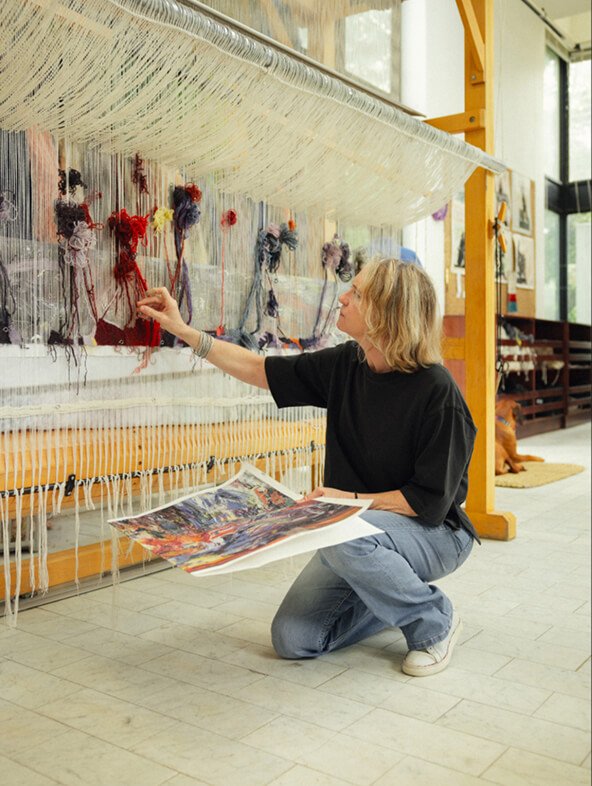
Tina at work on Catherine Goodman's Winged Garden tapestry, on the loom.
Photo Chloe Kenely
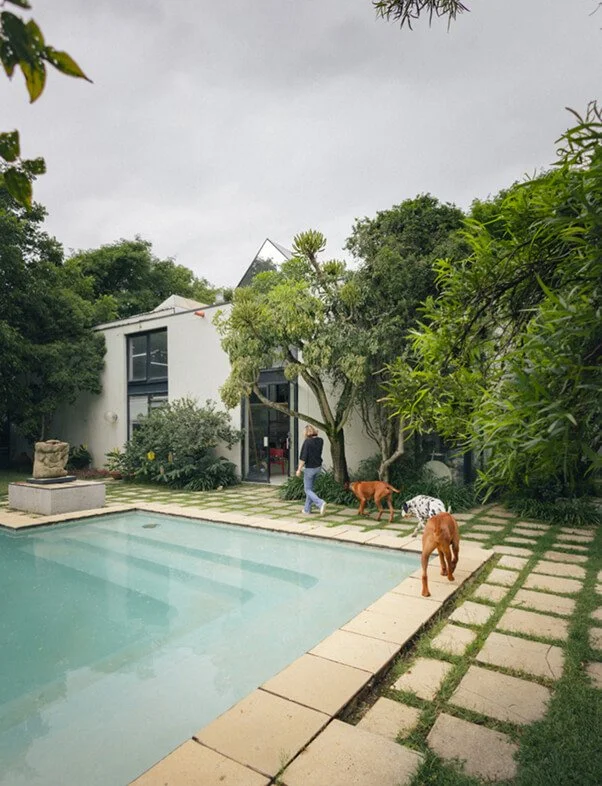
Studio’s entrance within the property.
Photo: Chloe Kenely
I love it. Absolutely; what a utopia.
I love these tapestries. I love the whole feeling that the studio was built and is used properly, and that there's more to come, with other things happening down at the bottom of the property, including the new studios for the mohair and the exhibition space.
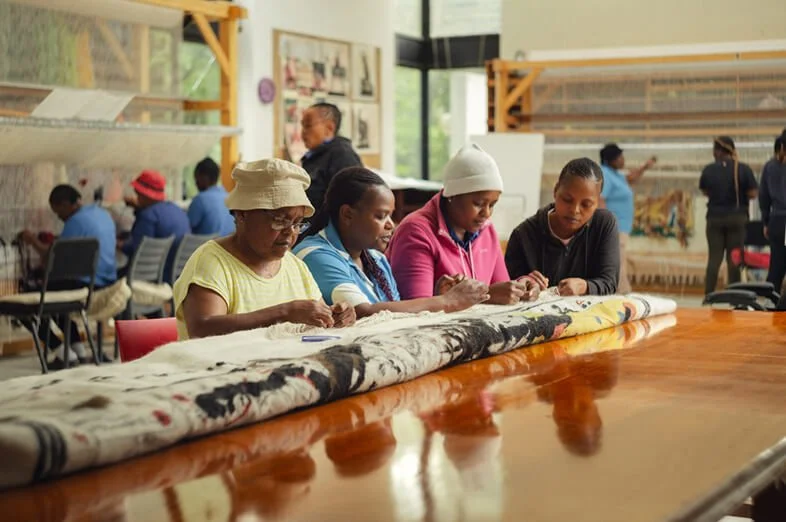
Weavers Gladys, Fortune, Sibongile and Blessing finishing a tapestry after William Kentridge, trimming and neatening the piece at the studio.
Photo: Chloe Kenely
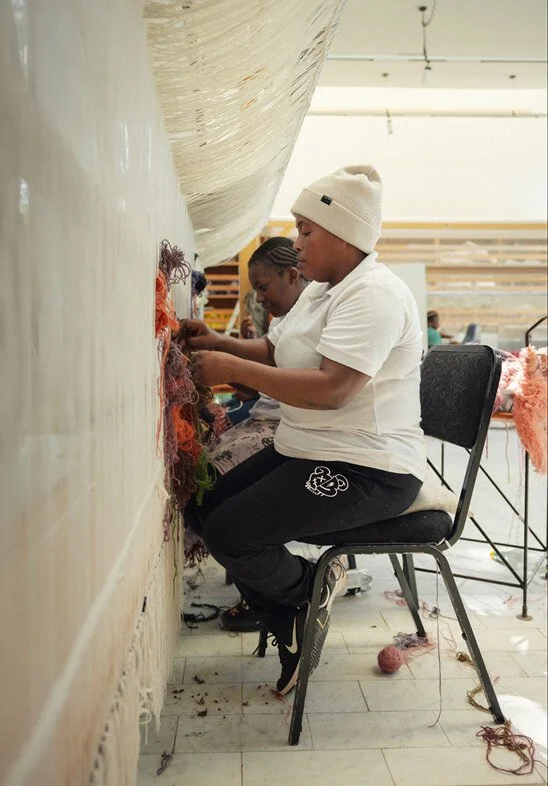
Treasure Zulu, the studio's head weaver, weaving Catherine Goodman's Winged Garden.
Photo: Chloe Kenely
It doesn't stop.
Tina: No. It hasn't stopped.
Mags: I really consider myself 100% lucky and don't even think about going somewhere else.
Tina: I wouldn't dream of it.
I’m really lucky because I can ask you to come into the studio and have a look and give advice. What’s really amazing is you've never, ever told me I'm doing anything wrong, never criticised me.
Mags: No, sometimes I'll say, “I have to think about what you are doing.” Or I look at the design and say, “wow, that looks difficult.” And then I'll say, “I'm going to try and get my head around it.”
Nothing can be more dreadful than having negativity.
Tina: No, you've never been negative. You've been phenomenally generous. There is a very special generosity that is inherent in you.
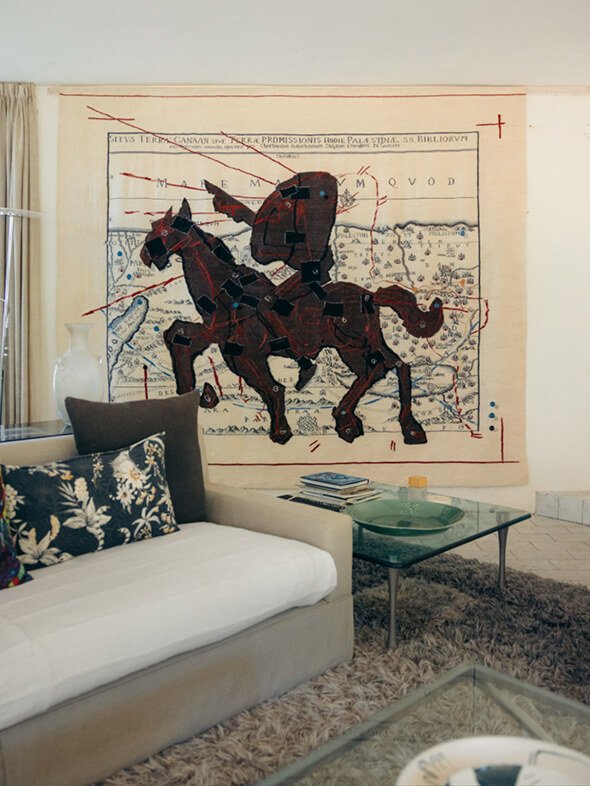
Promised Land by William Kentridge, at Mags' home. Black is almost entirely absent, as it is throughout Mags' interpretations of William.
Photo: Chloe Kenely
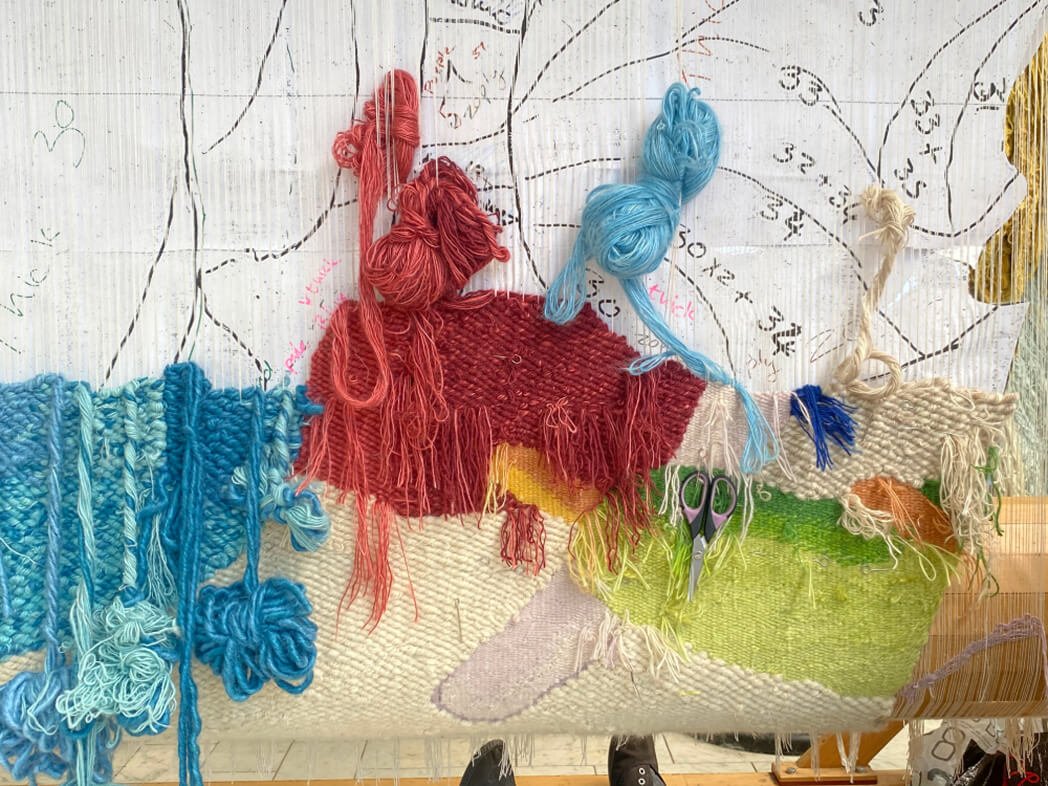
Alaskartica Deannexation by Misha Kahn on the loom.
Photo: Tina Weavind
But I remember when we had the big Misha Kahn carpet, and you were like, “No, this can't happen.” Then I was like, “It's going to happen.”
Mags: It was pretty amazing because that carpet was so enormous it had to be woven on two looms.
The two sides were woven simultaneously, like a jigsaw puzzle, so it didn’t have a ridge where the two sides met.
Tina: It really was like a jigsaw puzzle.
Mags: It was fantastic. You could never see that join.
Tina: But do you know how amazing the weavers were in there?
Because I was like, “This has got to work. It's just got to work. What are we gonna do?” Eventually, everybody was so irritated with me; they said, “It’s going to work.”
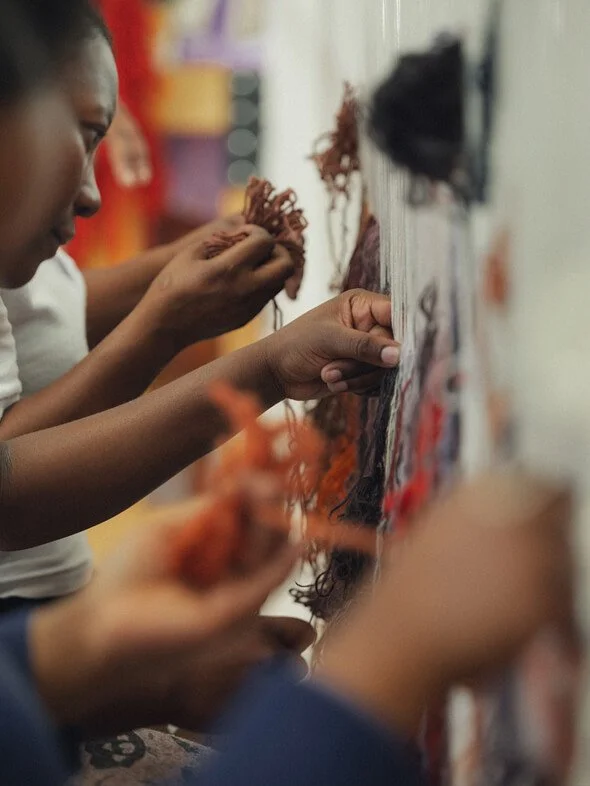
Weavers working on Winged Garden, designed by Catherine Goodman. Photo: Chloe Kenely
Mags: It was fun, but the tapestry was going to be put on the floor with furniture on top.
Tina: I've always thought that we should have a tapestry and make it a bathmat.
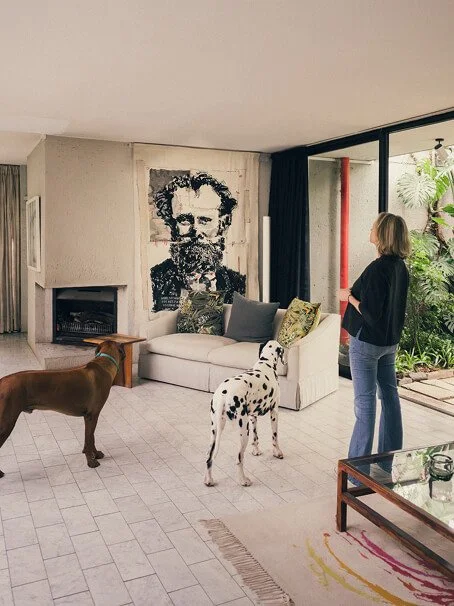
Tina in Mags' home next to Monsieur Manet by William Kentridge.
Photo: Chloe Kenely
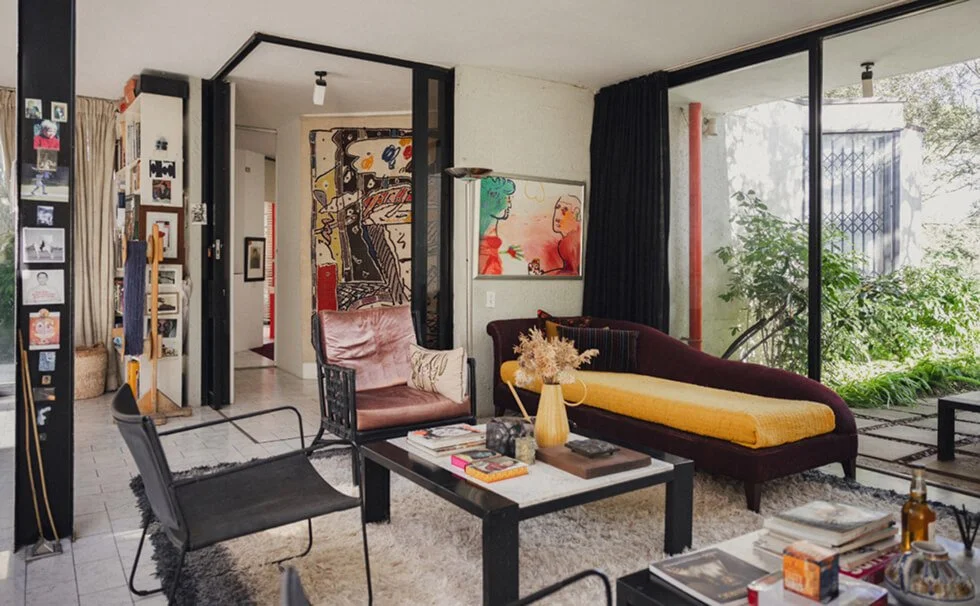
Mags’ living room.
Photo: Chloe Kenely
Mags: I think you can get over yourself on that one …
Tina: No, okay we're not making a bathmat, Mum.
Art is everywhere
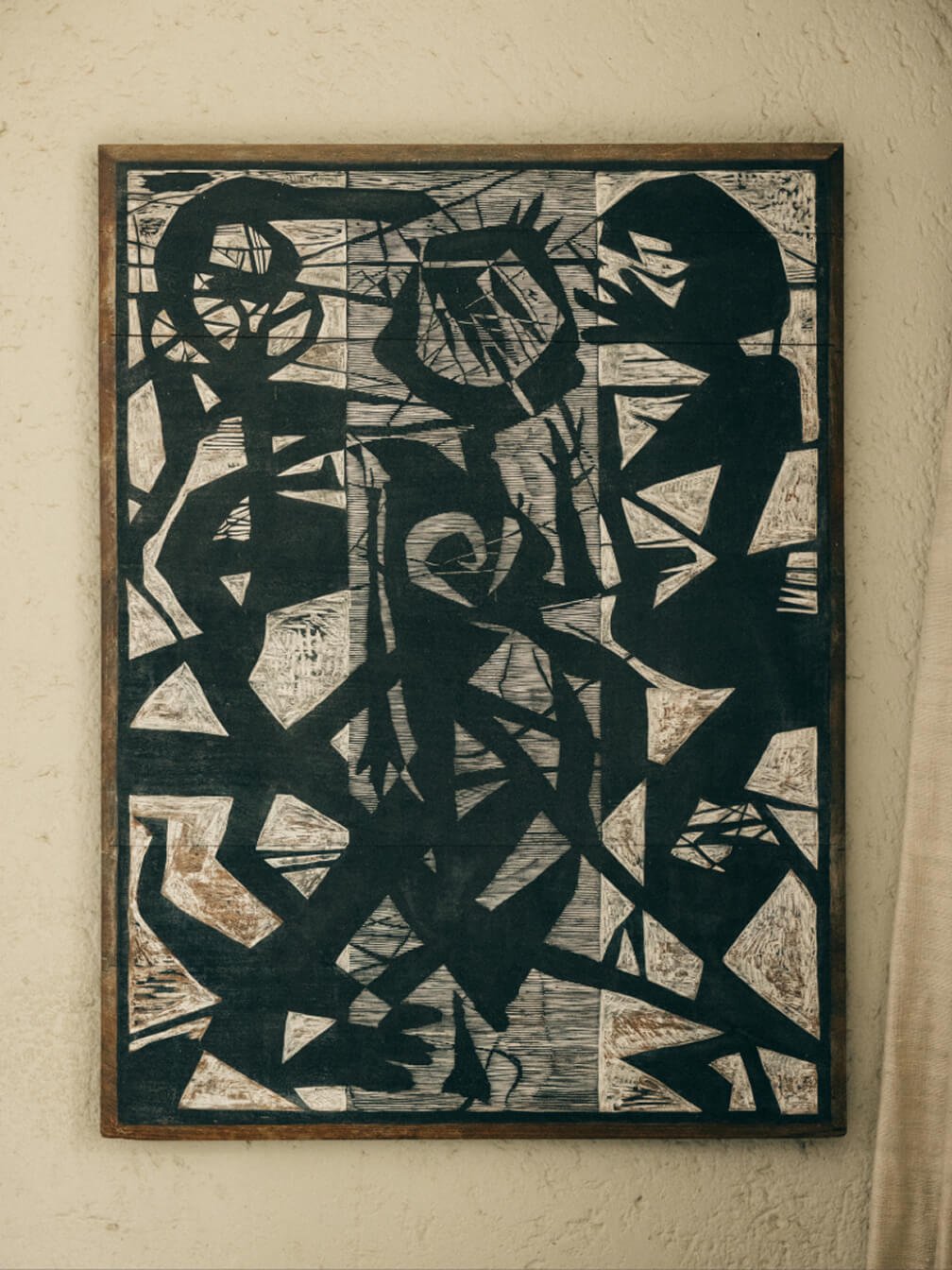
Three Figures, woodcut artwork by Cecil Skotnes, at Mags' home.
Photo: Chloe Kenely
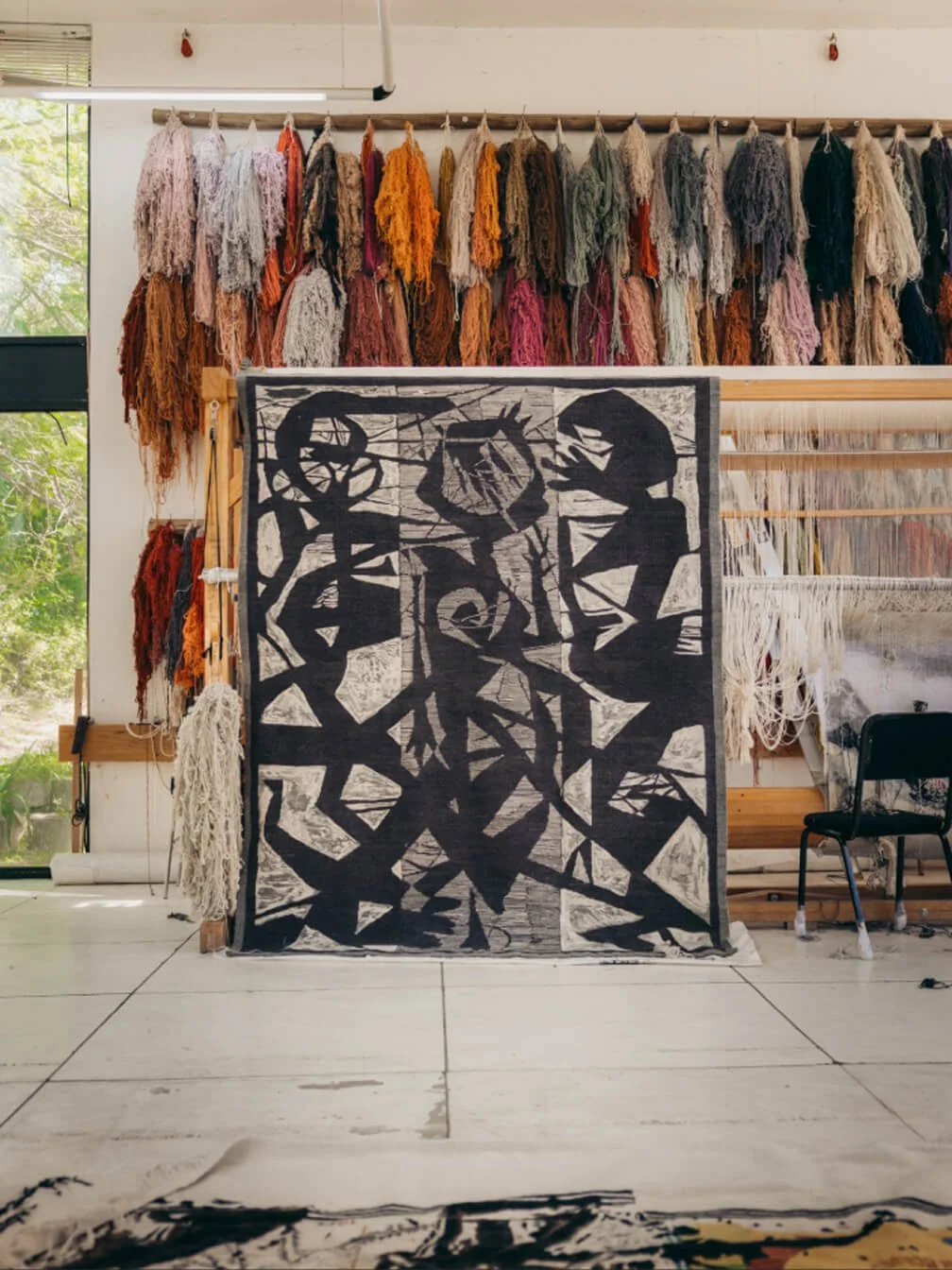
Three Figures Tapestry, after Cecil Skotnes, as interpreted by Mags.
Photo: Chloe Kenely
Tina: Even so, it would have been art. There is art everywhere; there always has been. There was art on the walls. There was art on the looms. There was art everywhere.
Mags: What we were doing was a craft, but the work was an artwork. You can't look at a tapestry and say it's craft; it's an artwork created by craft.
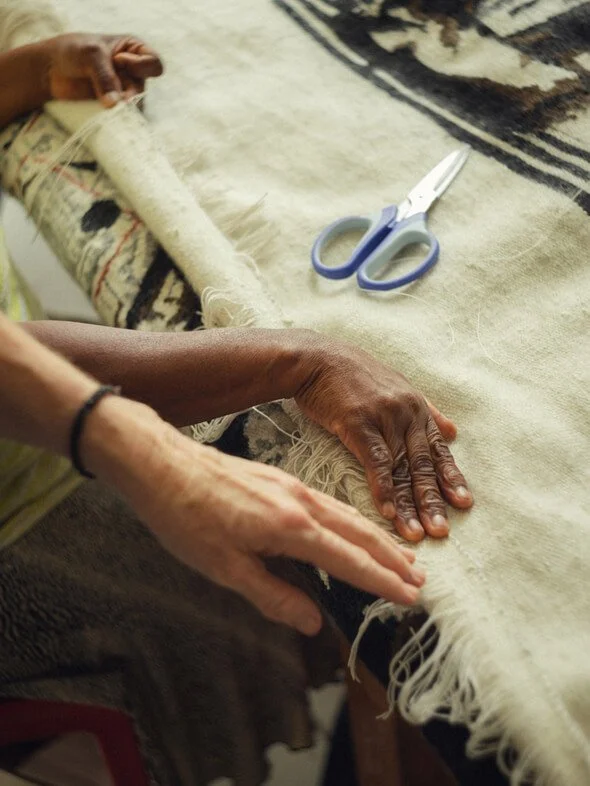
Finishing one of the tapestries by William Kentridge.
Photo: Chloe Kenely
When you're doing painting, is it a craft or is it an art? When I take up a paintbrush, is that the craft of painting? Once it’s painted through it becomes the artwork.
Tina: There is a big crossover. If you're making a sculpture, the process of making it has got to be a craft – you can call it an art if you want to, but there is art in weaving. By the same token, if you're going to use the word ‘art’ as a skill, there is an art to handling my dogs.
When the tapestry is then woven, and you look at it, what has it gained in being made into a tapestry?
Mags: It gains another dimension. The line is never exactly the same. The colours don't necessarily have to be exactly the same, but the basic artwork is put into another context. I can't say that it's ever diminished.
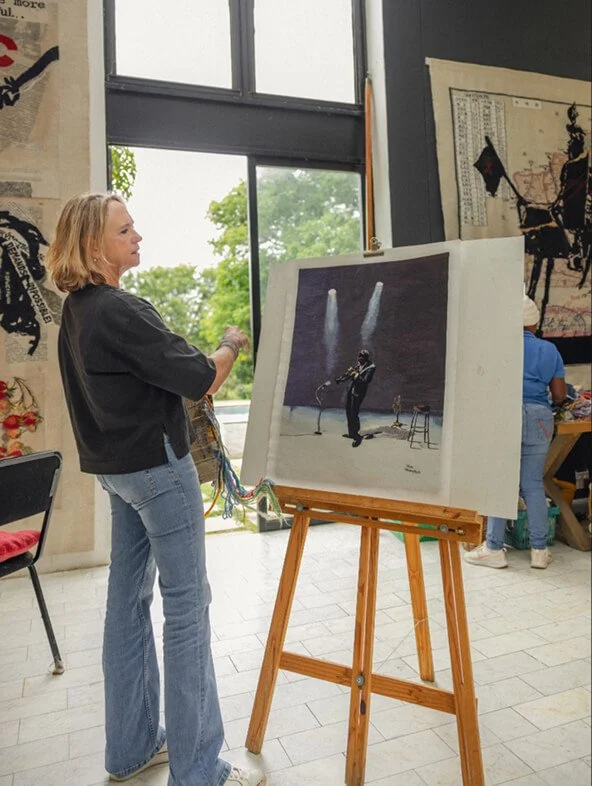
Image reference of After Miles Davis by Sam Nhlengethwa.
Photo: Chloe Kenely
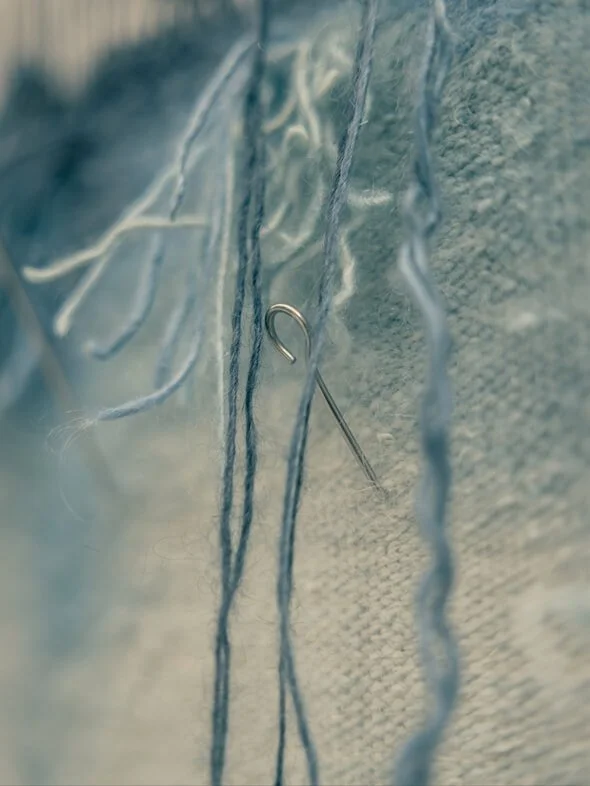
Detail of After Miles Davis while on the loom.
Photo: Chloe Kenely
Tina: What’s interesting is, if you look at the older tapestries, the borders are often really fundamental to the piece. But when you look at the cartoons they never had borders, so they were basically something created apart from the artist. They would be something the weavers and the patrons would design.
One of the things about tapestry is the blending of colours, when you mix two colours of paint, like red and blue, you will get purple. If you add a red thread with a blue thread, you're going to get red and blue threads. You can get the sense of purple by adding increased gradients of the two colours so the transition becomes seamless.
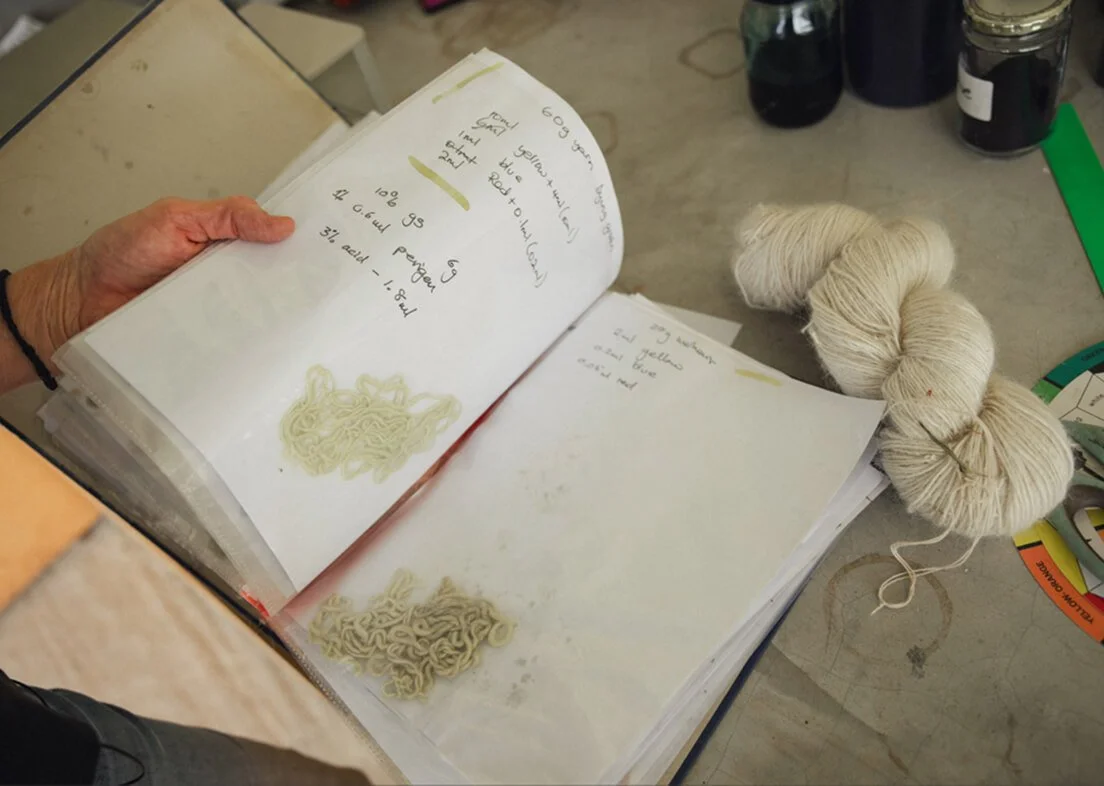
Mohair dyeing recipes per colour.
Photo: Chloe Kenely
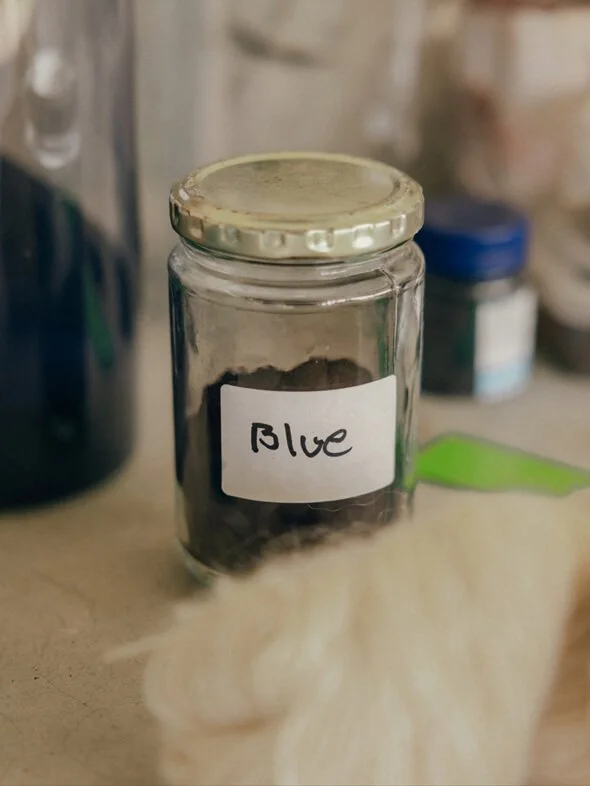
Blue pigment to dye mohair.
Photo: Chloe Kenely
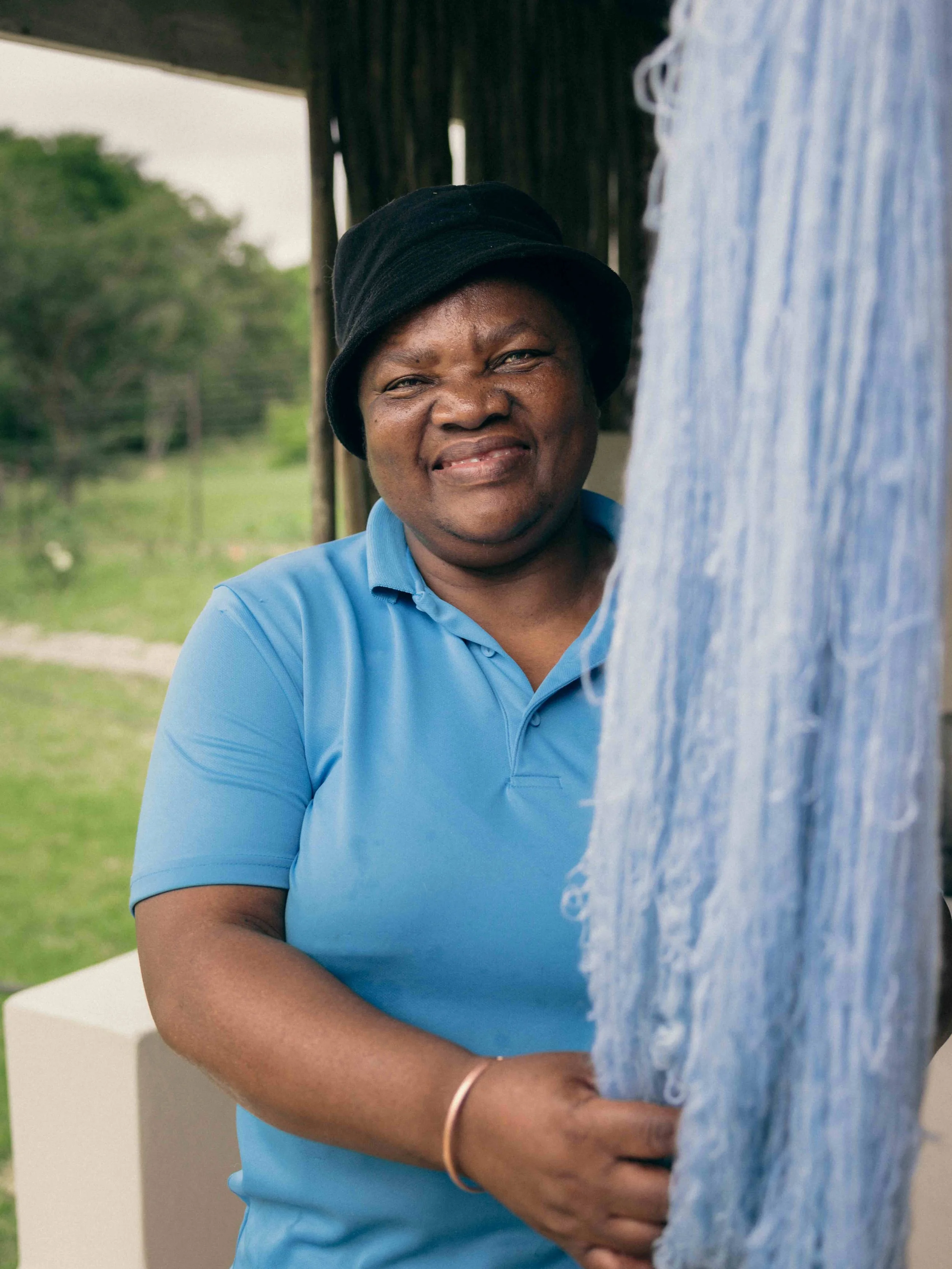
Phelili, the dyeing expert at the studio, colouring the mohair.
Photo: Chloe Kenely
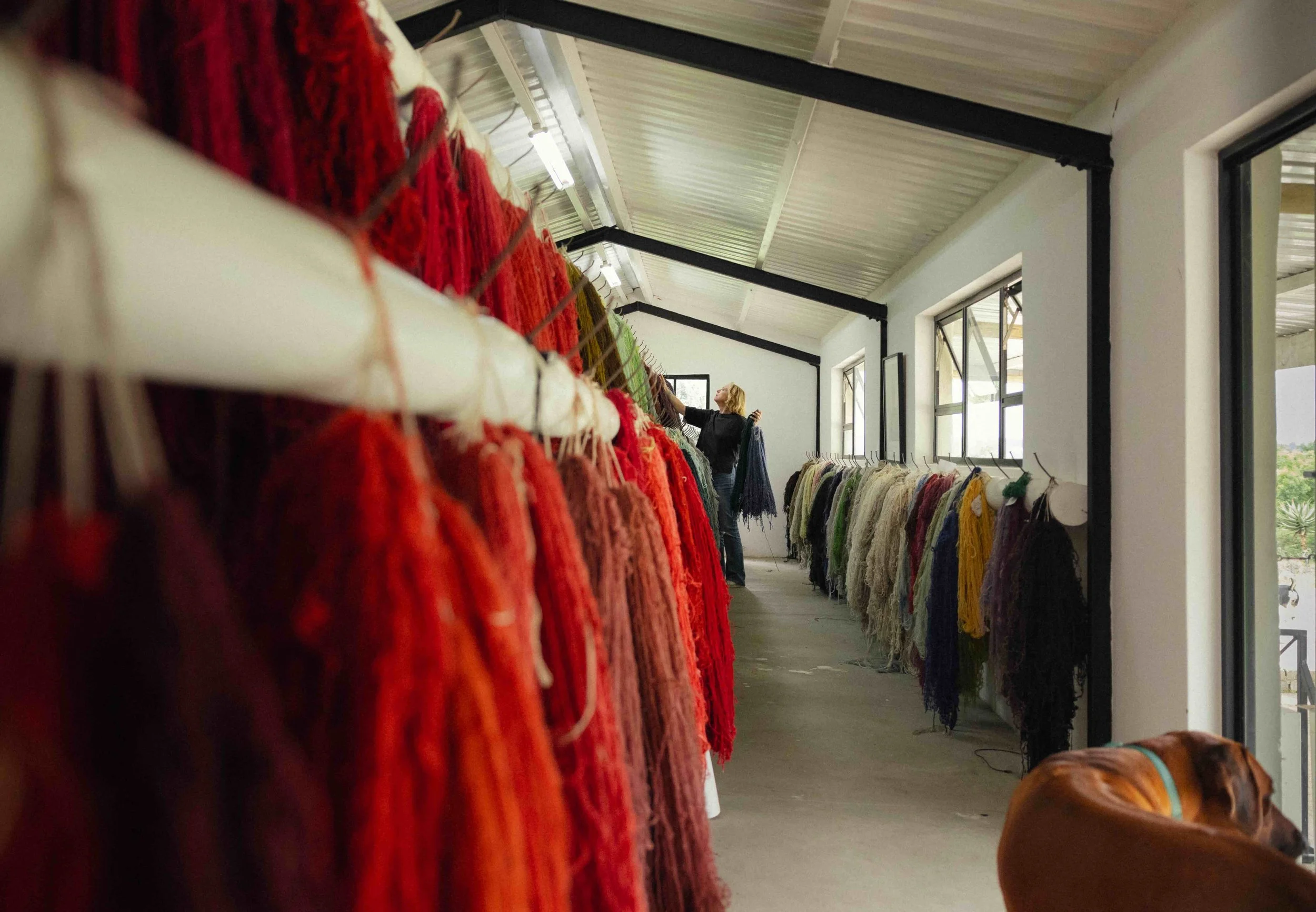
Tina in the mohair shed.
Photo: Chloe Kenely
Mags: There are different ways of doing it because you can also dye the unspun mohair and then mix the colours during the carding process, like we do with shades of grey.
Tina: Yes, that’s right. You add more or less of each colour to get the right shade.
Mags: I think the best example of how we’ve done our blending is in some of William Kentridge’s Porter Series tapestries. We started with the natural pale white, and then we'd mix two strands of white with one shade of 3, which was very pale grey. Then one white with one 3, then just 3 on its own. Then 3 would be mixed with 2 and 4, and it would go up to 5. The weavers were fantastically good.
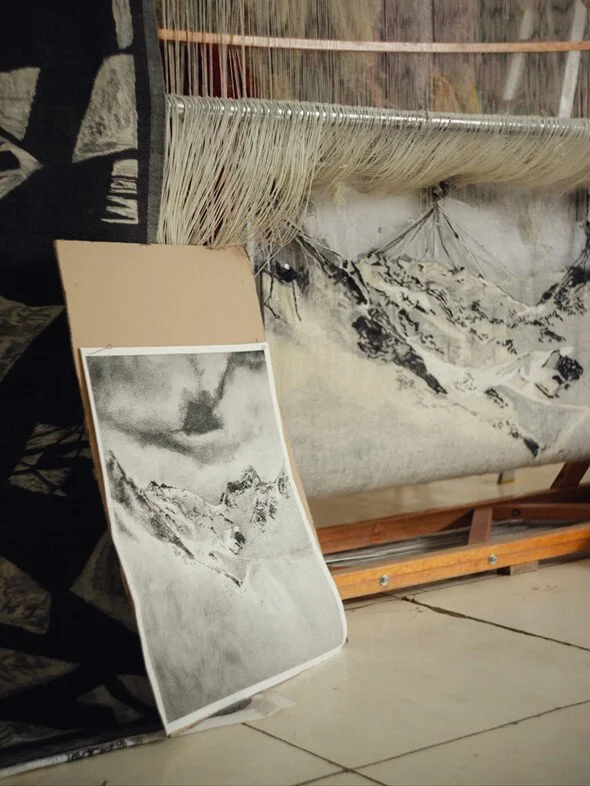
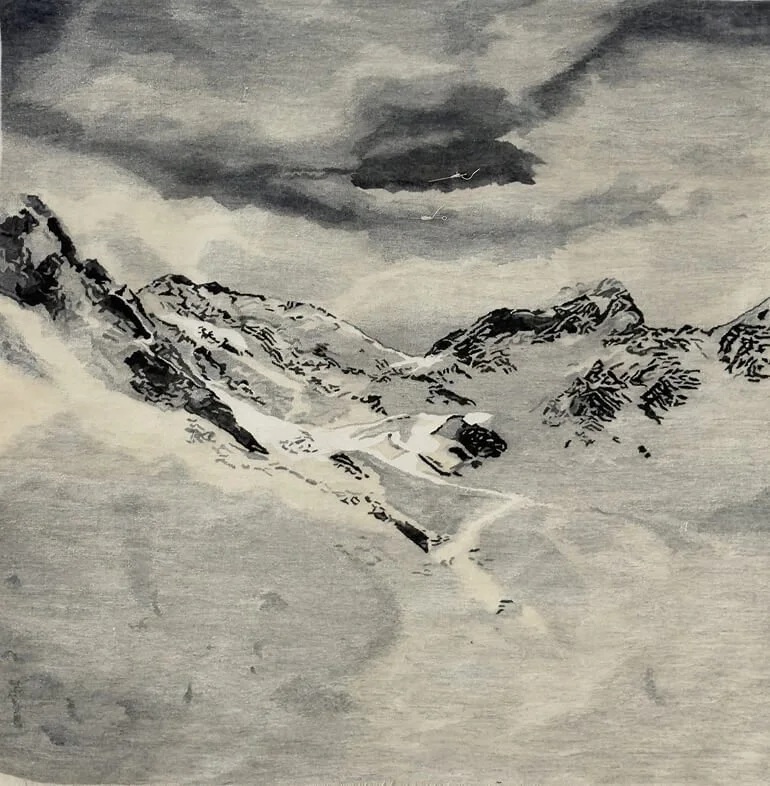
Tina: That's what's happening with Helena Boas’ tapestry.
Mags: This method is a bit boring for everybody, but I'm telling you, you can do it.
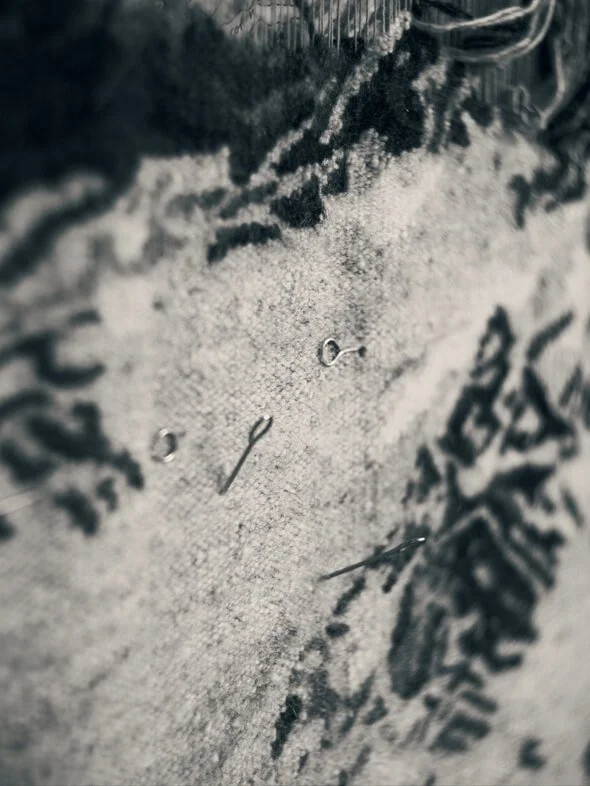
Details of the tapestry while on the loom, and the finished work, designed by Helena Boas.
Photo: Chloe Kenely
Tina: You've often had artists come to you, and you’ve told them their work is too difficult.
Mags: Sometimes it's quite hurtful to say you won’t do their work. So you say, “I actually haven't got time at the moment, but can I just take a photograph and leave it with me?” But, for instance, William wasn't unhappy at all on one or two occasions when I said, “Sorry, William, I can't weave this.”
He was a bit taken aback, but he behaved extremely well. There have been people whose work I really couldn't bear to weave.
Tina: I remember you saying sometimes that certain work would not translate well into a tapestry.
Mags: It was a very good way of putting it to the side.
Tina: Of telling people that you didn't like their work.
You see that when it comes to me, I'll just say, “Yes, for sure. I'll do it. No problem.”
It just seems that I keep getting more and more difficult things.
Mags: You can't get more difficult and complicated than Catherine Goodman. Her work is going to be spectacular.
Tina: It should be fine, because I'm not trying to make it three-dimensional. Also, with Catherine's work, there is a certain freedom to play with. I really think that her work is fantastic in a tapestry. Big and bold.
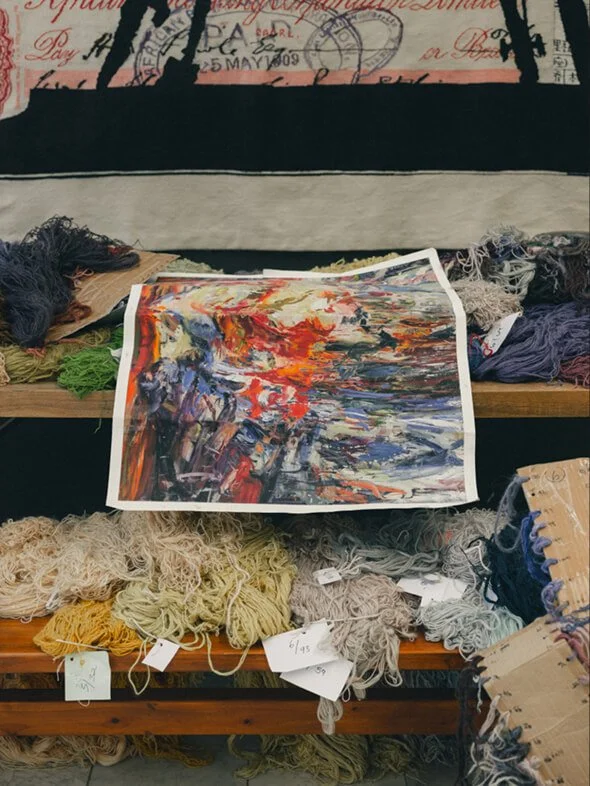
Mohair for Catherine Goodman’s Winged Garden Tapestry.
Photo: Chloe Kenely
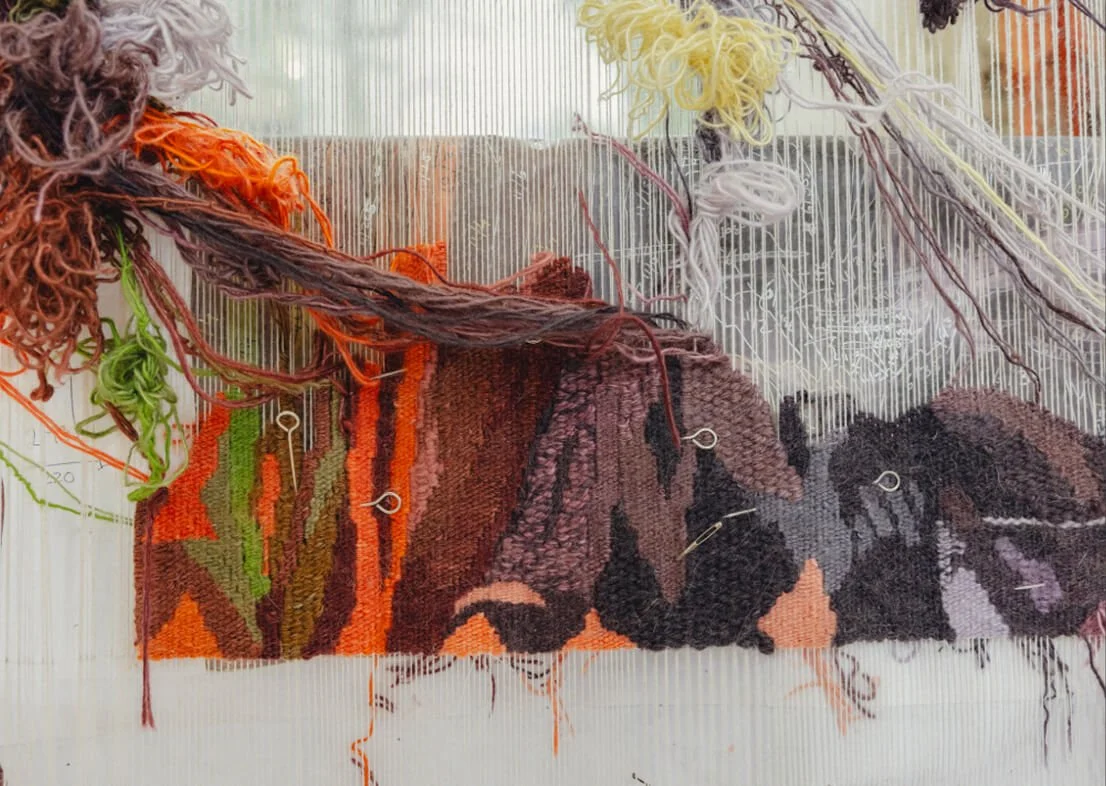
Detail of Catherine Goodman’s tapestry while on the loom.
Photo: Chloe Kenely
Mags: Tapestries are supposed to be big. The reason tapestries are huge is that they're not necessarily only decorative. They were used for other reasons as well. The bigger the better.
Tina: I just love the scale of them, the drama of huge tapestries.
Mags: But they also become untenable because people can’t accommodate the size. It's a luxury to be able to do it.
Tina: There is nothing quite as exciting as walking into a room or a gallery that's just huge and full of tapestries. They really are exciting.

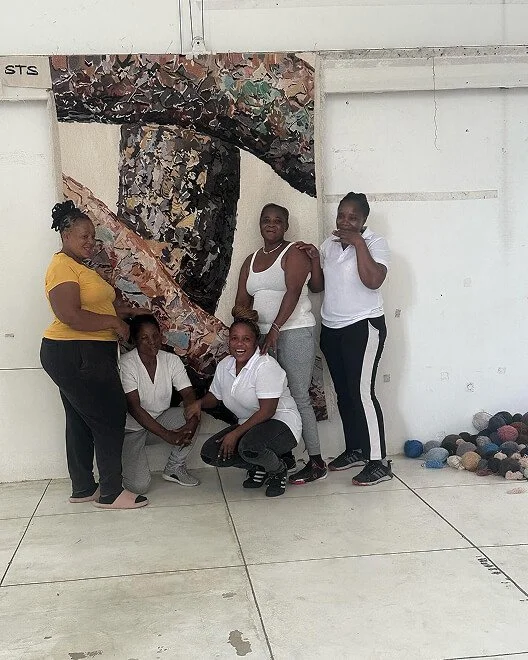
Studio weavers Margaret, Rhodah, Mercy, Mumcy and Treasure.
Photo: Tina Weavind
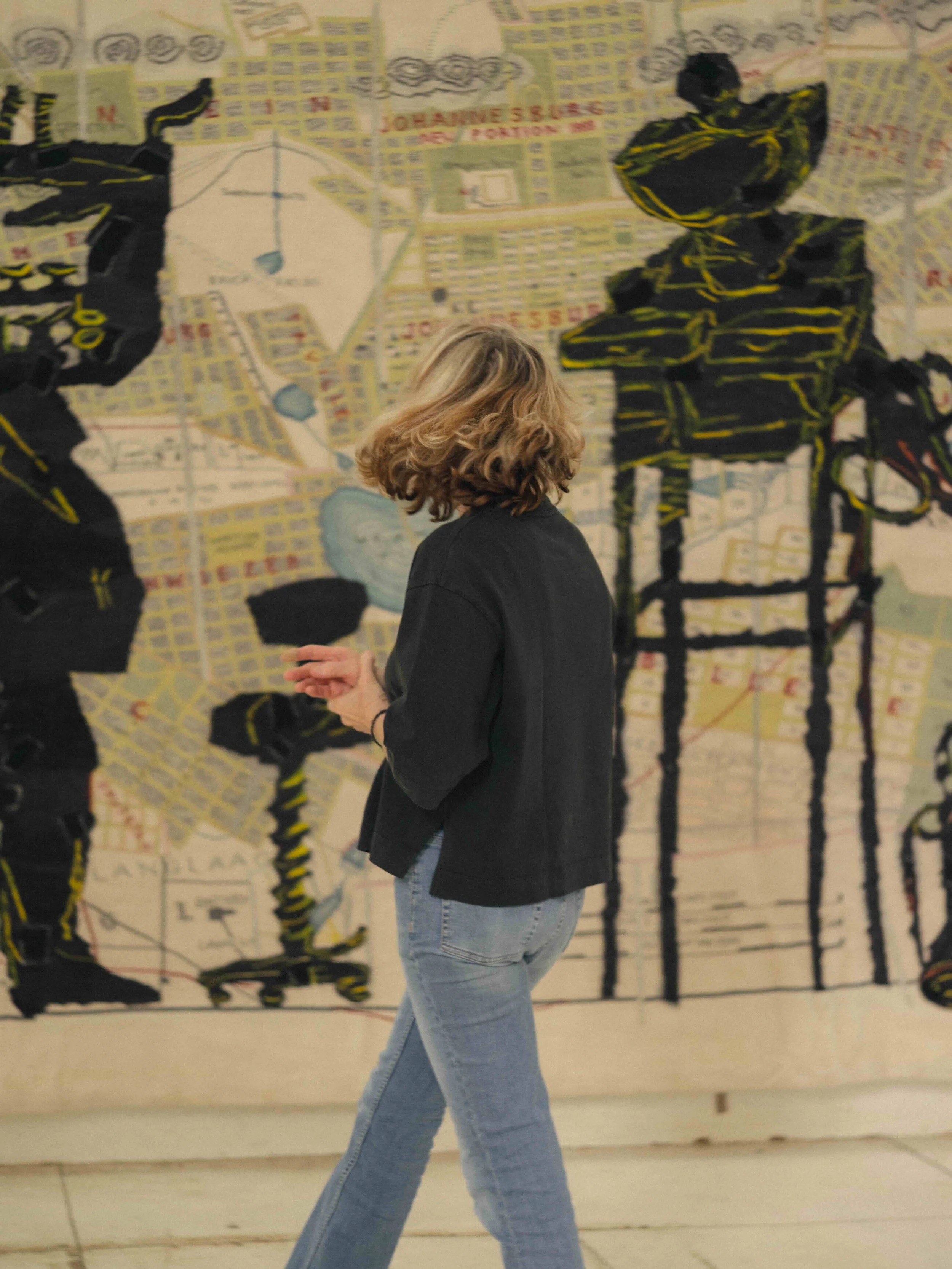
Tina and Office Love by William Kentridge.
Photo: Chloe Kenely
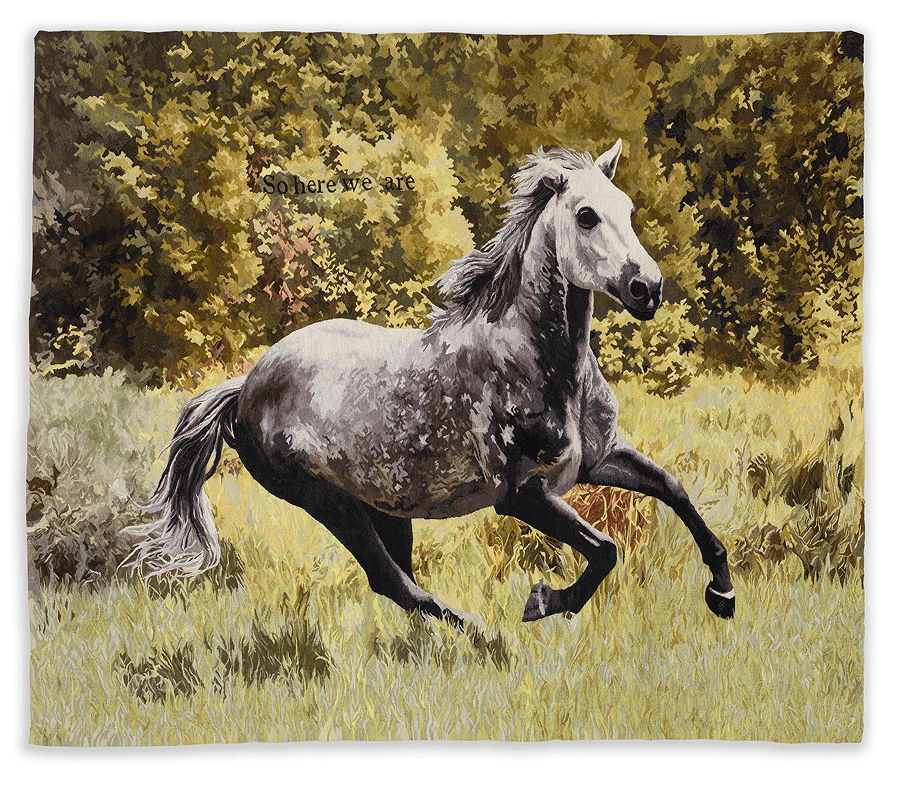
One of the most challenging tapestries the studio ever made.
But there are some absolutely beautiful small pieces I've seen in Europe, or even in places in England. Utterly beautiful, but small, without trying to be a wall hanging. They're a specific type of work that is an artwork in its own format.
Mags: That's fantastic. I've also seen some very interesting ones where people are doing experiments with different kinds of weaving that have a fragility that is really beautiful.
Tina: Whatever we make, we need to make sure that it's as good as it can be.
The End of the Matriarchal Line
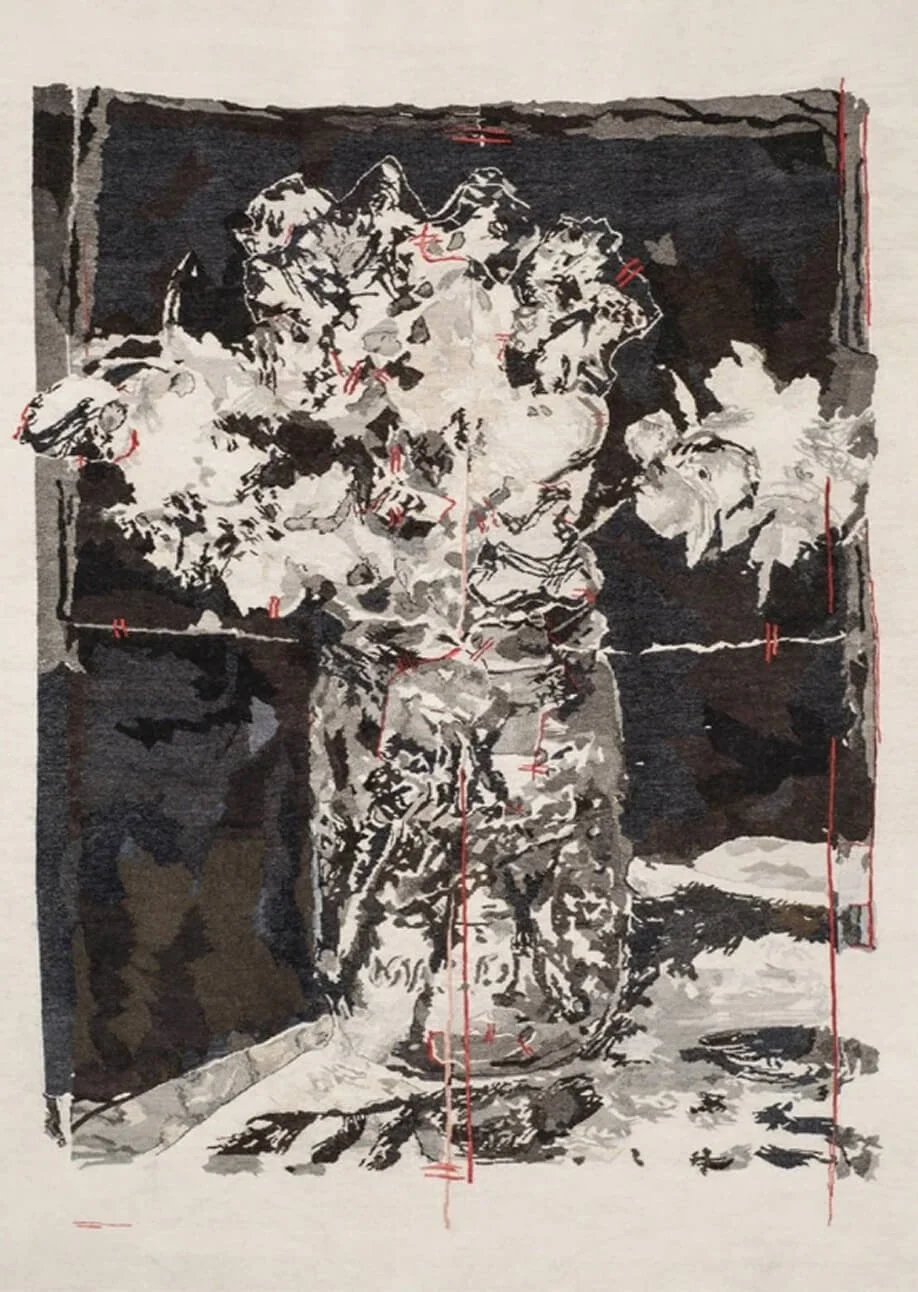
Flowers for Suzanne, a tapestry after a design by William Kentridge.
Tina: At this point, my sons aren't going to be picking up any of this, and I can't see what’s going to happen in the future.
Mags: Maybe there's an artist who is interested in textiles and carrying on. You never know.
Tina: But, Mum, people have got their lives. No one has been immersed in it for their whole lives as we have.
In the end, perhaps what happens is we shut the studio.
Mags: The tapestries have been made. They’re done. The only trouble is that it would leave a lot of people without work. There are all the spinners. There are the weavers in Swaziland, there are the washers, the dyers. There are an awful lot of people who rely on this. Maybe the government will take it over.
Tina: All those old weaving studios in Europe closed down, and people found other jobs. There comes a time. There's a cut-off point. Alternatively, the whole thing could be sold as an entity, but at this point, I don't see it going further than me.
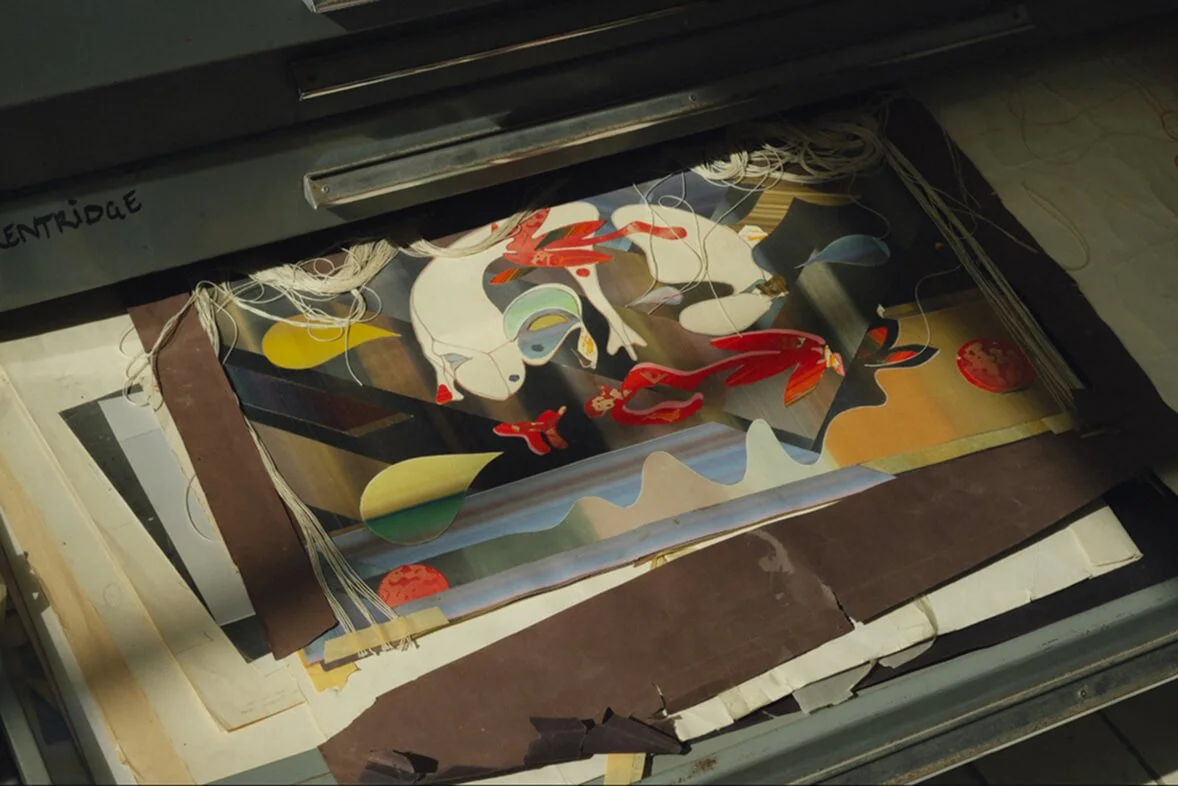
Artistis archive at the studio.
Photo: Chloe Kenely
Mags: I wouldn't like it to be sold to somebody using the same name.
Tina: No, they wouldn't have any of the intellectual property because they wouldn't get the cartoons. But from the point of view of whether they wanted to use the studio to make carpets, then that would be a different concept. They would not have the same history with the artists.
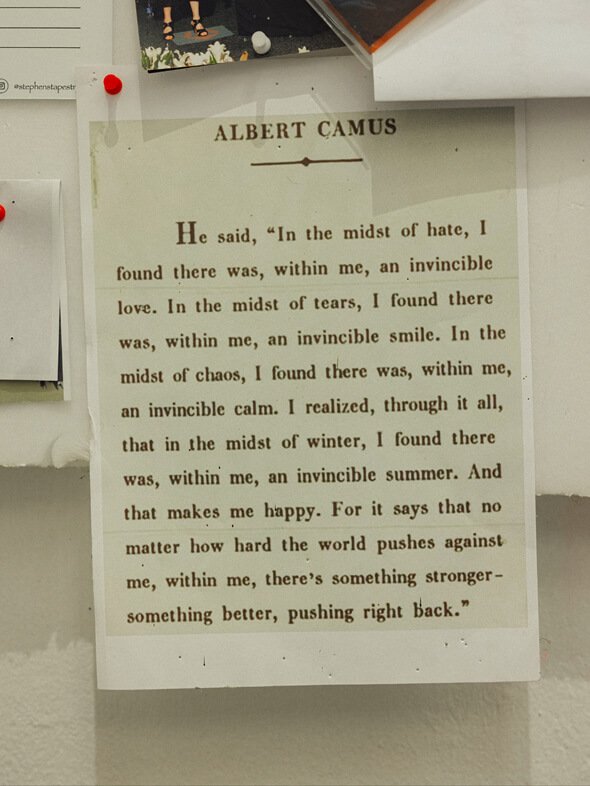
Albert Camus quote found in Tina's studio, part of her moodboard.
Photo: Chloe Kenely
Mags: Anyway, the point is, you will carry on doing this for the next 30 years. Won't you? Maybe 40.
Tina: 40 years? No, I don't want to do it till I'm 90. Good God.
A Swaziland connection
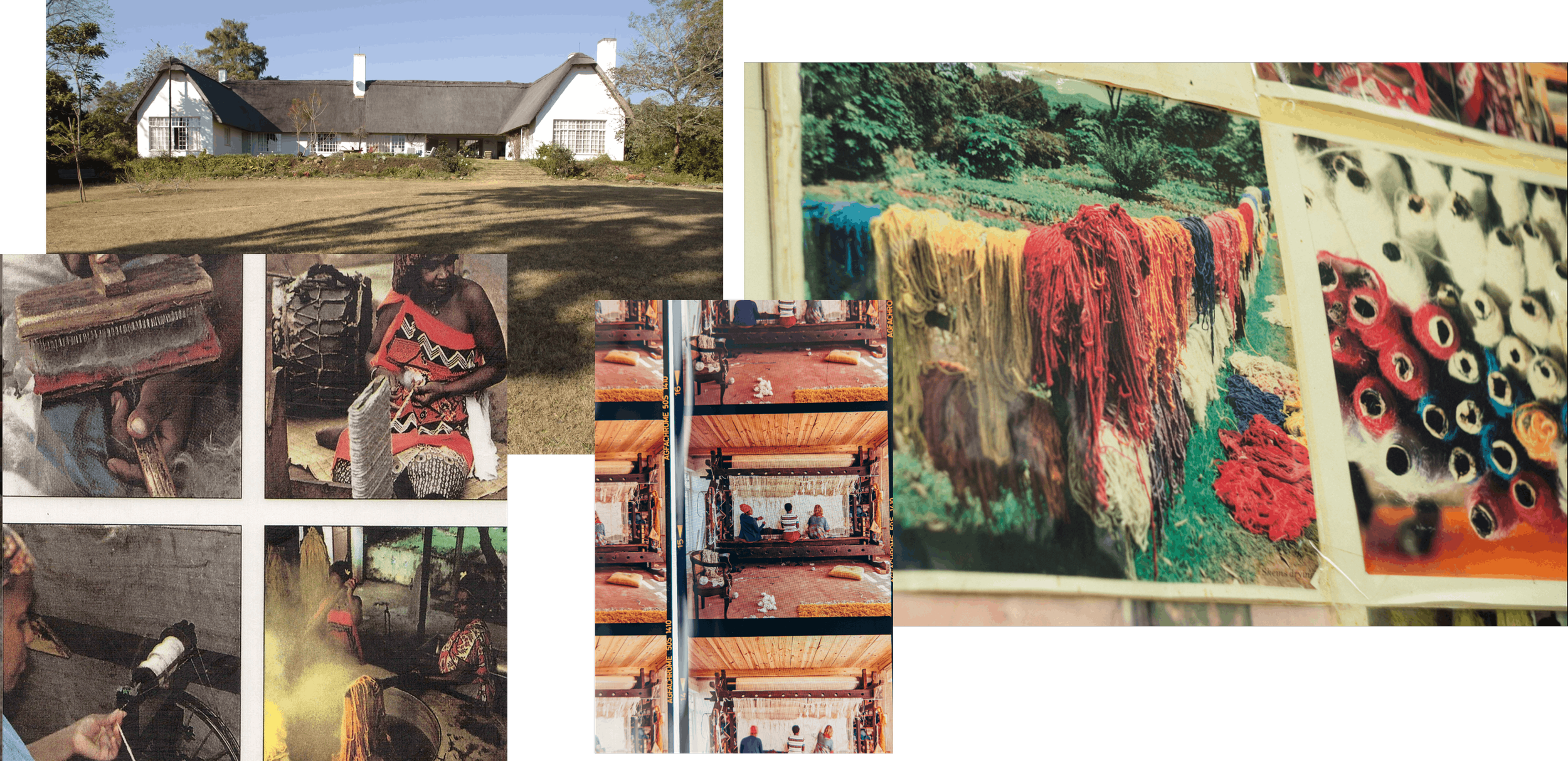
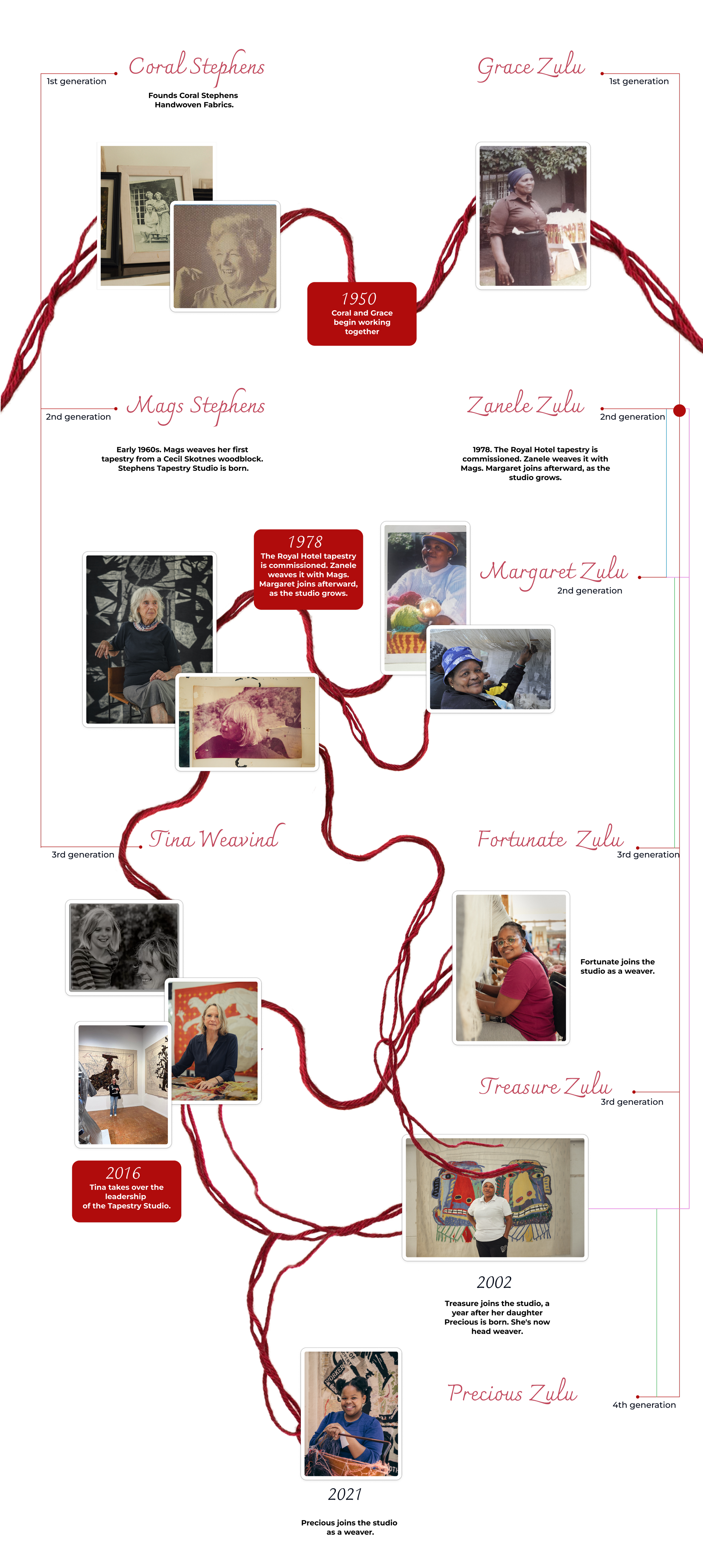
Two families, three generations each, bound by the same craft.
Coral Stephens
Founds Coral Stephens Handwoven Fabrics.
Grace Zulu
1950
Coral and Grace begin working together.
Mags Stephens
Early 1960s. Mags weaves her first tapestry from a Cecil Skotnes woodblock. Stephens Tapestry Studio is born.
Zanele Zulu
1978. The Royal Hotel tapestry is commissioned. Zanele weaves it with Mags. Margaret joins afterward, as the studio grows.
1978
The Royal Hotel tapestry is commissioned. Zanele weaves it with Mags. Margaret joins afterward, as the studio grows.
Margaret Zulu
Fortunate Zulu
Fortunate joins the studio as a weaver.
Treasure Zulu
2002
Treasure joins the studio, a year after her daughter Precious is born. She's now head weaver.
Tina Weavind
2016
Tina takes over the leadership of the Tapestry Studio.
Precious Zulu
2021
Precious joins the studio as a weaver.

Together they are Stephens Tapestry Studio
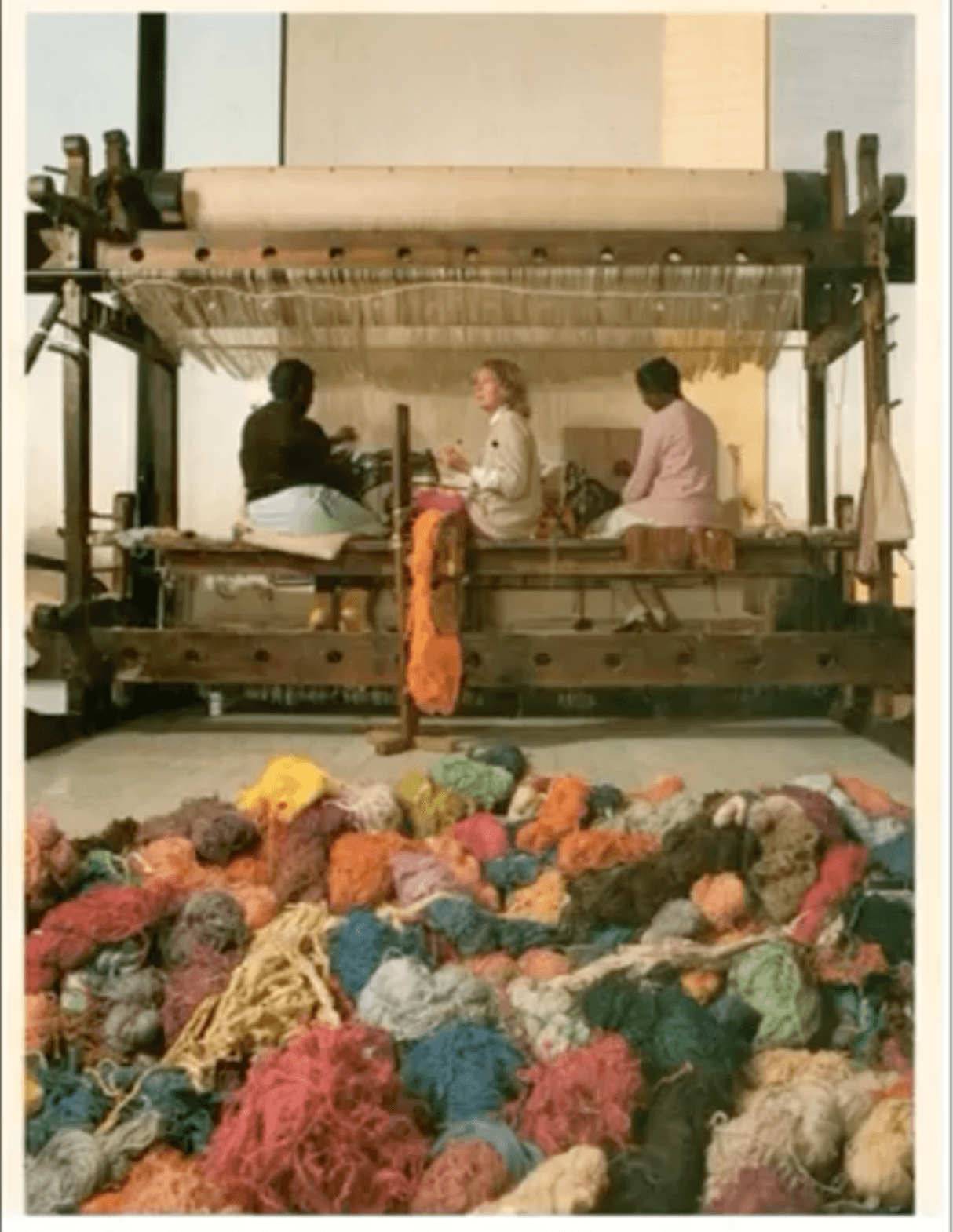
Mags weaving (1990s).
Photo: Courtesy of Mags Stephens

Catherine Goodman on Tapestry
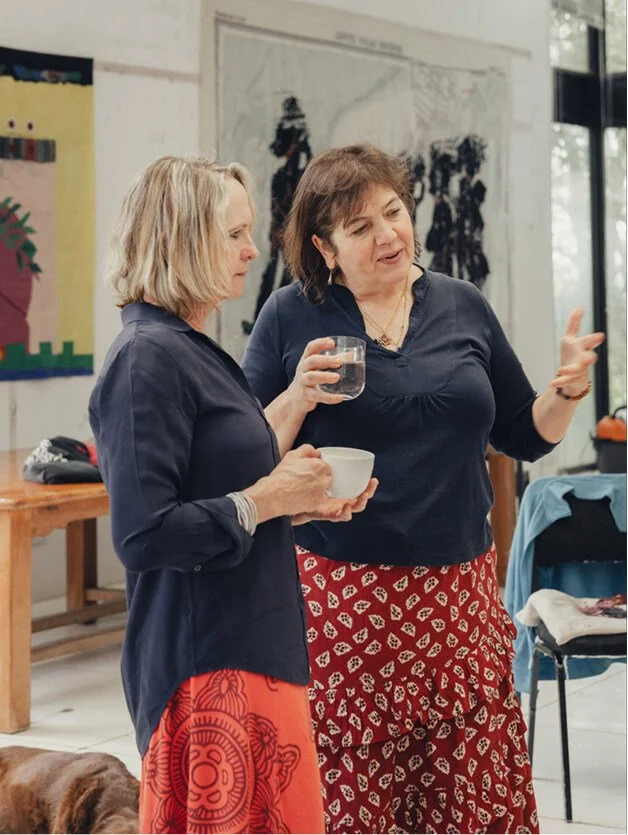
Tina and Catherine at the studio.
Photo Chloe Kenely
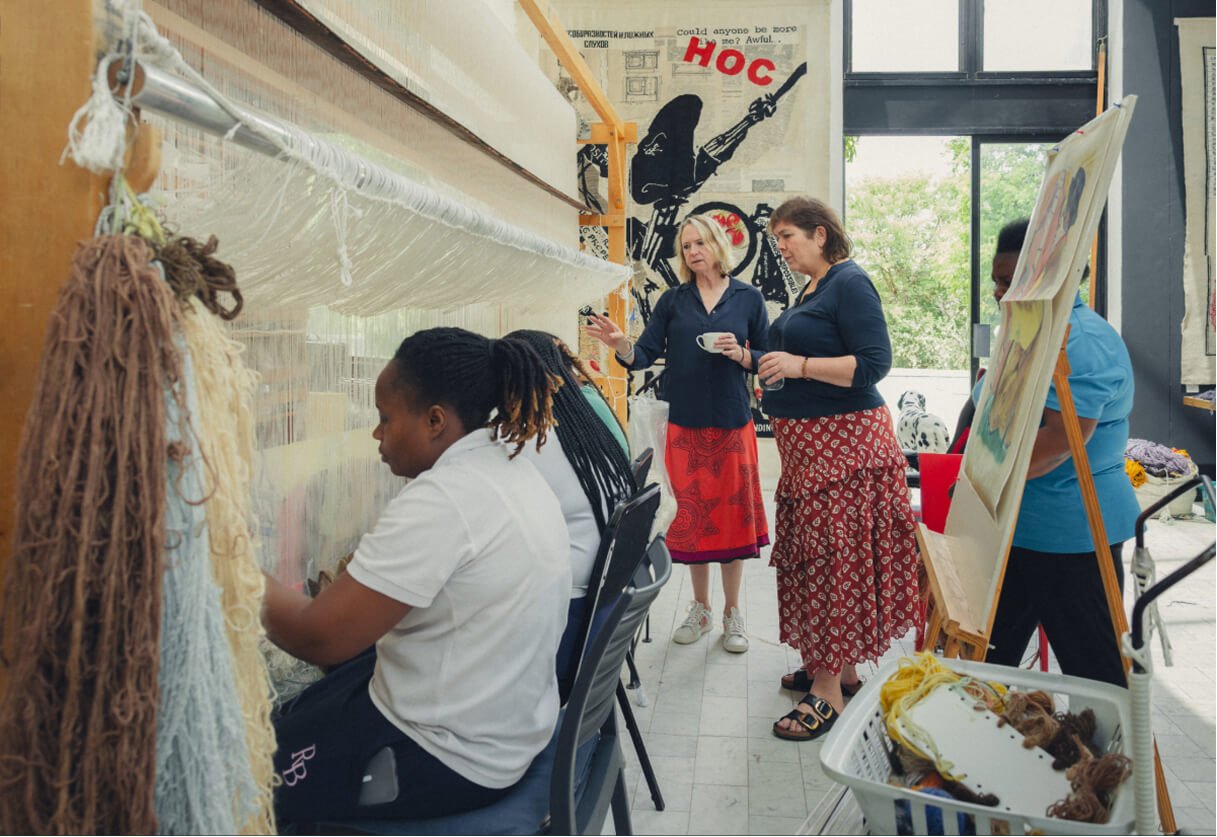
Tina and Catherine at the studio.
Photo Chloe Kenely
There are so many interesting ways of experiencing tapestry because it is not screaming “I'm a masterpiece”. It is softer, gentler, more domestic.
Since childhood, I have wondered how women five hundred years ago were able to express themselves. I love looking back and thinking about how my great-grandmother, or my great-great-grandmother, might have lived a creative life, and the need to make something. Was it through their gardens or the clothes they chose to wear?
At the National Gallery in London, and out of all the thousands of paintings in the permanent collection, fewer than forty-five are by women. What does that say? It says that it's not that women didn't want to make paintings; it’s that they weren't able to.
I’ve always thought of textiles as women's art: how women expressed themselves for so many years when they weren't able to be artists. They made tapestries, needlepoints, and they knitted.
Choosing two paintings to be interpreted as tapestries was very intuitive. I'd never been to Stephens Tapestry Studio before, but I thought about it in the context of this powerful landscape – South Africa, a country so long dominated by men. It seemed to me that asking the women working here to make something from a landscape image, from a different climate and a different place, felt like a good dialogue to have.
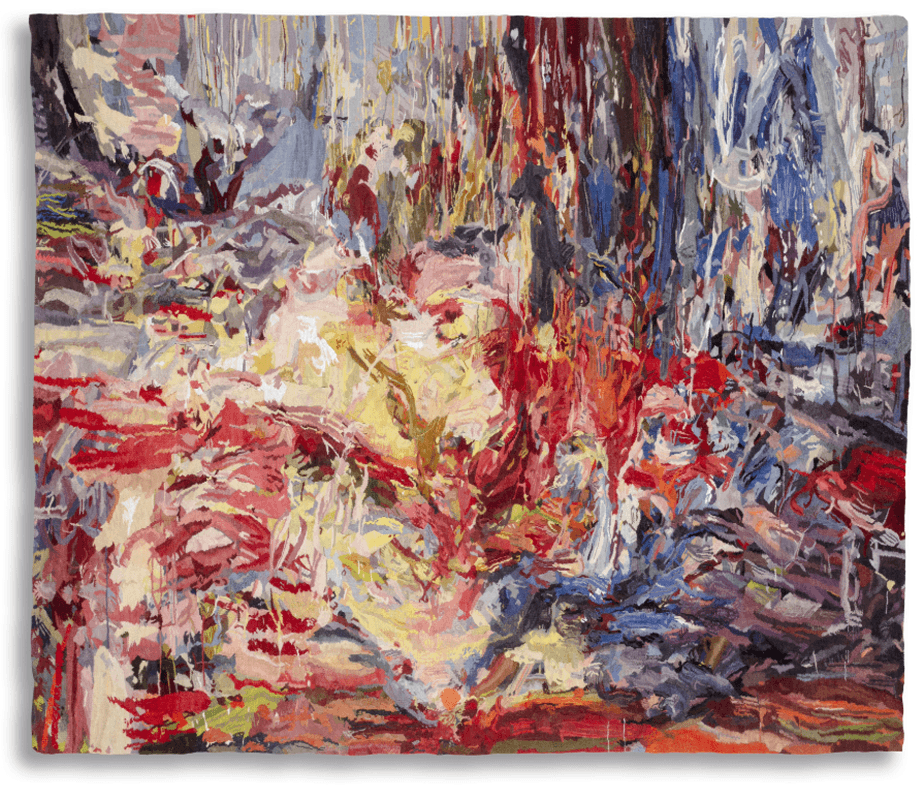
I chose the Winged Garden painting as the first one. What's interesting about making more abstract paintings is how the physicality of the painting works on a feeling level, and how someone else receives the work.
With all of these women making the tapestries from my paintings, interpreting them, it’s important to be able to relinquish control. As an artist, it can be very exciting.
What I'm really interested in here is how something moves from one form, one pair of hands, to another. How will the wool, the colour, and the interpretation affect it? It's hard to predict, but mystery is a big part of making my work.
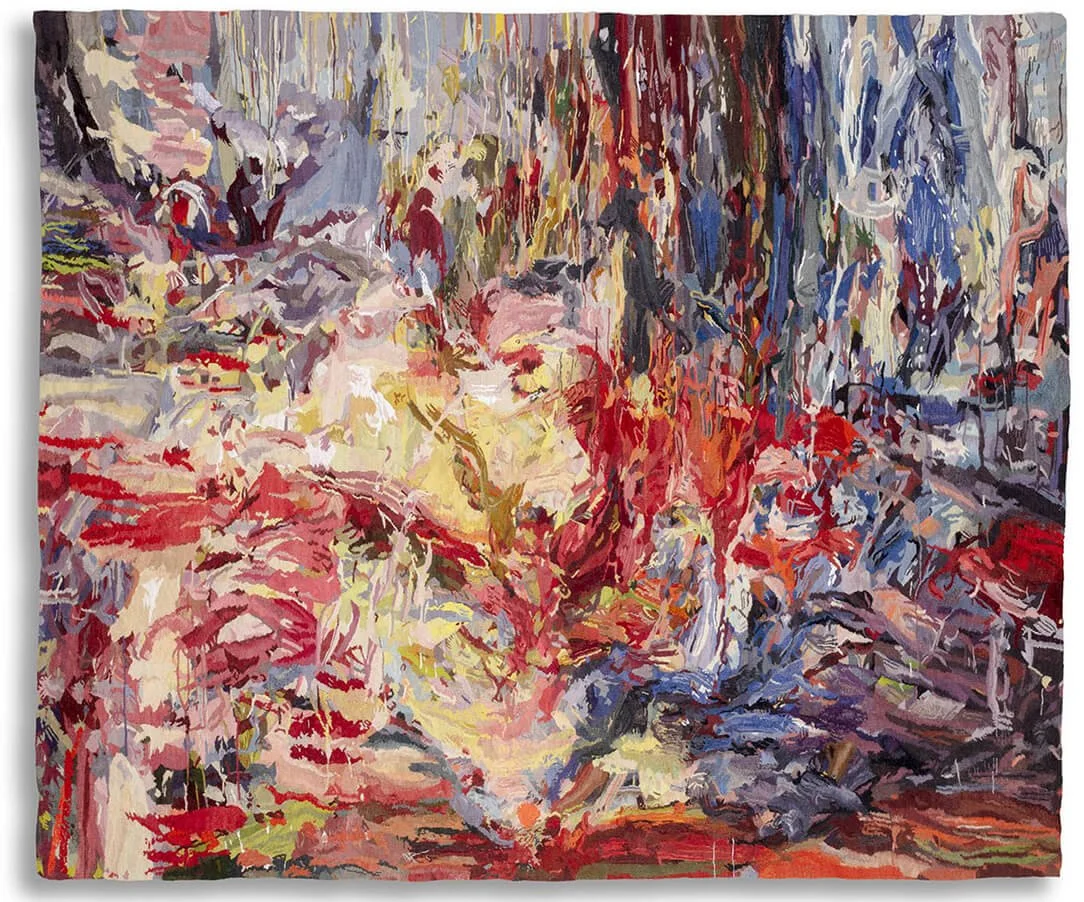
Winged Garden tapestry, after Catherine Goodman, part of her exhibition "In the House of Tapestries" at Boughton House (2026).
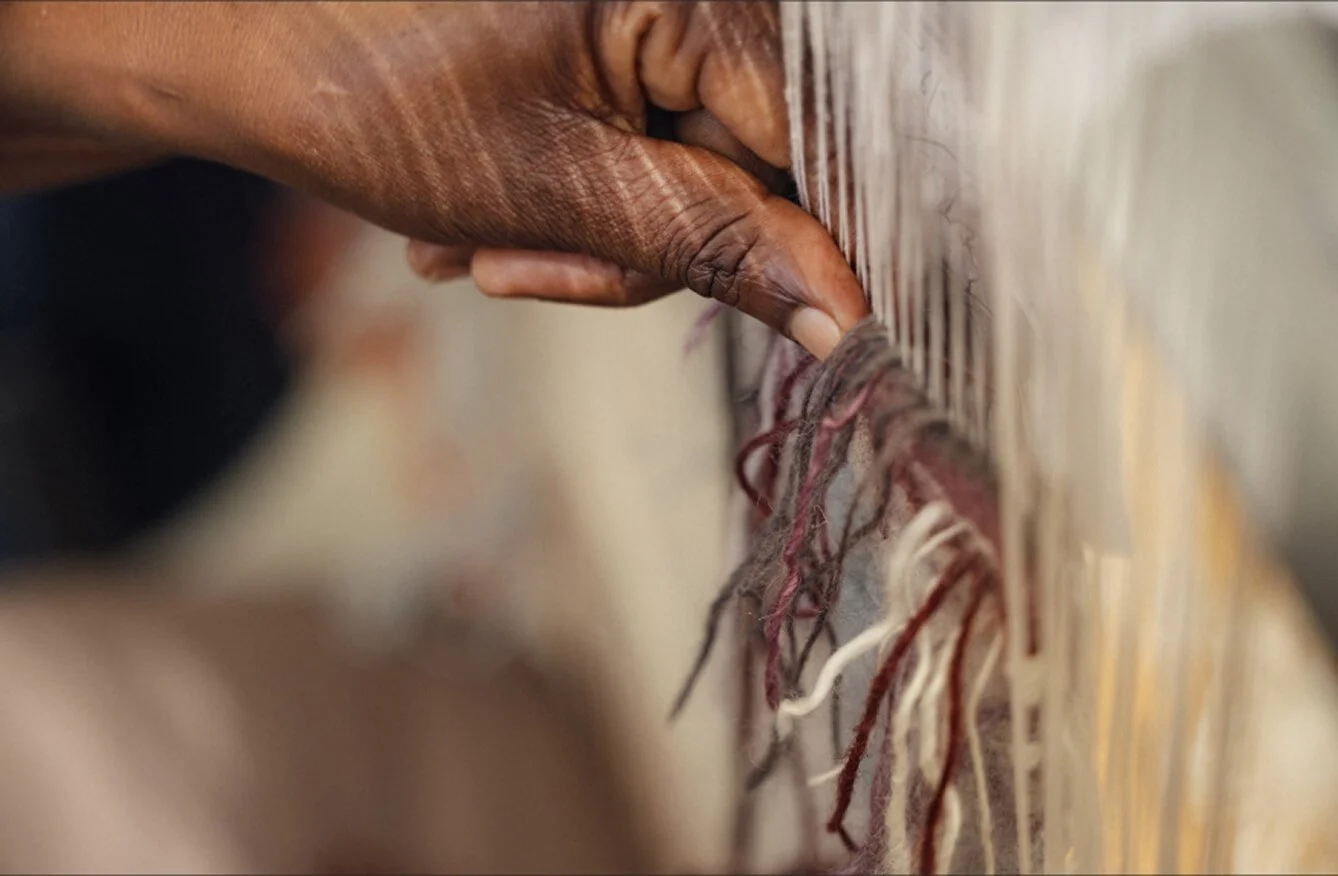
Weavers weaving Winged Garden.
Photo: Chloe Kenely
When Tina Weavind sent me samples for the tapestry, it was wonderful to see how something can be translated from one form to another. That curiosity about translation probably comes from growing up between two cultures. My mother was Russian; my father was British.
I grew up between them – Russian food, Russian faith, and Russian painting. I’ve often wondered why these large images on walls mean so much to me. I think it's because the first images I ever saw were in Orthodox churches, painted from floor to ceiling, with huge icon heads looming above. I was very small, but that sense of being completely surrounded by images never left me.
I felt it again when I first went to India and saw the Ajanta Caves – these extraordinary painted caves – and later at the Scrovegni Chapel in Padua, painted by Giotto. Those places are always the most important to me as an artist – the way a narrative can play out across an entire architectural space like that.
It's what drew me, years later, to the William Kentridge tapestries at the Royal Academy. That same sense of image filling a room, demanding to be lived with rather than simply looked at.
My lifelong interest in weaving really started in India, watching shepherds in the mountains making beautiful textiles. They were mainly men, but the women, too, often sewed the pieces together, made them into blankets, and dyed the wool.
It was a collaboration, as it always is with these ways of working – and I suppose it's the oldest craft in the world. There's something about the softness of wool and the way it changes the feel of a room that has stayed with me ever since.
At Boughton House, where I'm doing the show with tapestries, I go into those rooms, and I draw them as though it's one huge architectural space, like a cave. It's extremely cold. Before central heating, tapestries were a very important part of how people lived in a space like that, because they added warmth and protection.
The cold and damp at Boughton often make me think of needing a coat. I think we're clothing a room in the same way – and that's all about comfort. It’s about how we experience art, how we live with it, and how it plays out in our subconscious.
The idea of making contemporary tapestries to enter into dialogue with the old ones from the Boughton House collection seemed very natural. I think about the tapestries after Raphael which hang behind the beds in the state rooms, and the people who slept there beneath those vast images. How does that make you dream?
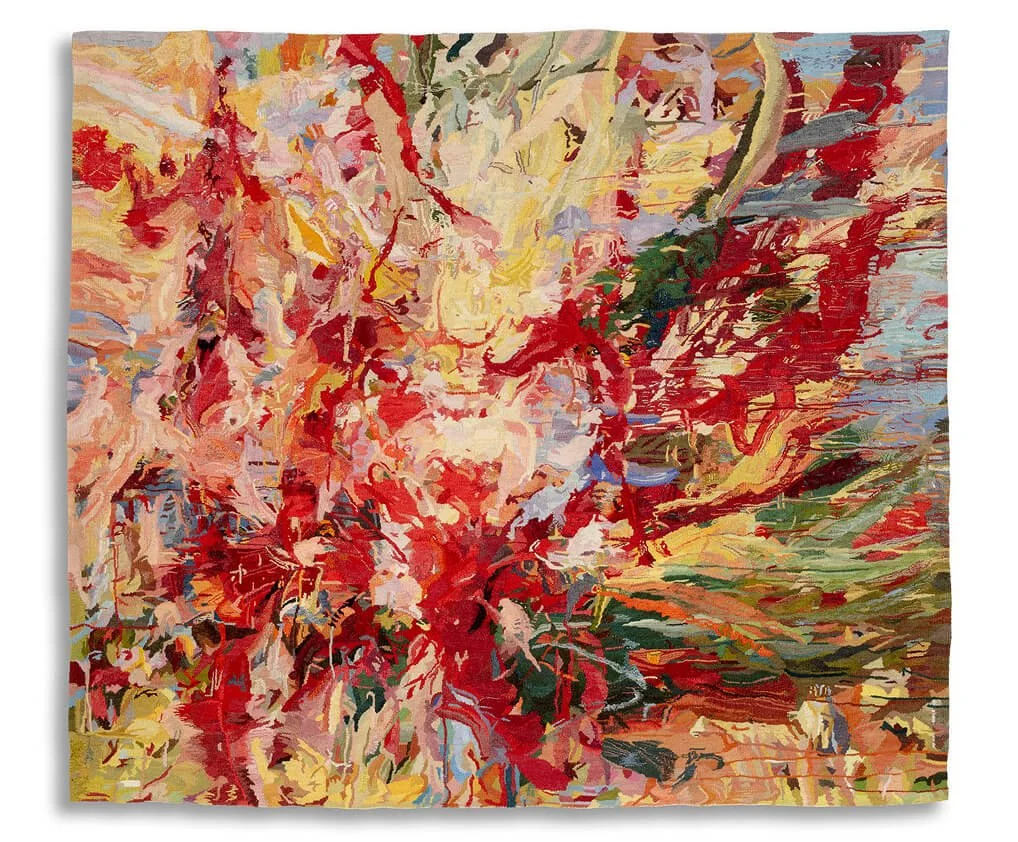
From Boughton to Volterra, tapesty after Catherine Goodman, part of her exhibition In the House of Tapestries at Boughton House (2026).
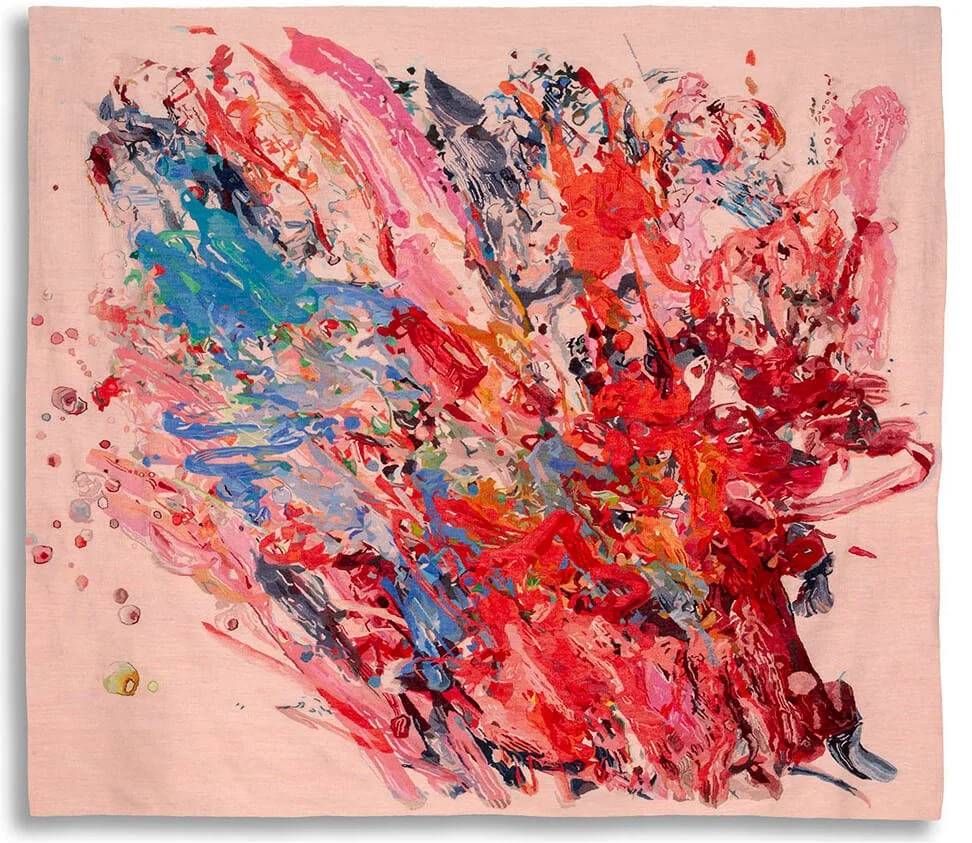
Origin, tapestry after Catherine Goodman (2026).
BECOME PART OF STEPHENS TAPESTRY STUDIO’S STORY
To learn more about Stephens Tapestry Studio, consider following its work to help celebrate the art of handwoven tapestry. For more than six decades, the studio has transformed the work of leading artists into intricate mohair tapestries, preserving a unique weaving tradition while bringing South African contemporary art to audiences around the world.
By sharing the studio's story, you help ensure that tapestry art continues for generations to come.