The Forgotten Her Story Featuring Historical Women Project
Maria Sibylla Merian
17th Century Naturalist and Illustrator
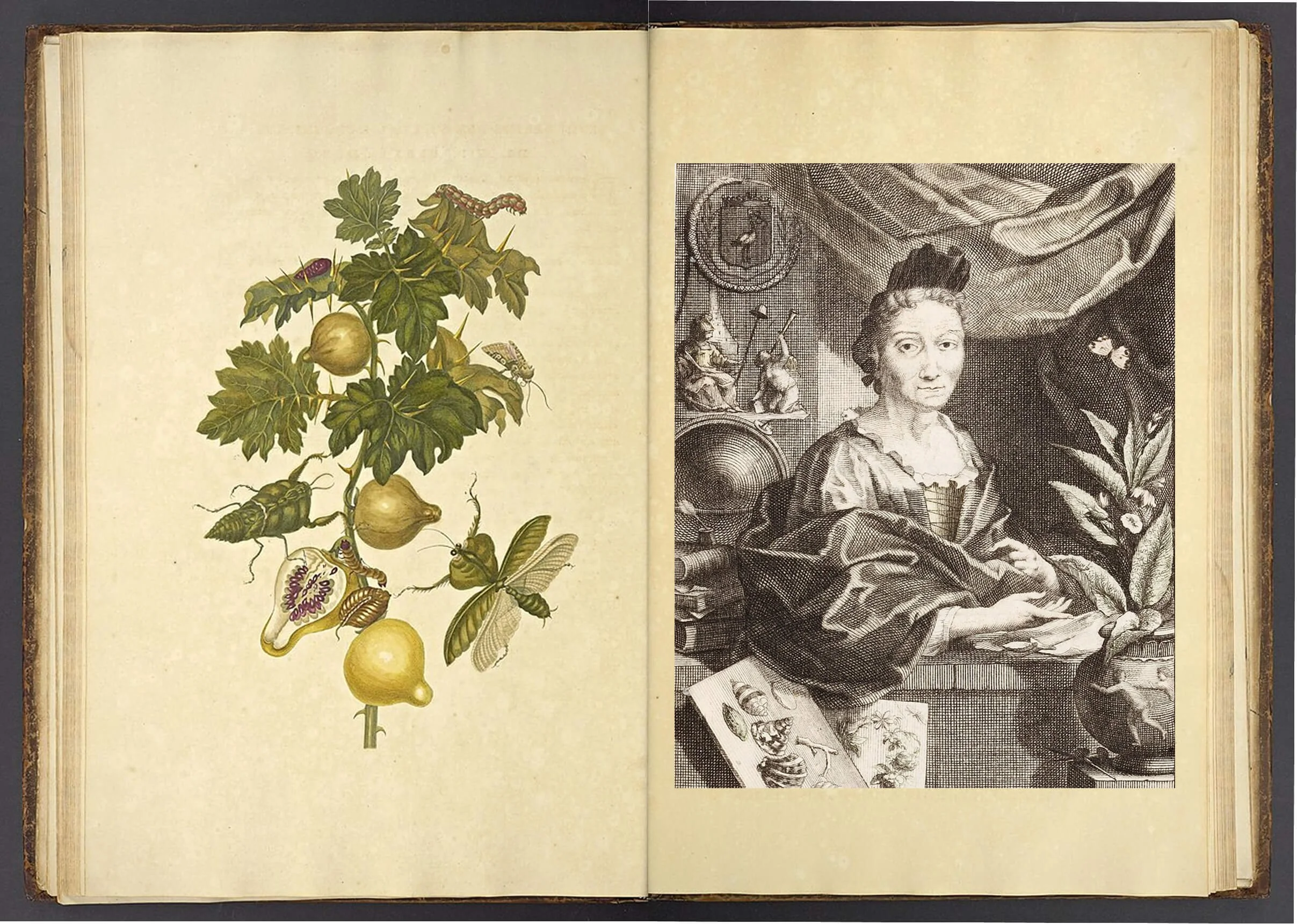
Maria Sibylla Merian (1647–1717) was a German naturalist and artist whose groundbreaking work in the study of insects and plants left an enduring mark on science. For over a century and a half after her death, her observations were used as reference material by biology students, celebrated for their accuracy and insight. Yet in the 19th century, her work fell into disrepute, dismissed by male scientists entrenched in colonial and patriarchal attitudes. In recent decades, however, renewed interest in her life and contributions has restored her place as one of the most influential figures in entomology, the scientific study of insects—a view shared by luminaries such as David Attenborough.
Merian was born in Frankfurt to a Swiss father who was an engraver and publisher. He died when Maria was just three years old, leaving her mother to remarry a painter. This new household provided Maria not only with artistic training but also the independence and encouragement to explore her interests. From the age of thirteen, she began painting plants and insects, distinguishing herself from other female artists of the era by studying her subjects directly. While girls of her age were typically trained in domestic arts, Maria meticulously observed caterpillars, butterflies, and other insects in their natural habitats, documenting each stage of metamorphosis with remarkable precision.
In Merian’s time, the worlds of art and science were closely intertwined. Scientific publications relied on skilled illustrators to communicate observations, while artists often turned to natural subjects for inspiration. Maria excelled in both domains. In 1679, she published her first illustrated work on insects, focusing on their metamorphosis, demonstrating a unique blend of aesthetic talent and scientific observation. She also supported her family, teaching painting lessons and selling her own artwork, establishing herself as both an artist and a naturalist. Merian’s life took a significant turn in 1685, when she moved with her family to a Labadist community in Friesland, a Dutch province, seeking a more spiritually focused life. Six years later, she relocated to Amsterdam with her two daughters, separated from her husband. Her career reached a historic milestone in 1699, when the city granted her permission to travel to Suriname, a Dutch colony in South America. She was tasked with studying and illustrating the local insects and plants—a feat remarkable for any scientist of the era, but especially for a woman navigating the restrictions of 17th-century Europe.
In Suriname, Maria faced both physical challenges and cultural complexity. She travelled extensively, sketching the flora and fauna she encountered while recording their local names and uses. She collaborated with indigenous peoples and enslaved women, learning from their knowledge of plants and their practical applications. Merian’s observations were not only scientific but ethnobotanical: she documented which plants were used for food, medicine, and even quiet acts of resistance. She witnessed the brutal treatment of enslaved people by Dutch plantation owners, describing the cruelty in her notes. In a striking account, she recorded how enslaved women sometimes terminated pregnancies in silent protest, preventing children from being born into slavery. Her meticulous documentation preserved these stories and the plants involved, creating a rare historical record of human experience intertwined with natural science. Merian’s work in Suriname lasted only two years; health issues forced her return to the Netherlands. Undeterred, she published her magnum opus in 1705: Metamorphosis Insectorum Surinamesium, a beautifully illustrated book on the insects of Suriname.
The work remained a standard reference for naturalists for over 150 years, celebrated for its detailed observations, aesthetic elegance, and scientific rigor. Despite her accomplishments, Merian’s reputation declined in the 19th century. The academic world, steeped in colonial ideology, criticised her use of local names for plants and insects. Her gender became a weapon against her: some claimed she had shared a bed with men from the indigenous population, suggesting this influenced her to record the names they provided—an accusation they argued would never be made against a male scientist. Consequently, her name was largely forgotten for decades. Fortunately, the 20th and 21st centuries have restored Merian’s legacy. Scholars such as Londa Schiebinger and exhibitions like Slavery at the Rijksmuseum have highlighted both her scientific achievements and her moral courage. Her meticulous illustrations and observations influenced generations of naturalists, including Carl Linnaeus, the father of modern taxonomy. Today, Maria Merian continues to inspire scientists, artists, and educators worldwide, appearing in books, exhibitions, and documentaries, celebrated for her curiosity, dedication, and pioneering spirit.
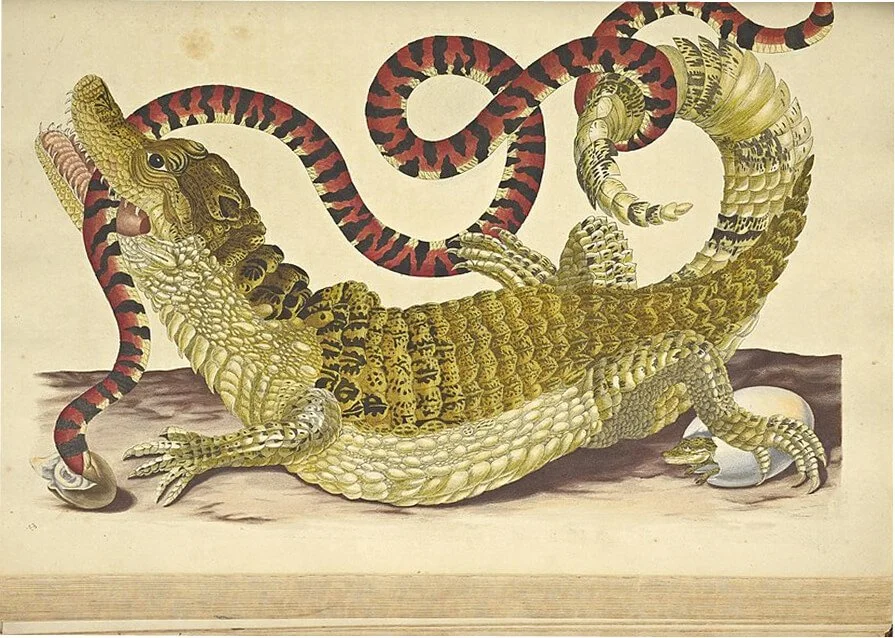
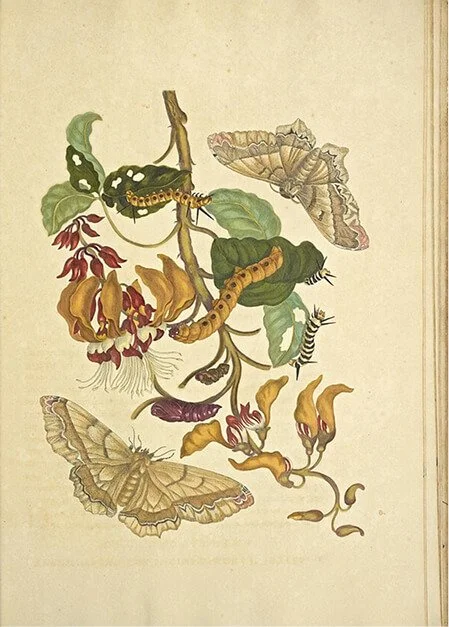
Maria Sibylla Merian died in Amsterdam in 1717 at the age of 69, leaving behind a body of work that bridged art, science, and humanity. Her life story reminds us that scientific discovery is not only about observation and documentation—it is also about empathy, courage, and the willingness to see the world from perspectives others may overlook. From her early sketches of caterpillars in Frankfurt to her revolutionary studies in Suriname, Maria Merian remains a symbol of curiosity and perseverance, proving that careful observation can illuminate both nature and the human experience.
Sources:
Beuys, B., Maria Sibylla Merian: Künstlerin, Forscherin, Geschäfstsfrau, Berlin 2016.
Wijlick, L. van, ‘Een Overzeese Ondernemer: Maria Sibylla Merian’. In: Moorman, J. (red.), Gouden vrouwen van de 17de eeuw: van kunstenaars tot verzamelaars. WBooks, Zwolle, the Netherlands.
https://resources.huygens.knaw.nl/vrouwenlexicon/lemmata/data/Merian
https://www.rijksmuseum.nl/nl/pers/persberichten/rijksmuseum-verwerft-hoogtepunt-oeuvre-maria-sibylla-merian
Barber Jacobs
16th Century Secondhand Trader
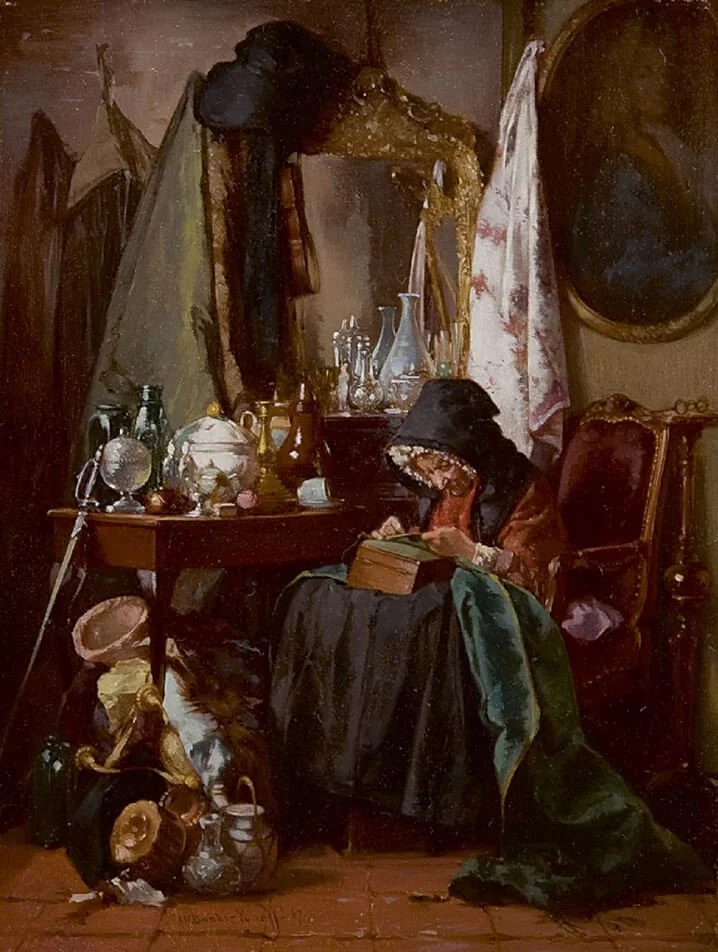
In the bustling streets of early modern Amsterdam, a unique form of trade flourished, largely unnoticed by history until recently: the uitdragerij. An uitdrager was a dealer in secondhand goods—household items, furniture, woodwork, clothing, and even art— that poorer families could not afford to purchase new. Both men and women could take up the profession, though in its earliest centuries, it was overwhelmingly dominated by women. By the seventeenth century, however, men had begun to take over the trade.
Among these women, one name stands out: Barber Jacobs (1549–1624). She is remembered as the most prominent uitdrager in Amsterdam during her lifetime, and her story offers a rare window into both the profession and the lives of early modern women traders.
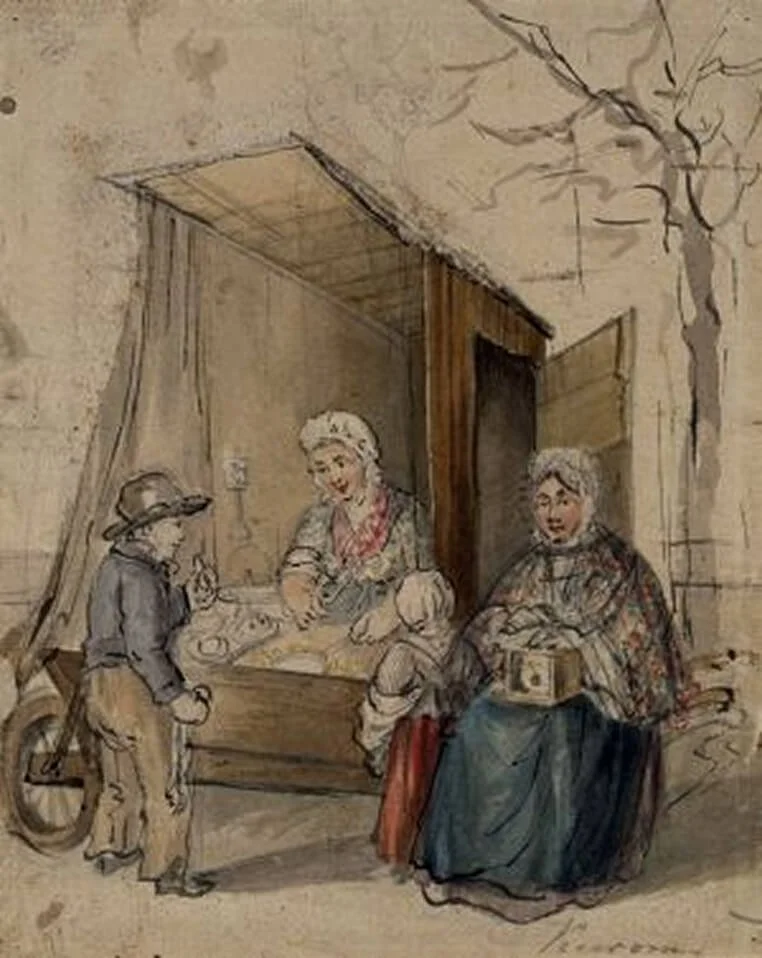
Barber Jacobs was born into a relatively affluent family on St. Janstraat in Amsterdam. Her father was a ship’s pilot, and her family enjoyed a comfortable life. St. Janstraat was also a hub for uitdragers, and many households in the neighbourhood combined living and trading spaces. In 1572, Barber married Pieter Segerzoon, a city messenger who later worked for the orphan chamber. In his position, Pieter was closely involved with the auctions where uitdragers acquired their goods. However, his Roman Catholic faith led to his dismissal in 1578 during a period of religious turmoil, and the family lost its primary source of income.
Faced with financial necessity, Barber Jacobs stepped into the profession herself. She became an uitdrager—and not just any uitdrager, but the leading figure in Amsterdam. Her first appearance in the city’s registers as an uitdrager was in 1590, marking the start of a career that would make her household prosperous despite the challenges she faced. Barber ran her business while raising six children, and after Pieter’s death in 1602, she continued working tirelessly. Even after the birth of her youngest daughter, she remained deeply involved in her trade, demonstrating the combination of resilience, business acumen, and social savvy that characterised her career.
Barber Jacobs’ workdays were filled with constant activity. On a typical morning, she might visit the orphan chamber’s auction hall, where entire households—tables, beds, cupboards, and even tapestries—were laid out for sale. She carefully inspected each item, tapping the wood of a cupboard to test its quality, unfurling textiles to examine thread counts, and sometimes even negotiating a lower price by pointing out minor imperfections. Later, she would return to her shop on St. Janstraat, arranging newly purchased furniture alongside secondhand ceramics, clothing, and small luxury items she had collected from street vendors. Families from across the city would visit, and Barber knew how to match a buyer with the perfect piece, ensuring both a sale and the satisfaction of her clients.
Later in life, Barber Jacobs’ expertise was recognised formally when she was appointed as a schatster by the orphan chamber. A schatster was responsible for assessing the value of estates during auctions, determining the prices of household goods and possessions of the deceased. This role gave Barber considerable influence and status in her community. At her death in 1624, her inheritance included three houses—a testament to the wealth and security she had built through her skill and perseverance.
The profession of uitdragers itself was vital to the social and economic fabric of early modern Dutch cities. By facilitating the sale of secondhand goods, uitdragers made essential items accessible to poorer families. They acted as intermediaries in a complex market, acquiring goods from street vendors, private sellers, and orphan chamber auctions, then reselling them to those who could not afford newly manufactured items. While men eventually dominated the trade in the seventeenth century, women like Barber Jacobs had long established themselves as competent, savvy traders, central to the distribution of goods in the city.
Uitdragers were often deeply connected to the broader networks of commerce and civic life. Their work required knowledge of both the market and the quality of the goods they handled. They would rescue overlooked treasures—a cracked chair that could be repaired, a faded tapestry whose design still captivated, or a set of silver spoons that had been discarded. By restoring and redistributing these items, uitdragers preserved Amsterdam’s material culture while supporting families of modest means.
Barber Jacobs’ story exemplifies the opportunities and challenges of this profession. She navigated complex social and economic networks, leveraged her knowledge of auctions and estates, and managed her household while building one of the most successful uitdragerij operations in Amsterdam. Other notable uitdragers included Hille Coppens, Neel Engelen, Trijn van Royen, and Marie Meynssen, women who, like Barber, combined entrepreneurial skill with social influence in a male-dominated world.
In reflecting on Barber Jacobs’ life and the world of uitdragers, it becomes clear that these women were more than mere traders. They were central figures in the urban economy, mediators of social mobility, and preservers of cultural and material heritage through the goods they circulated. Barber Jacobs’ legacy reminds us of the ingenuity and resilience of women in early modern Europe, who transformed necessity into opportunity and left an indelible mark on the commercial and social life of their cities.
Sources:
Dorr, D. (2021). ‘Barber Jacobs: Tweedehands Vermogen’. In: Moorman, J. (red.), Gouden vrouwen van de 17de eeuw: van kunstenaars tot verzamelaars. WBooks, Zwolle, the Netherlands.
Van Eeghen, I., ‘Uitdraagsters t’ zij man of vrouw’, Amstelodamum 56 (1969), 102-110.
Van Eeghen, I., ‘Haes Paradijs en de uitdraagsters’, Jaarboek voor vrouwengeschiedenis 8 (1987), 125-133.
Montias. J.M., Art at Auction in 17th century Amsterdam, Amsterdam 2002.
Puyenbroek, M., Gezworen schatsters. Taxeersters van huisraad en kunst in vroegmodern Amsterdam, researchmaster scriptie, Universiteit van Amsterdam 2020.(Artikel Amstelodamum: https://www.thefemaleimpact.org/wp-content/uploads/2023/02/M.Puyenbroek-GezworenSchatsters-Amstelodamum-2021-2.pdf)
Wijngaarden, H. van, ‘Op zoek naar uitdraagsters’, Historica 18 (1995), 11-12 (https://gendergeschiedenis.nl/attachments/article/333/Historica%201995%20nummer%201.pdf)
https://resources.huygens.knaw.nl/vrouwenlexicon/lemmata/data/Barber%20Jacobs
Anna Morandi Manzolini
18th Century Female Anatomist and Master of Wax Modelling
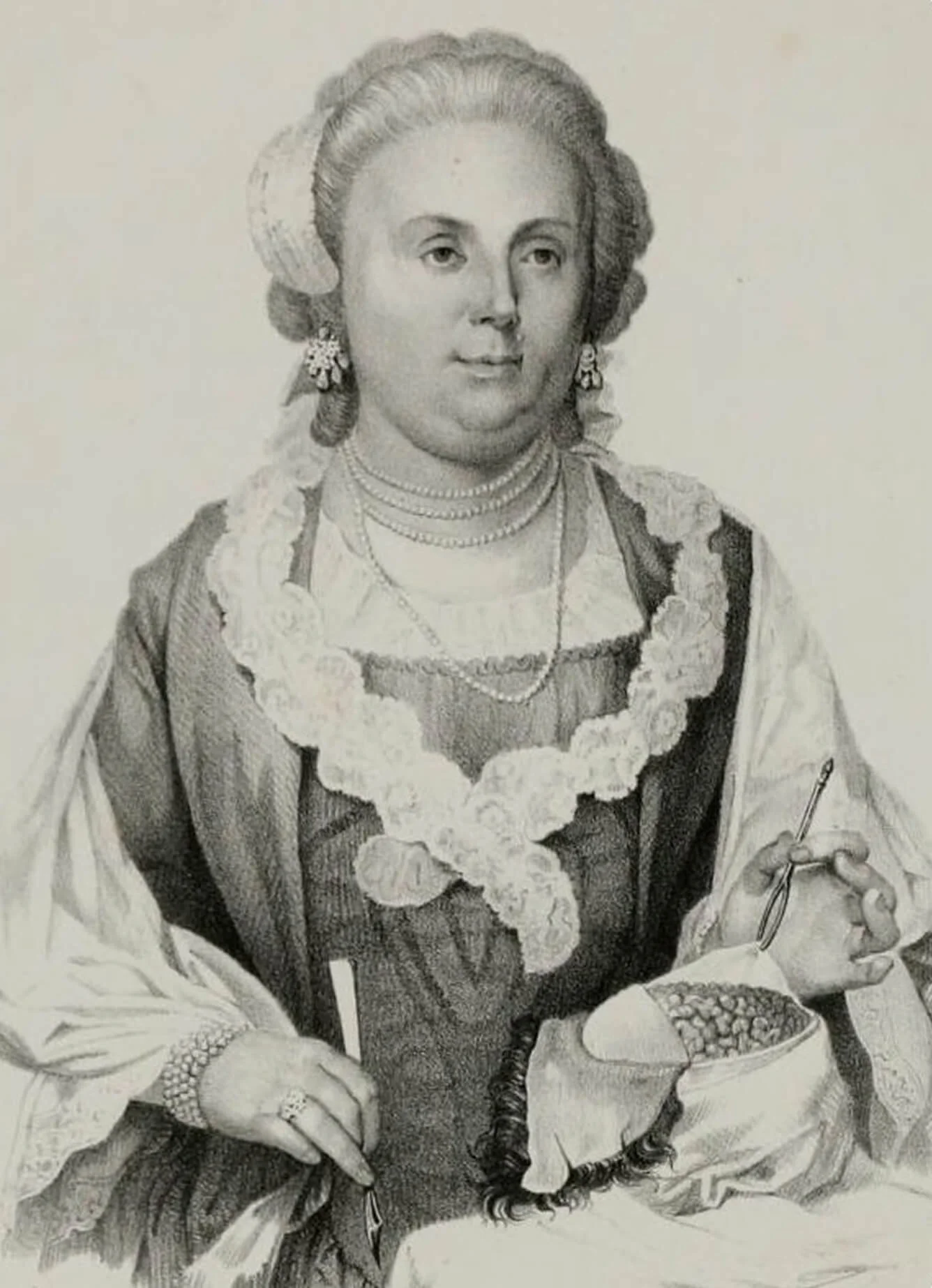
Anna Morandi Manzolini (1714–1774) occupies a unique place in the history of anatomy, not just as a pioneering female anatomist but as a master of wax modelling, whose technical skill transformed the study of the human body into both an exact science and a delicate art. Her legacy endures through her intricate anatomical models, which reveal a remarkable combination of observational precision, manual dexterity, and artistic sensitivity.
Morandi Manzolini’s path into anatomical modelling began in Bologna, a city with a rich scientific tradition and the University of Bologna, one of the oldest universities in the world. Under the tutelage of her husband, Giovanni Manzolini, she initially assisted in dissection and the preparation of wax models. However, it quickly became evident that her abilities surpassed those of her husband, and she soon developed an independent reputation for her meticulous and lifelike anatomical creations.
Her primary medium, wax, was both versatile and challenging.
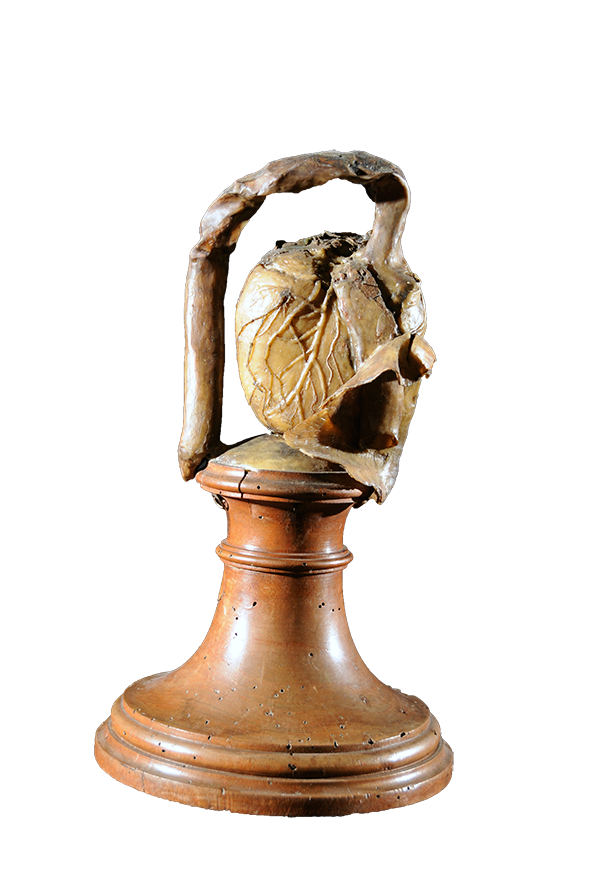
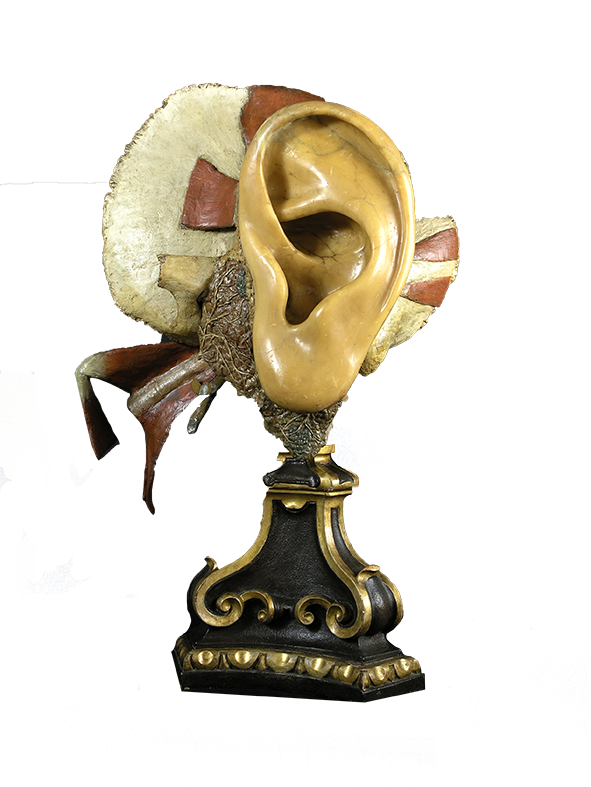
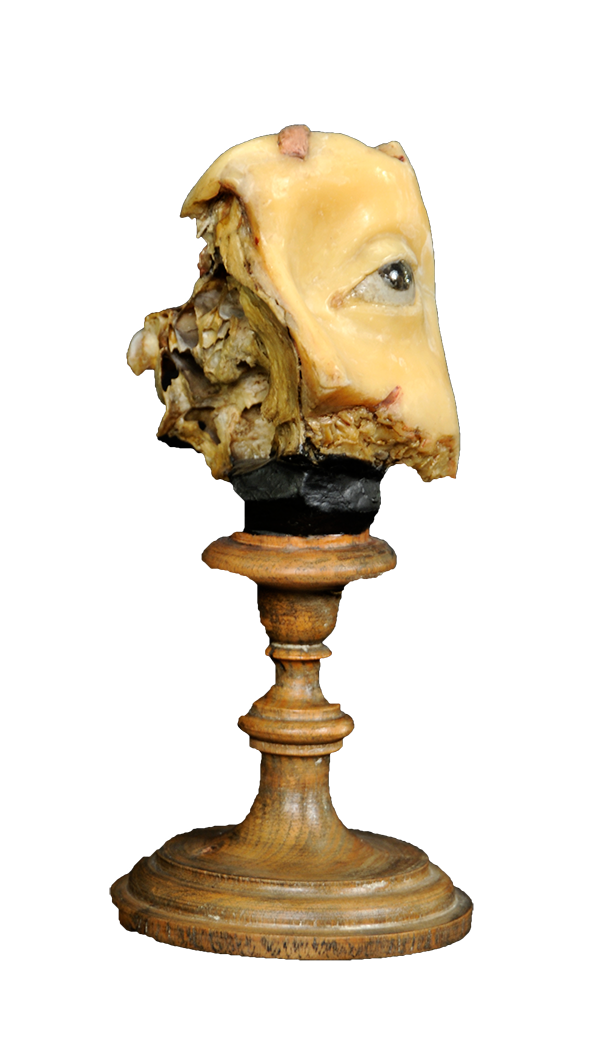
Wax could capture the subtle curves, textures, and translucencies of the human body, but it required careful handling and deep knowledge of materials. Morandi Manzolini demonstrated mastery over the wax medium, manipulating it to reflect not just form but function. She was acutely aware of wax’s limitations—its fragility, susceptibility to heat, and tendency to crack—and developed techniques to stabilise and preserve her models for long-term use. This attention to material science was a cornerstone of her craftsmanship.
The process of creating a model began with direct observation from cadaver dissections. Morandi Manzolini did not rely solely on textbooks or illustrations; she painstakingly observed tissues, muscles, vessels, and nerves in situ, often making preliminary sketches. These sketches guided the subsequent modelling, but the transformation from dissection to wax required an extraordinary technical understanding. Each anatomical element had to be rendered with exact proportions, capturing the delicate interplay between organs, bones, and connective tissues.
One of her signature techniques was the use of layered modelling. Rather than creating a single monolithic structure, she built models in layers, mirroring the natural layering of the human body. Muscles were sculpted over bones, tendons positioned to reveal functional dynamics, and vessels traced along natural paths. This modular approach allowed her models to be dissected virtually, offering students a tactile experience akin to real dissection but without the impermanence of cadaveric tissue. The precision required in this layering was immense; each layer had to fit seamlessly with the others, maintaining anatomical fidelity while also being removable.
Morandi Manzolini’s treatment of texture was another hallmark of her craftsmanship. She used subtle variations in wax density, coloration, and finish to differentiate tissues. Muscles were rendered with a slightly matte finish to simulate fibrous texture, while vessels were often painted with translucent glazes to suggest blood flow. Nerves, delicate and often nearly invisible, were recreated with fine threads of wax, carefully positioned to follow natural courses. Even the skin, when included, was given a lifelike translucency, suggesting the thin layer that overlays underlying structures. These techniques were not merely decorative—they served an educational purpose, making the models visually intuitive and easier to study.
Coloration was applied with extraordinary care. Unlike modern anatomical models that rely on standardised colour coding, Morandi Manzolini’s waxes were painted to reflect natural variations. She mixed pigments to approximate real tissue tones, creating gradations that emphasised depth, curvature, and spatial relationships. The resulting effect was stunning: her models appeared alive, conveying not only the structural arrangement of the human body but also a sense of vitality.
Another innovation was her attention to functional dynamics. In some models, joints were articulated, allowing demonstration of movement. Tendons and ligaments were positioned to illustrate the mechanics of flexion and extension. This attention to biomechanical reality elevated her models from static representations to interactive educational tools, engaging students’ tactile and visual senses simultaneously.
Morandi Manzolini’s technical skill extended to preservation techniques. She understood the challenges posed by wax—its sensitivity to temperature and potential for deformation. She reinforced delicate structures with internal supports, sometimes using wire frameworks to ensure that thin or projecting parts, like nerves or blood vessels, maintained their correct shape. This foresight ensured that her models remained usable and accurate long after their creation.
Her expertise was widely recognised in her lifetime. Morandi Manzolini lectured at the University of Bologna, demonstrating her models to students and scholars, and her work was admired across Europe. Collectors and academics sought her models not only for their scientific accuracy but also for their beauty. Contemporary observers praised her ability to blend artistic finesse with anatomical precision, describing her waxes as “living representations” of the human body.
Anna Morandi Manzolini’s craftsmanship represents a rare synthesis of art, science, and technical mastery. Her models were more than educational tools—they were a medium through which the complexity and elegance of the human body could be studied, appreciated, and understood. By translating dissection into wax, she created a bridge between empirical observation and enduring visual knowledge, ensuring that future generations could learn from her meticulous labor.
Today, her wax models are preserved in museums and collections, admired for both their historical significance and their unparalleled technical quality. They stand as a testament to the extraordinary skill required to render the human body in wax and to the vision of a woman who, through meticulous observation and artistic expertise, elevated anatomical modelling to the level of fine art.
Sources:
Irving, C., ‘Portrait in Wax: The Anatomical Models of Anna Morandi Manzolini’, Advances in Anatomy, Embryology and Cell Biology, vol. 242, 2026, pp. 67–78.
Legro, M., ‘The Lady Anatomist: The Wax Sculptures of 18th‐Century Artist‐Scientist Anna Morandi Manzolini’, The Marginalian, 13 March 2012, online.
Messbarger, R., The Lady Anatomist: The Life and Work of Anna Morandi Manzolini, University of Chicago Press, Chicago, 2010.
Rosito, P., Mancini, A. F., Ruggeri, F. and Paolucci, G., ‘Anna Morandi Manzolini (1716–1774) Master Sculptress of Anatomic Wax Models’, Pediatric Blood & Cancer, vol. 42, no. 4, April 2004, pp. 388–389.
‘Waxworks and the Performance of Anatomy in Mid‐18th‐Century Italy’, Endeavour, vol. 30, no. 1, March 2006, pp. 29–35.
'Women and their craft' is a series of articles about three female artisans from the past. The series is part of a collaboration between The Forgotten Her Story and the Historical Women Project, a platform dedicated to bringing women's history to the forefront. Inspired by the work of Gerda Lerner, the world's first female historian.