Maria Godly
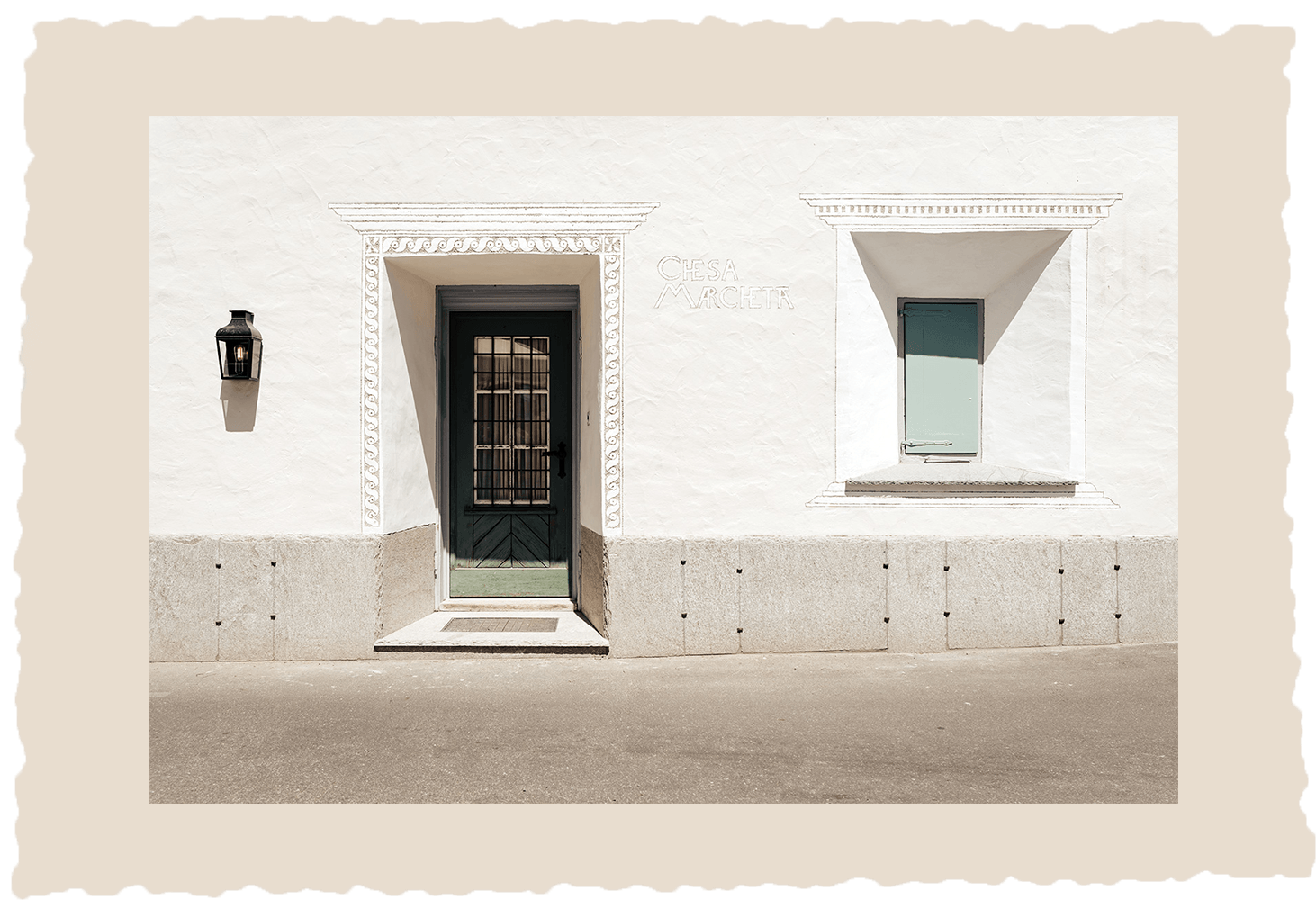
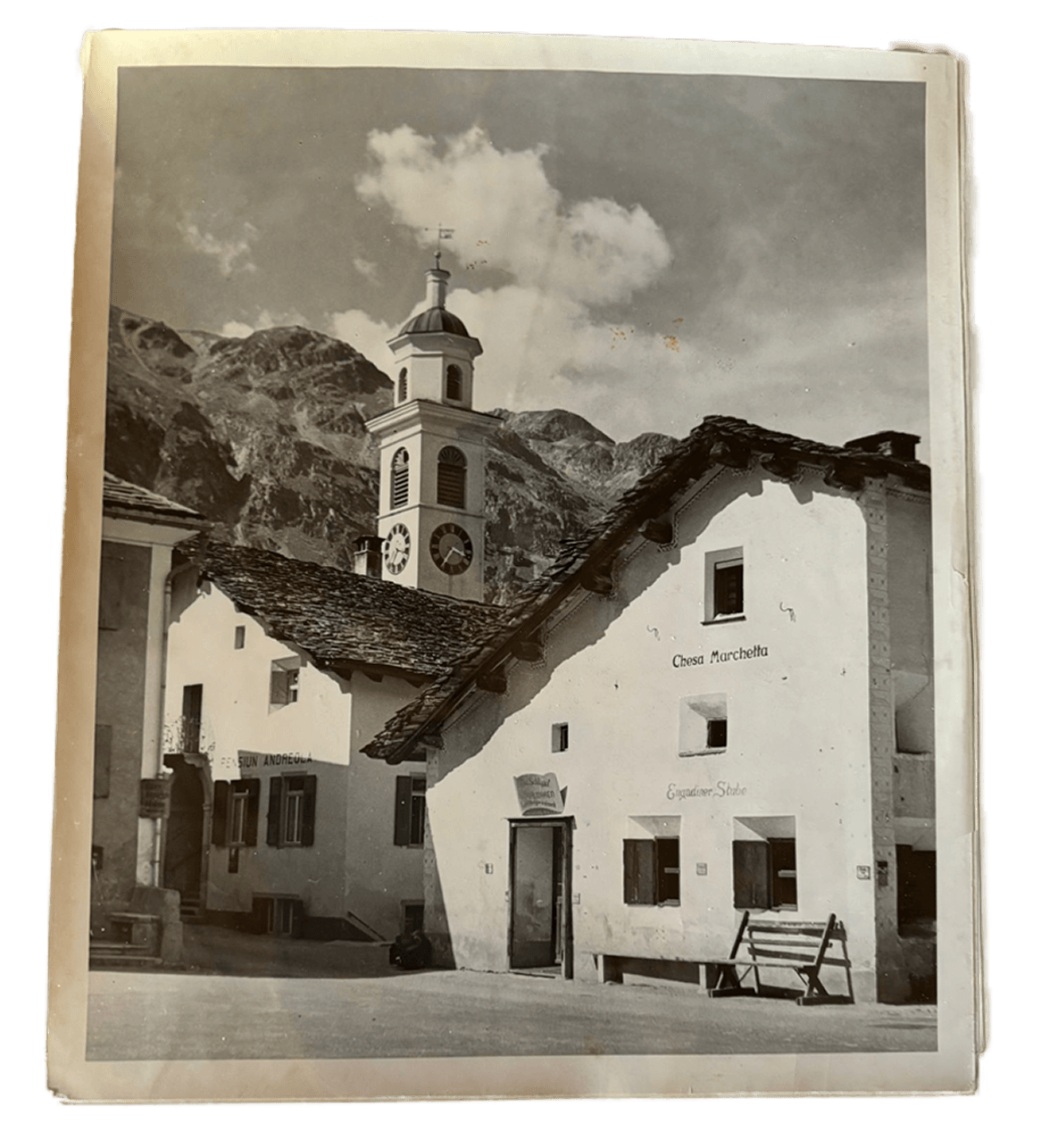
‘My parents told us that they would buy Chesa Marchetta, but only if we all helped with the work in return. So, we said yes.’
Frau Godly
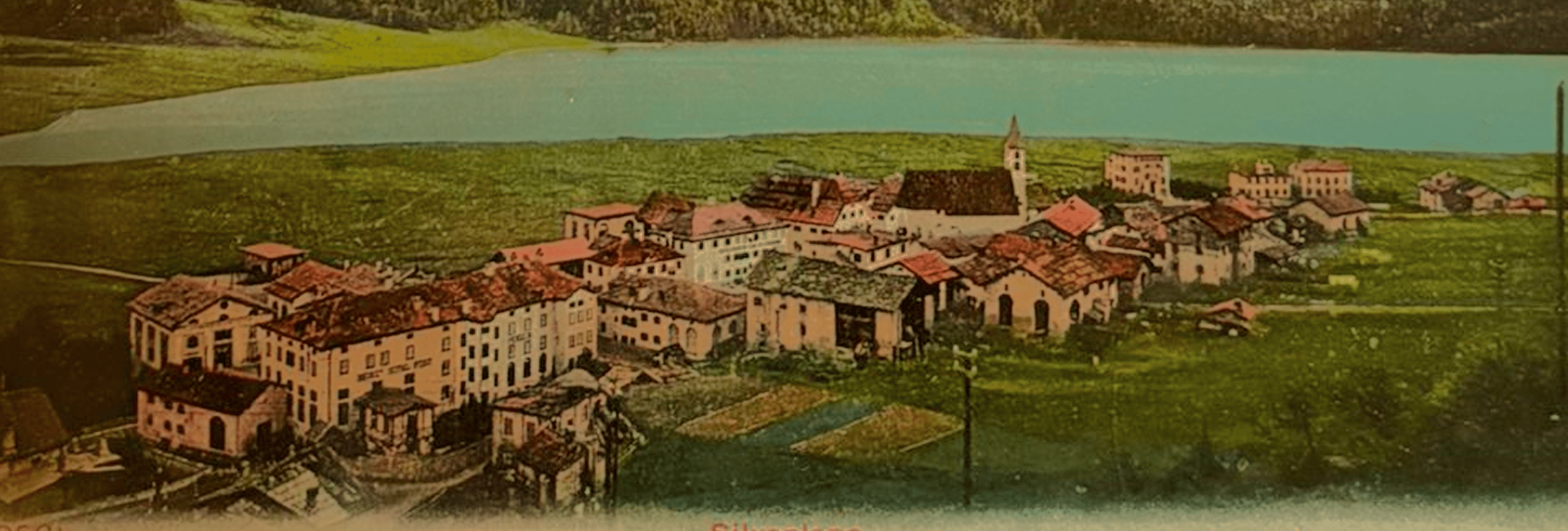
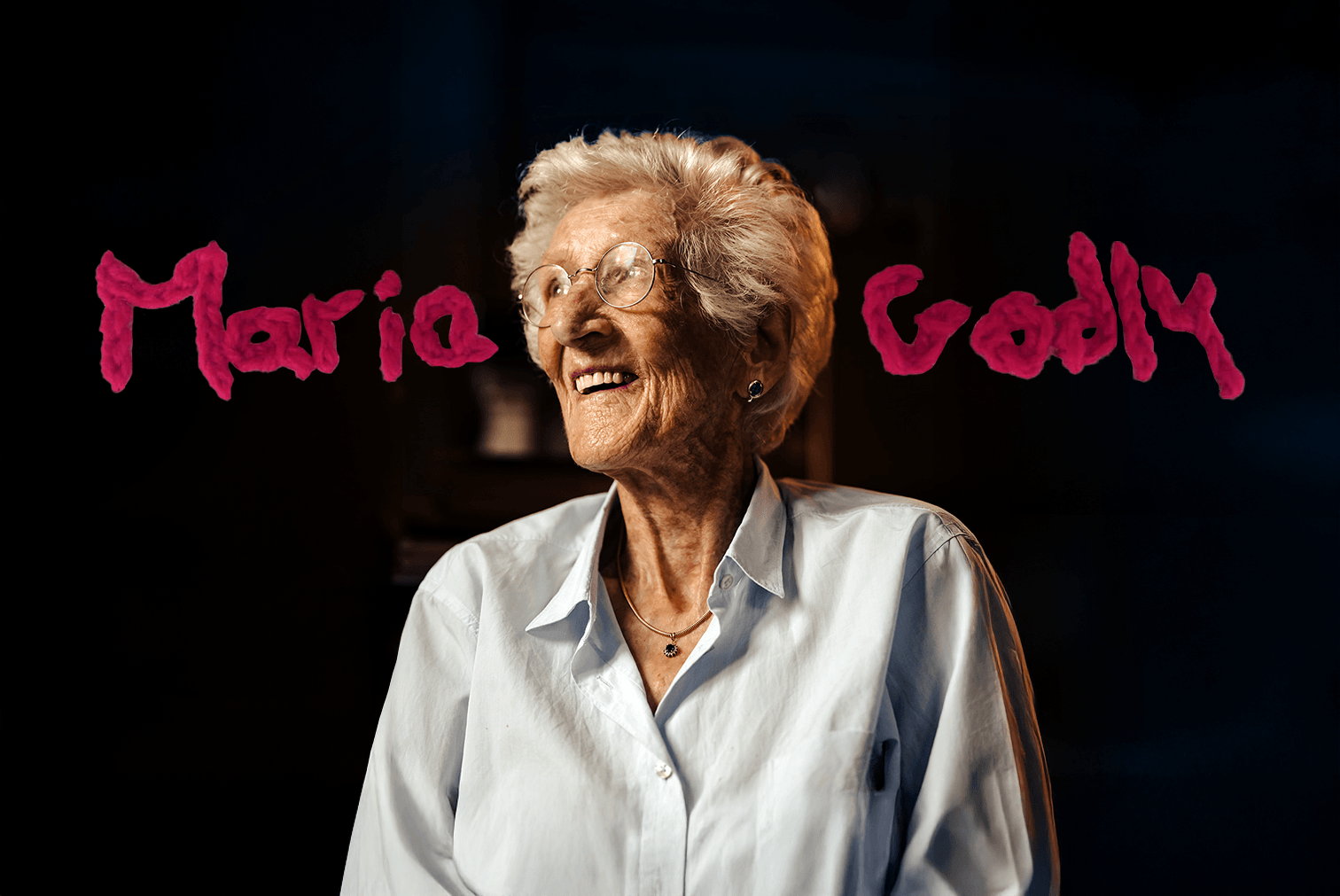
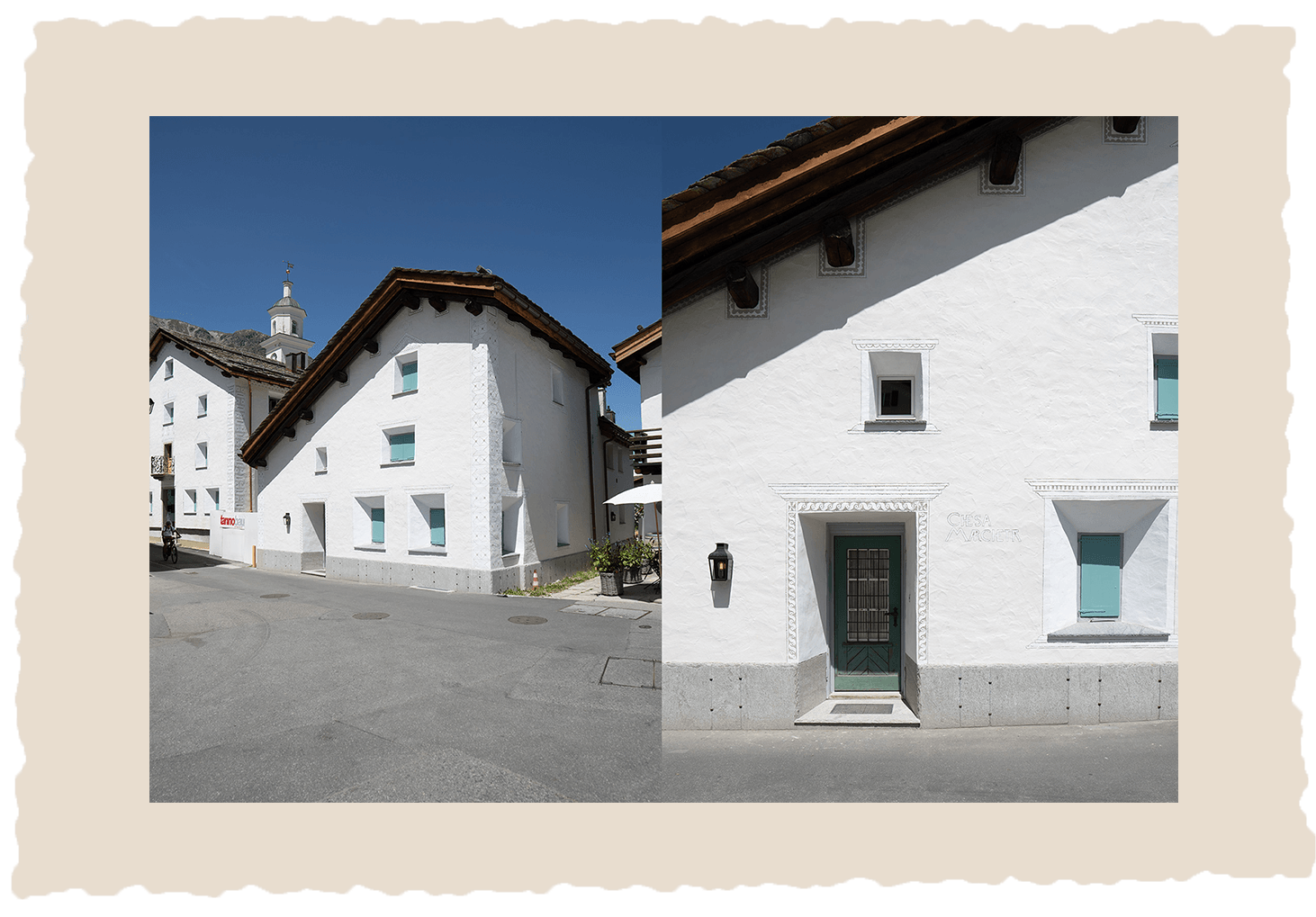
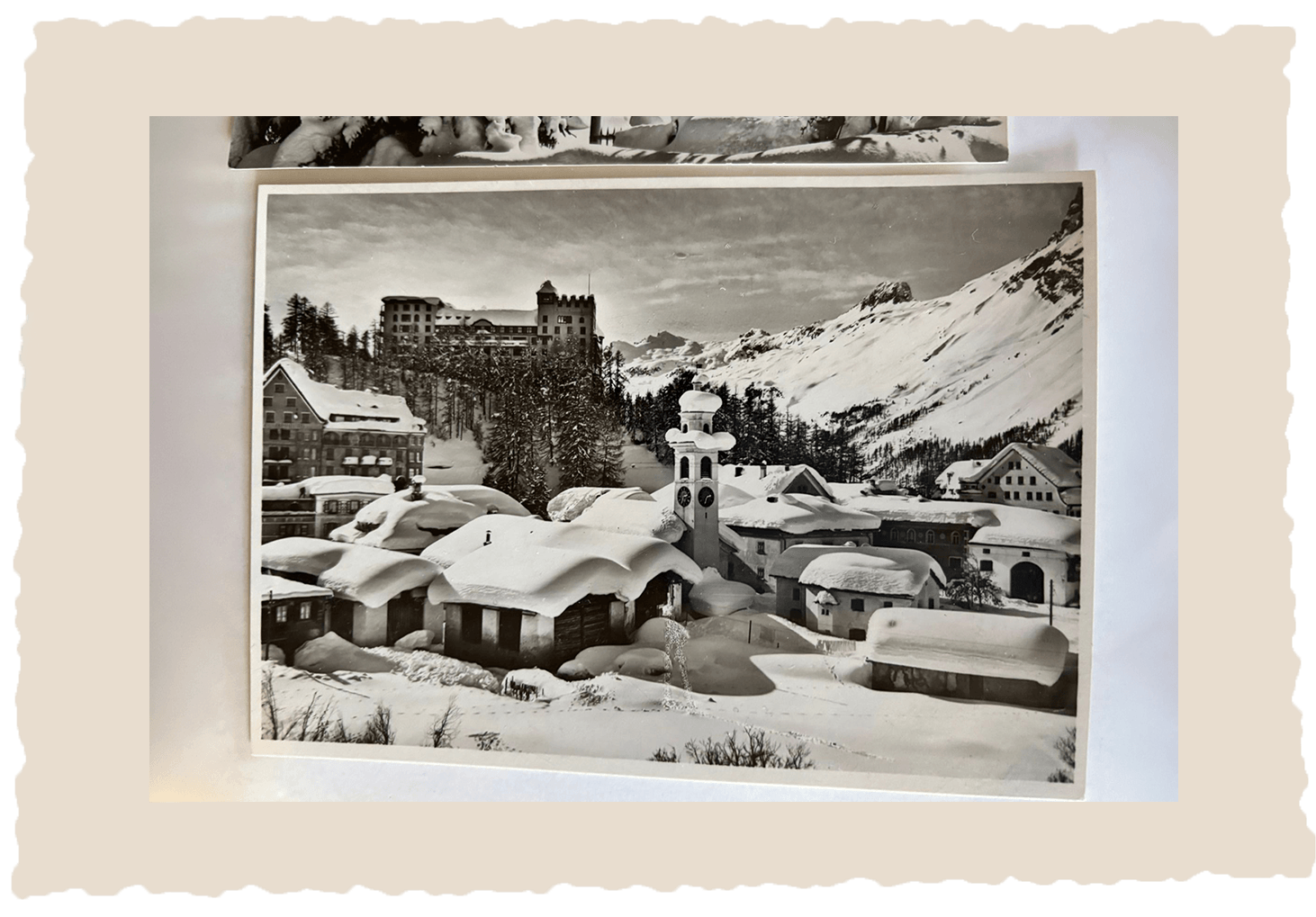
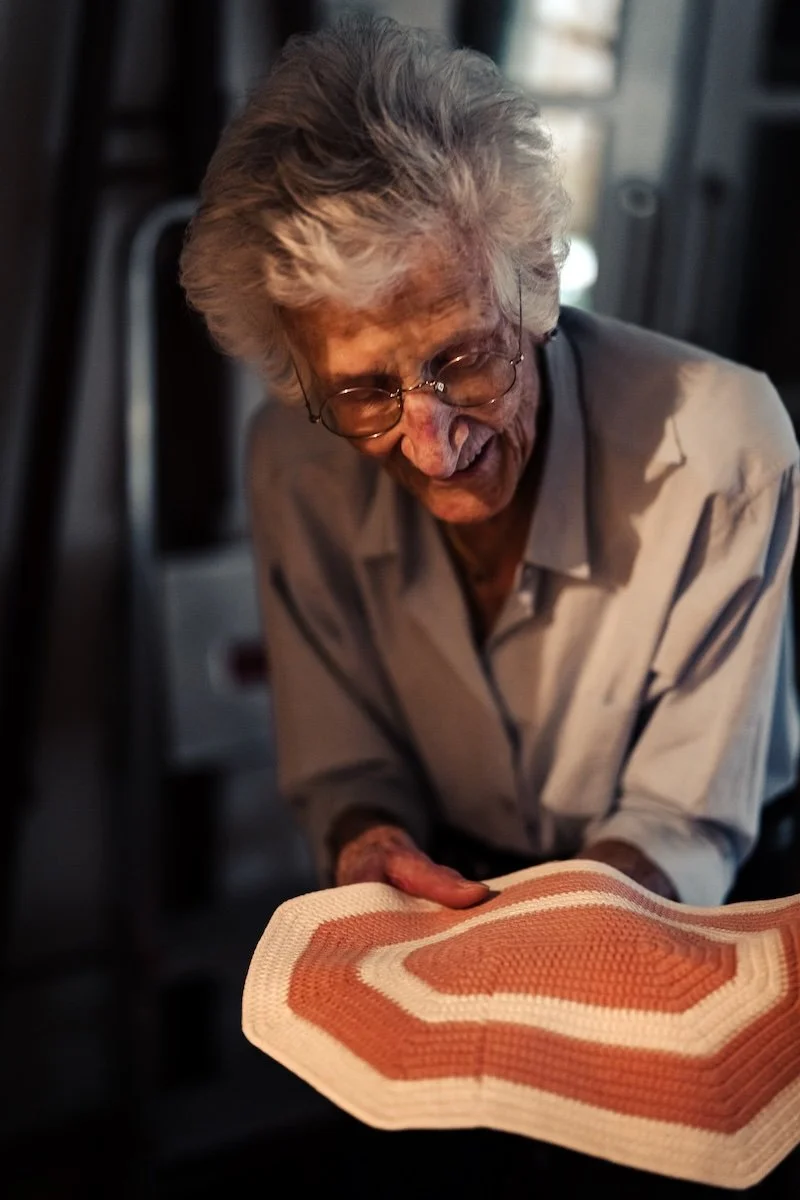
Maria Godly (born 1928) is the eldest of four siblings in the Godly family, known for their warm hospitality and deep roots in Sils Maria, Switzerland. Raised in a multilingual home where German and Romansh intertwined, Maria grew up between the traditions of the Engadin valley and the resilience of her mother, who was raised on the San Bernardino Pass. Her family’s journey into hospitality began when their father, a farmer, was offered the chance to buy the Chesa Marchetta and Pensiun Andreola in Sils Maria from a friend and hunting companion, Mr Gabriel.
The decision marked a turning point: Maria, at that point living in Zurich, returned to support the venture, alongside her younger siblings. The Godly family soon restored a few rooms in Pensiun Andreola, and continued to operate Chesa Marchetta as a restaurant and grocery store. (From 1958, Pensiun Andreola was open in the winter too.)
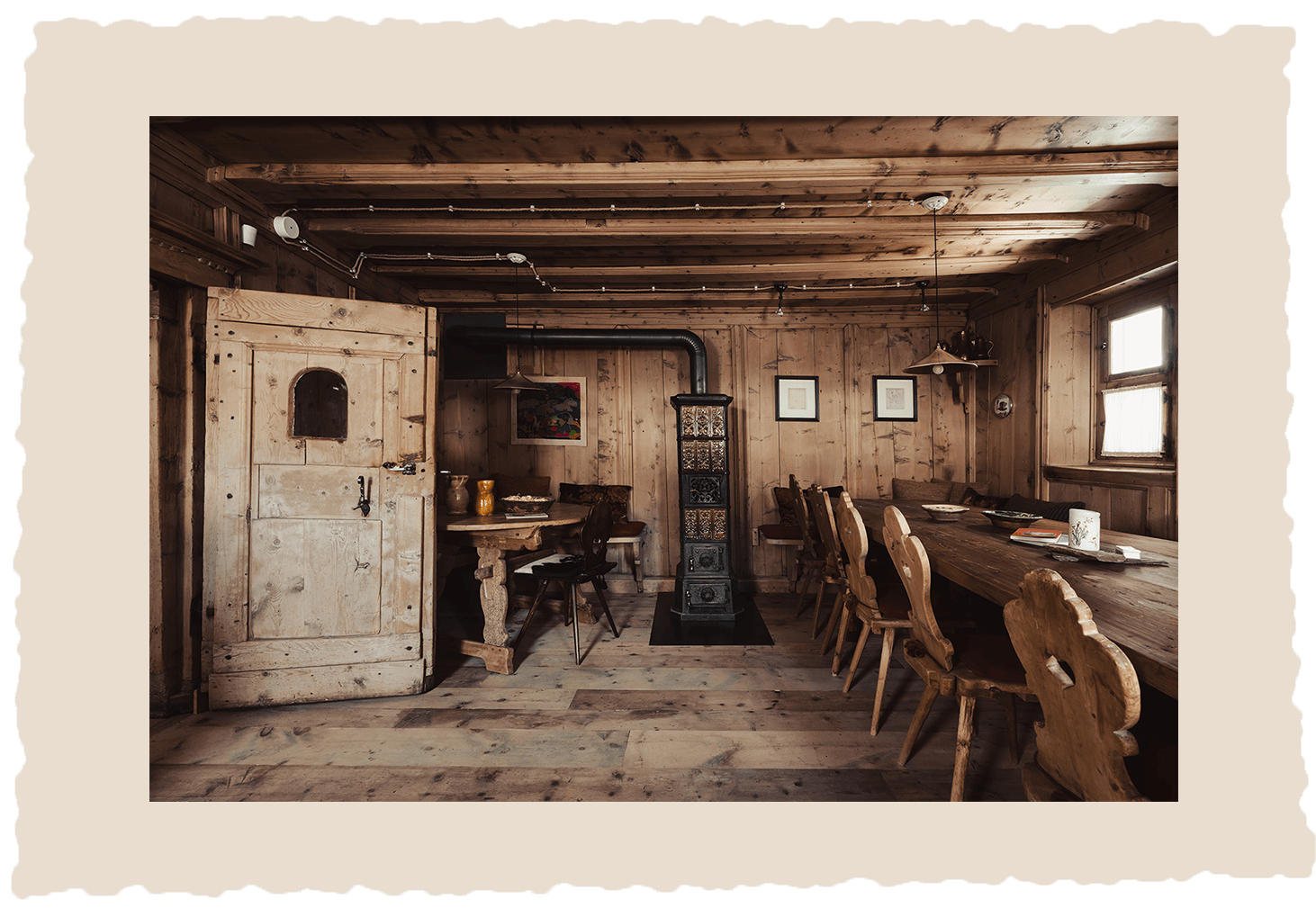
Under the watchful eye of Maria and her sister Christina, and her mother’s traditional culinary instincts, Chesa Marchetta became known for its set menus, handmade Knoepfli (spinach spätzle), and homestyle Fondue Chinoise served with generous portions of delicately sliced beef. The restaurant never adopted plated service; instead, meals were shared from large serving platters, warmed by specially designed scaldapiatti to maintain the food’s temperature and comfort. By the time Chesa Marchetta and Pensiun Andreola closed their doors in April 2016, alongside the family’s historic Pensiun Chastè in Sils Baselgia, Maria had become a living archive of Engadin culinary heritage, beauty and community warmth.
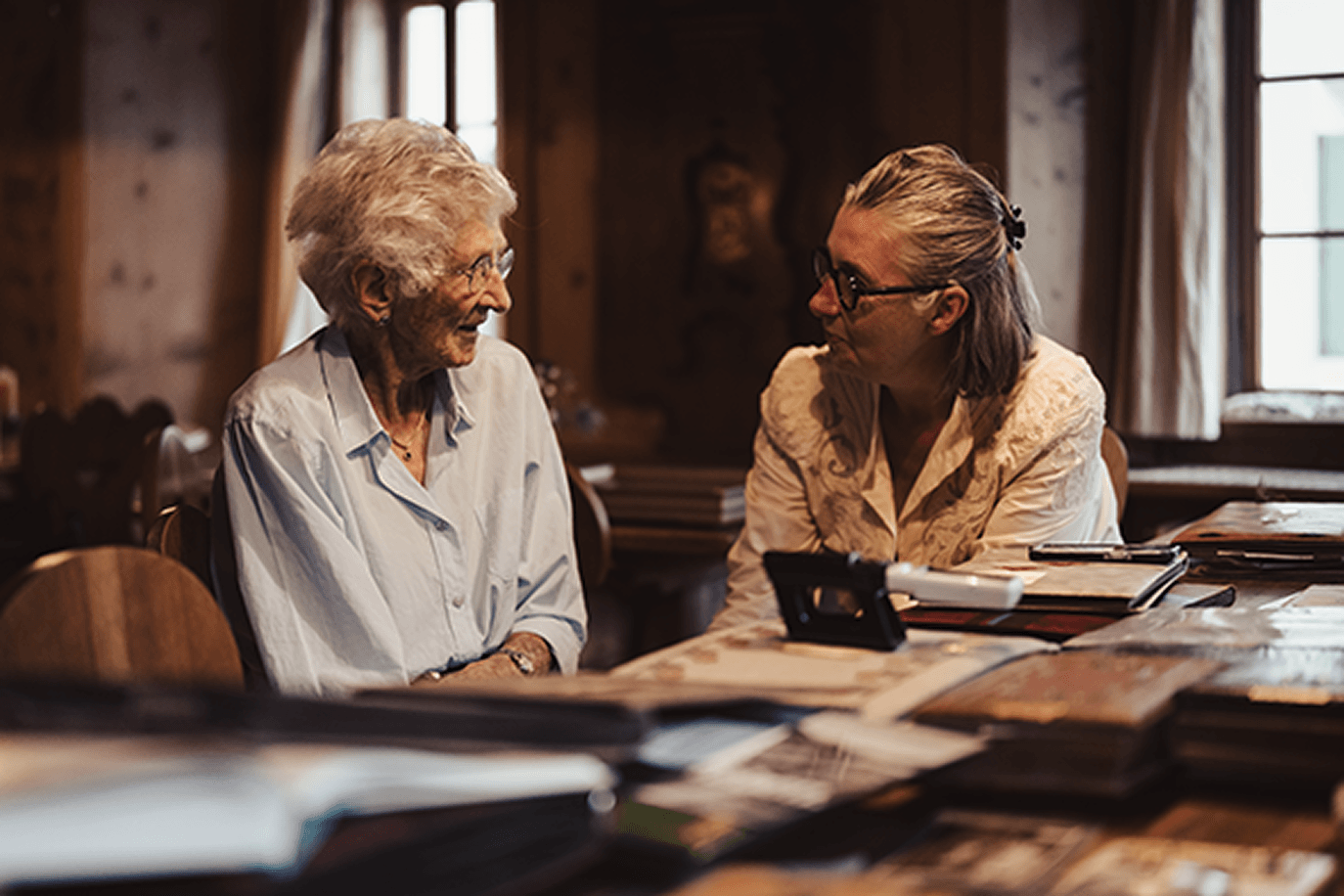
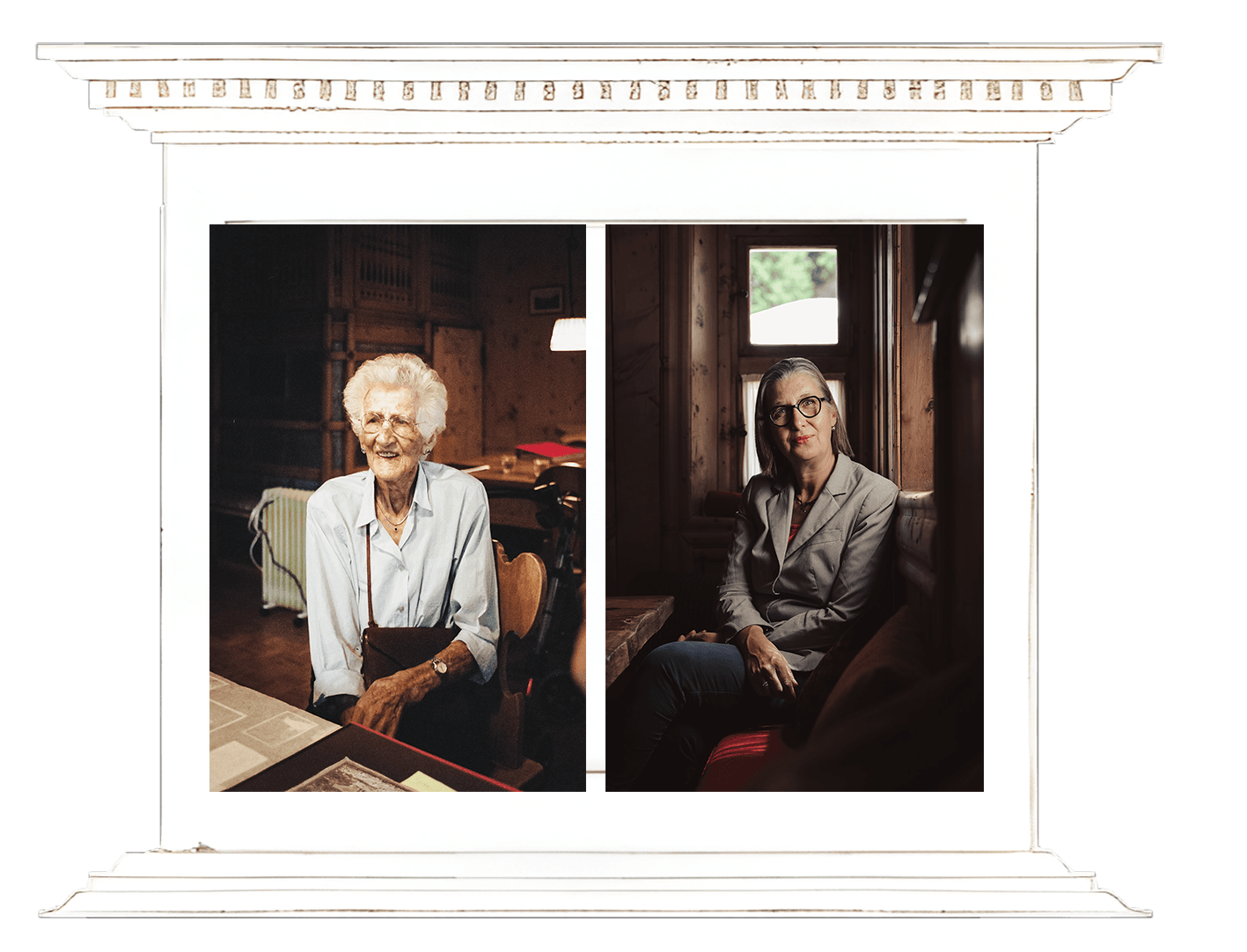
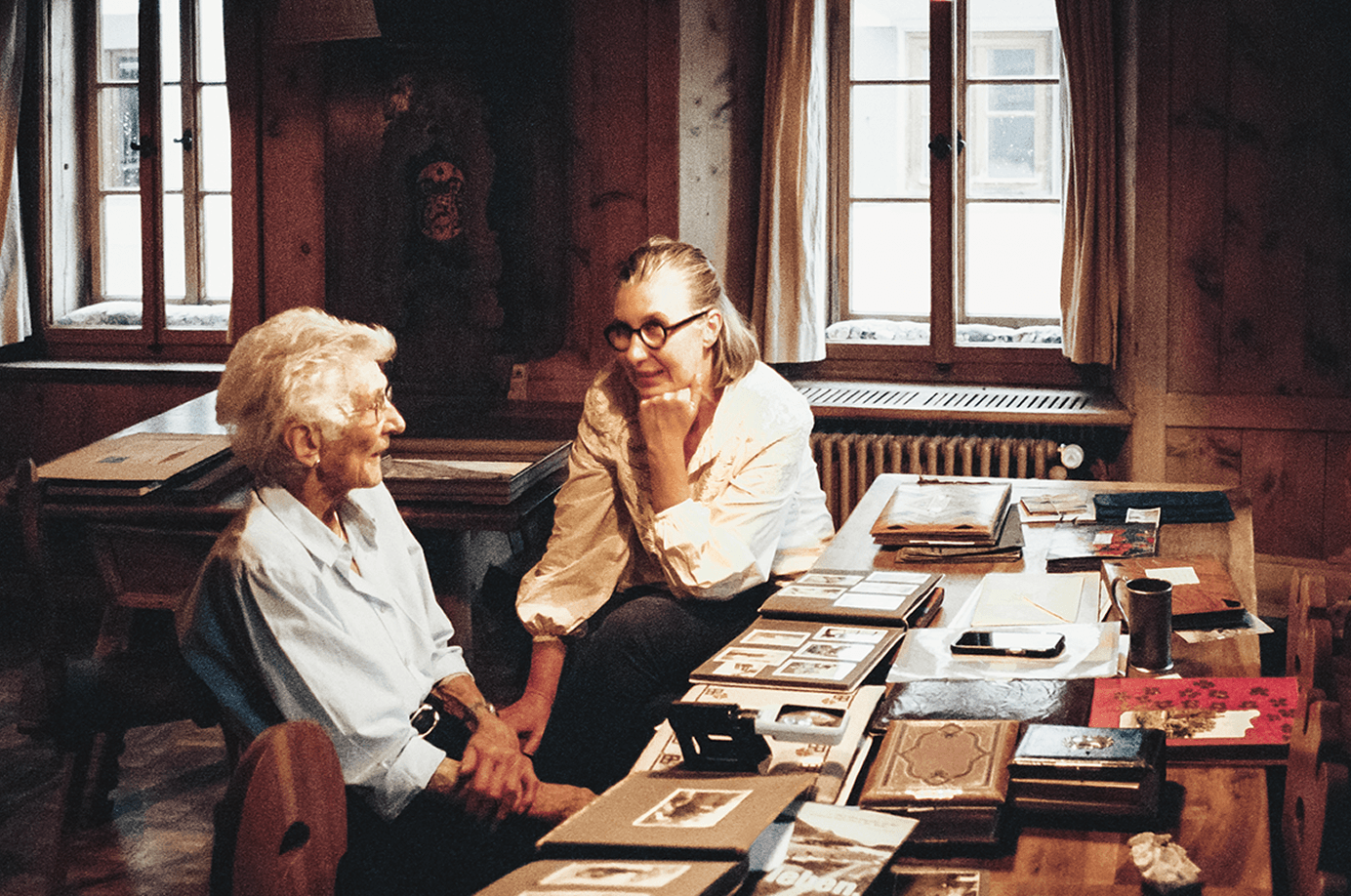
The following conversation takes place in the historic Pensiun Chastè, the current home of Maria Godly. Over a shared love of food and a journey through Maria’s personal memorabilia, she is joined by Federica Bertolini, an Italian hospitality expert, storyteller, and seasoned forager.
With two decades of experience in the UK–eleven years in Cornwall and nine in Scotland–Federica now steps into her new role as general manager of Chesa Marchetta, recently acquired by Artfarm. Her background spans 5-star hotels in Edinburgh and Rome to smaller properties in Cornwall and the Highlands, where she developed a personal, attentive style of guest connection.
Known as The Italian Ghillie, Federica blends her deep local knowledge with her Italian warmth, curiosity and passion for food, ensuring that the legacy of Maria Godly lives on, through generous hospitality, seasonal ingredients, and a deep respect for place.
Frau Godly & Federica Bertolini in Conversation

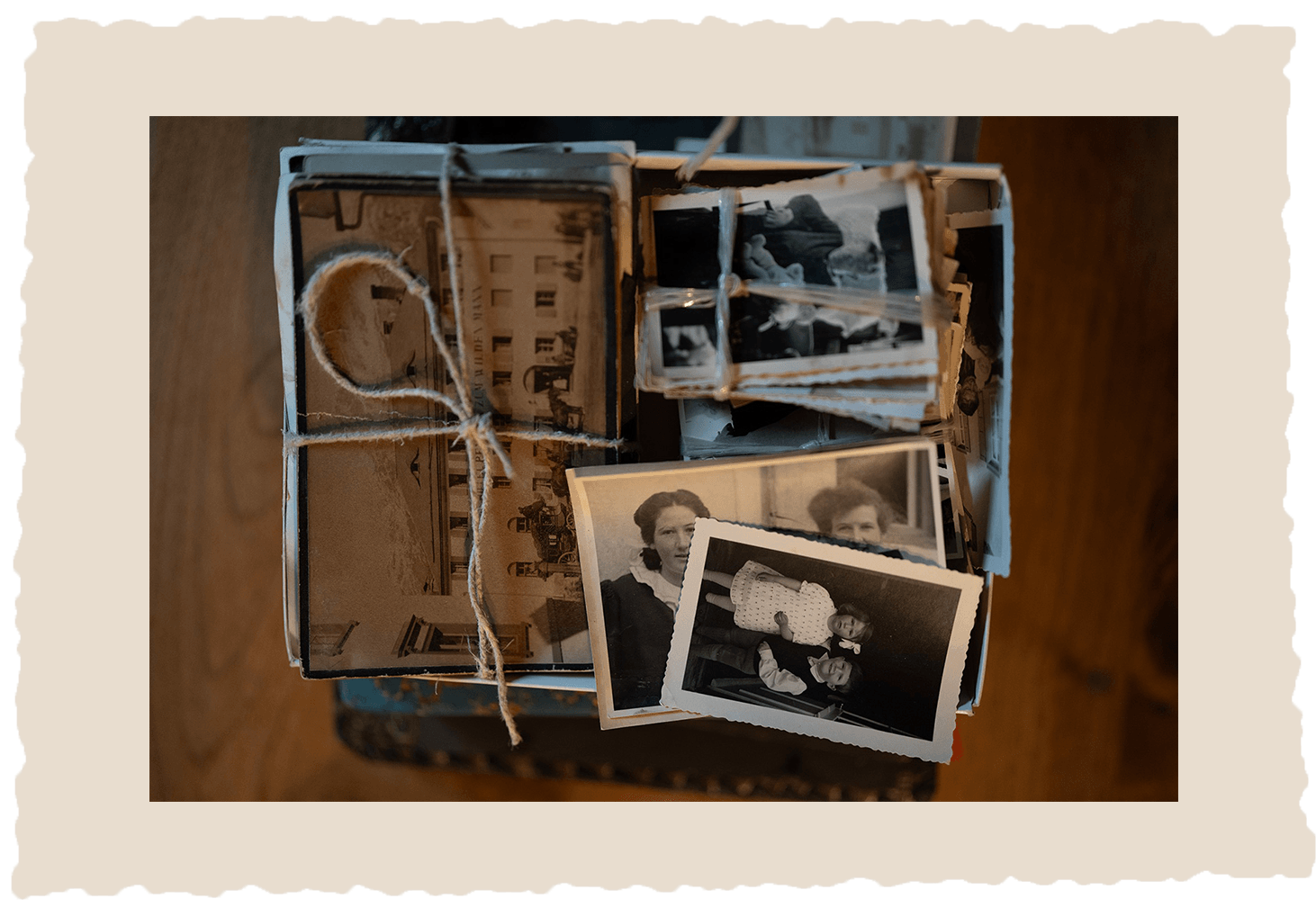
Federica: You inherited both Chesa Marchetta, Pensiun Andreola, and Pensiun Chastè from your parents and from your aunt, Annignia Godly, correct?
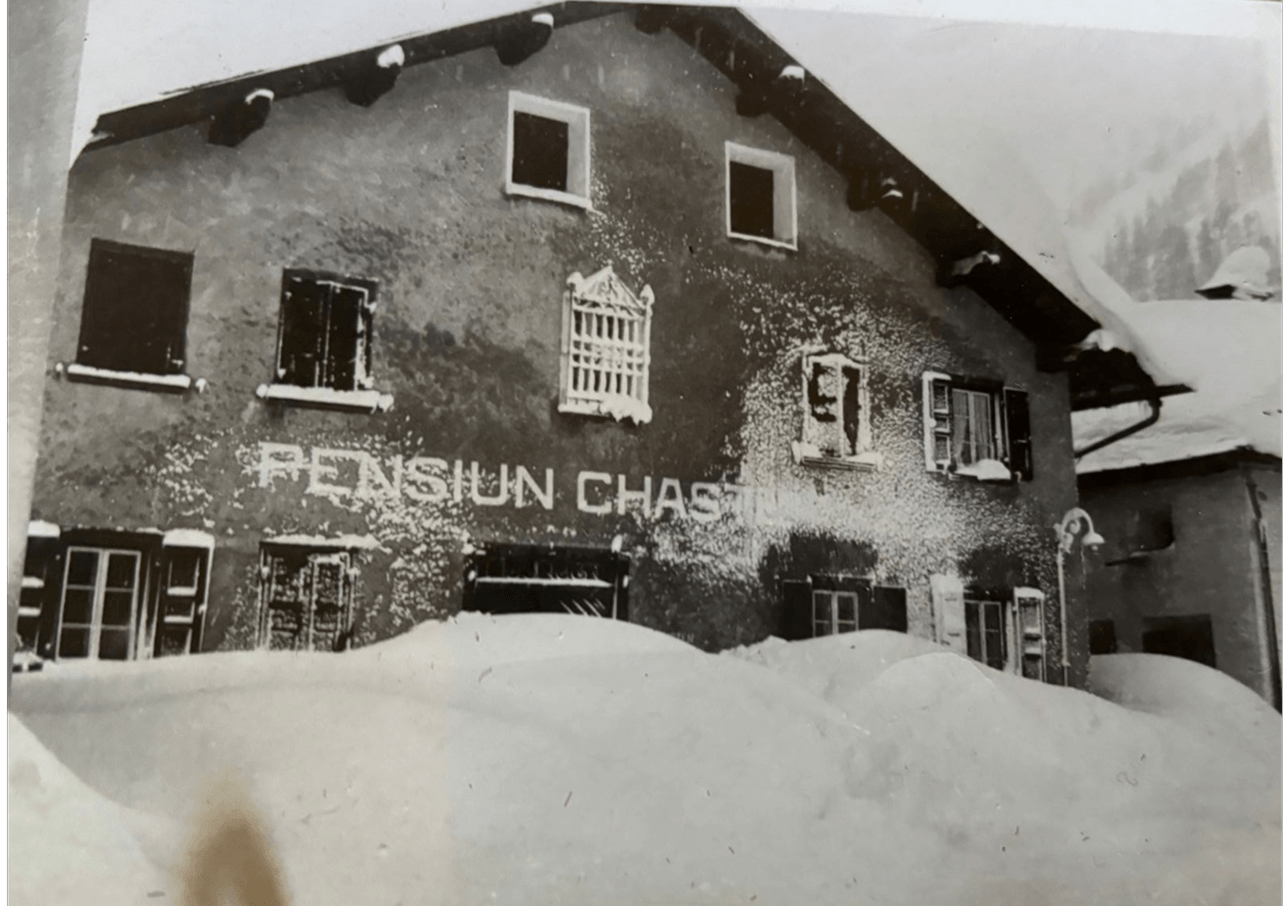
Godly: In 1901, my grandfather on my father’s side bought the house in Sils Baselgia that later became Pensiun Chastè. When the property was divided, my aunt inherited the Pensiun because she had always worked there. My father, Peter, inherited agricultural land.
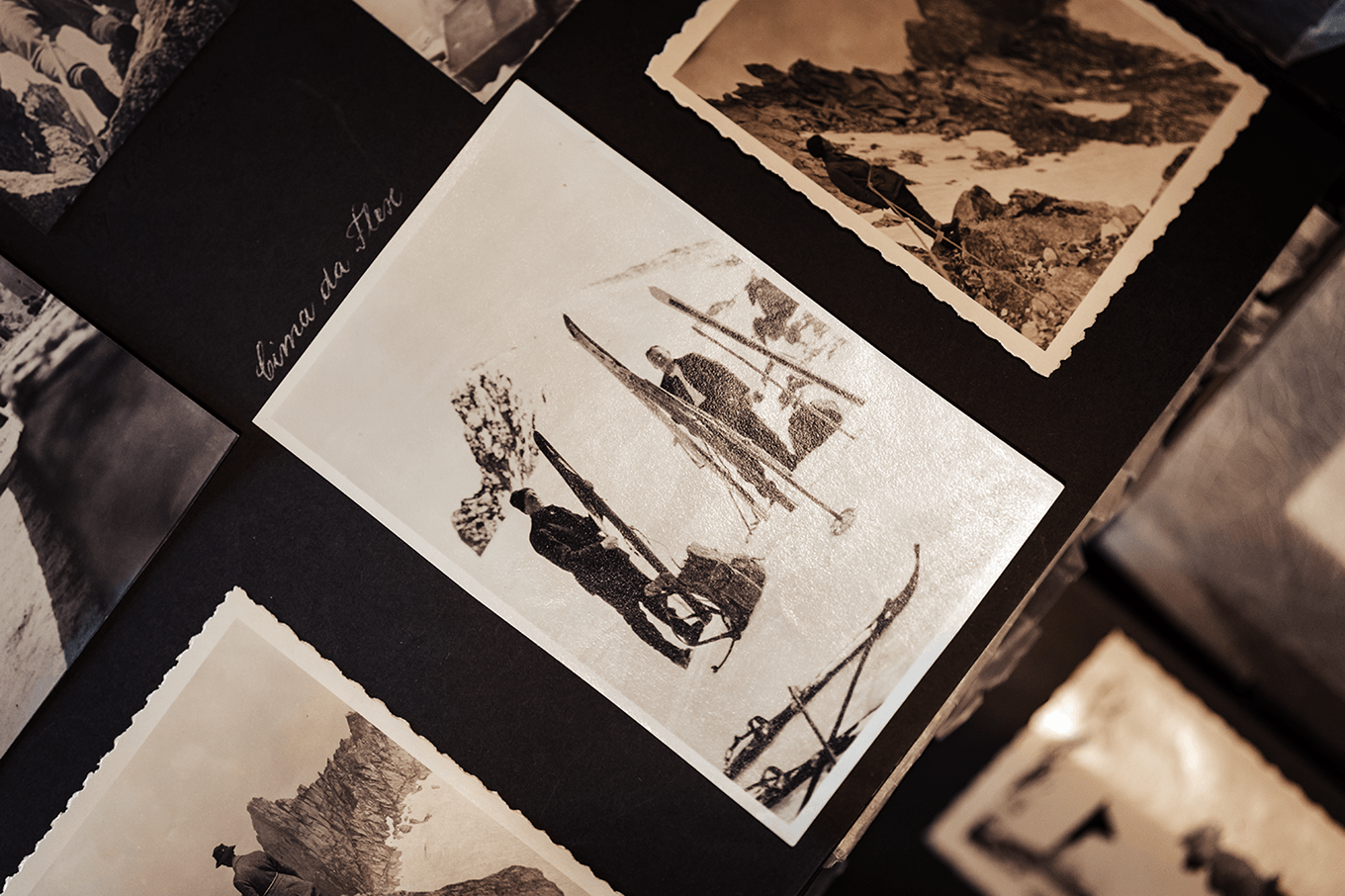
He was always full of life. Alongside farming, he worked as a mountain guide and ski instructor, and went hunting with Mr Gabriel, his friend and the previous owner of Chesa Marchetta and Pensiun Andreola.
Then, one day, Mr Gabriel came to see my parents and asked whether they would consider buying the houses.
I was already in Zurich, doing a retail apprenticeship. There was no money, but my parents had to decide whether to buy it.
Federica: Quickly?
Godly: Yes, the very next day.
My parents told us that they would buy it, but only if we all helped with the work in return. So, we said yes.
But to buy it, they asked the Kantonalbank for a loan because my father knew the bank's head.
When we bought it in June 1947, the rooms that would become the guest house were still exactly as the military had left them. There was straw on the floor where the soldiers had slept, and the wooden partitions had already been removed.
Because we had large debts, my parents had to prepare the rooms quickly so they could rent them out, but only initially in the summer. It was only from 1958 that Pensiun Andreola could be rented out in the winter.
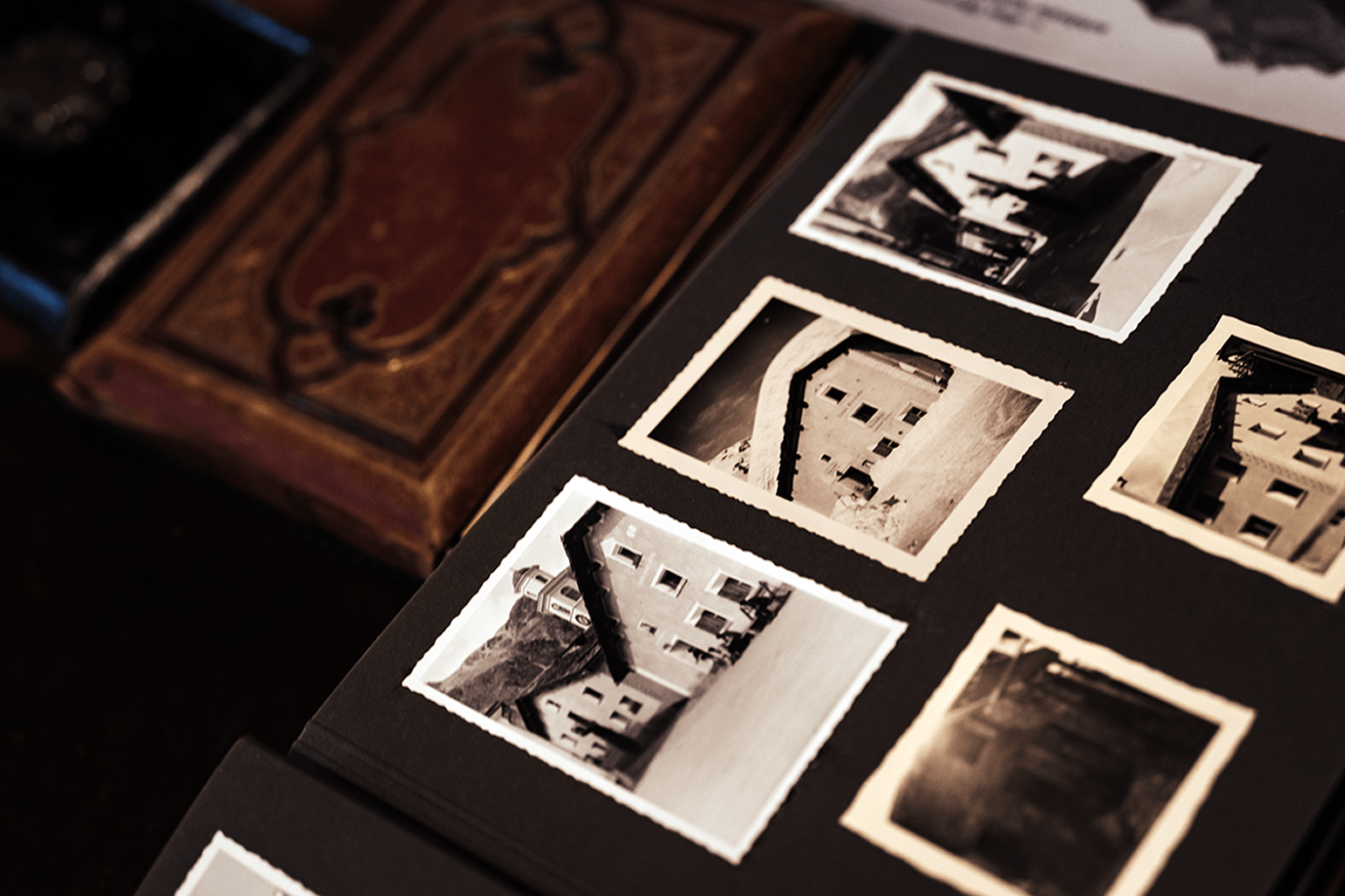
Federica: And in Chesa Marchetta, there was already a restaurant?
Godly: Yes, there was already a restaurant and a grocery shop at the entrance. My sister wasn't happy about having to run the shop as well.
People even came on Sundays to buy things, because the other shops and the post office were closed. But because we had the restaurant, we were open all week.
Federica: And your mum was the one cooking at Chesa Marchetta, right?
Godly: Yes, she was very good at cooking.
Before my parents got married, she came from San Bernardino Hospiz to the Pensiun Chastè to work there.
Federica: Was that how your parents met?
Godly: Yes. My parents then got married in 1927.
Federica: The same year you were born?
Godly: I was born in 1928.
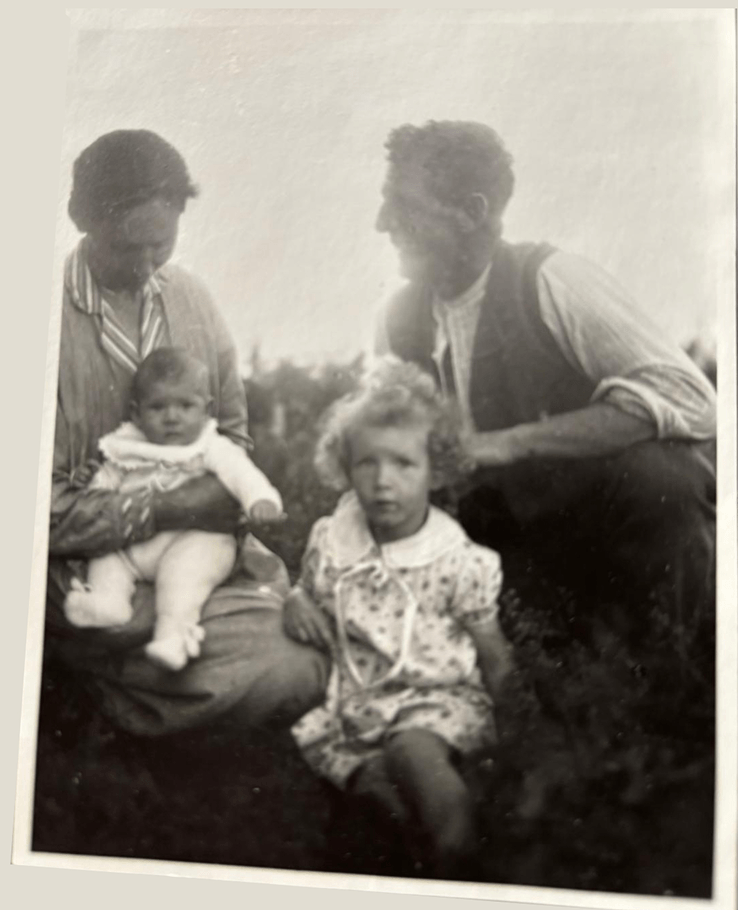
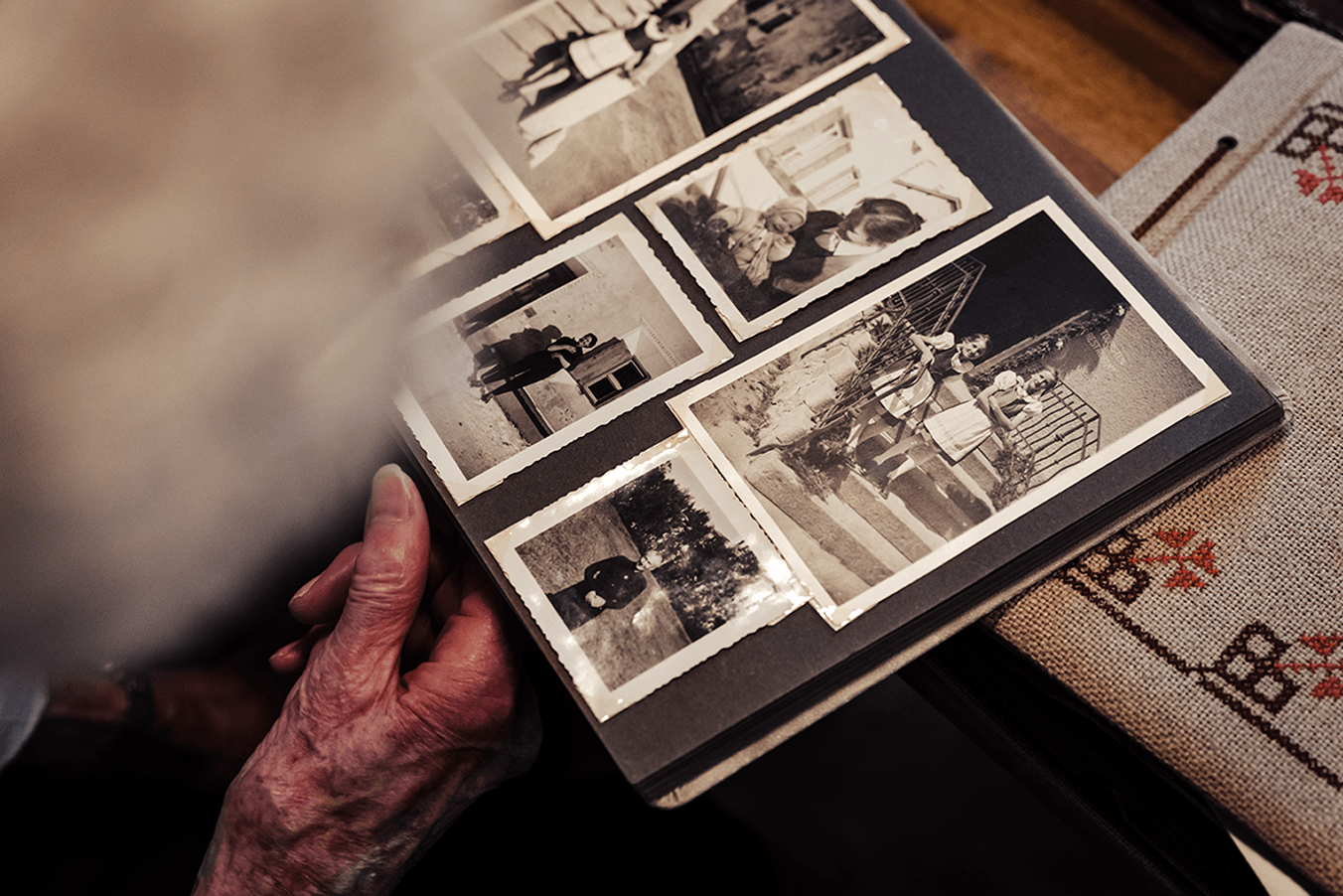
Federica: When you were the only child, were you very happy?
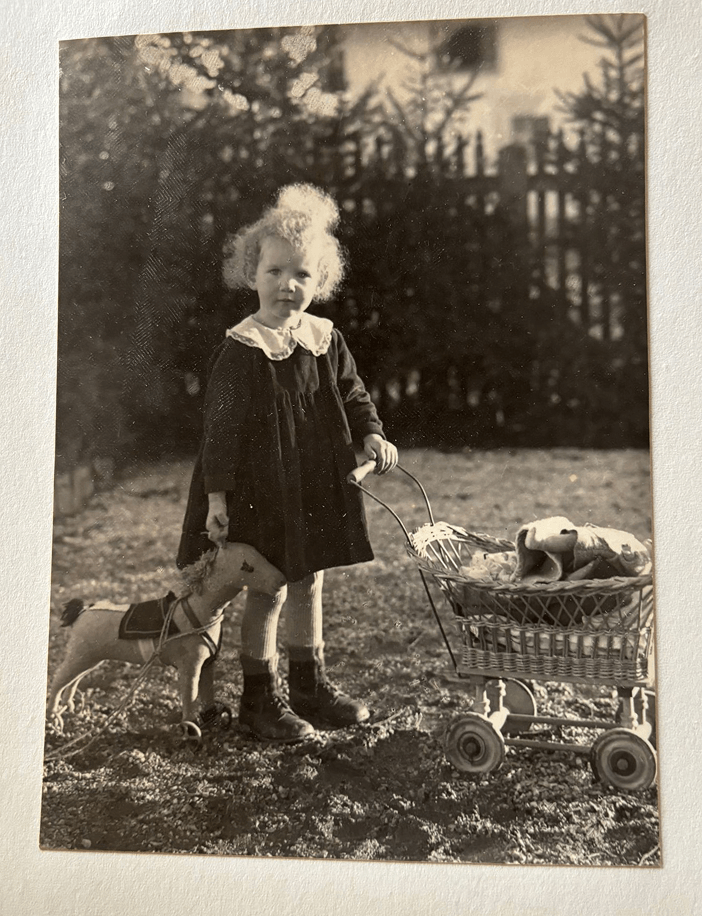
Godly: I was spoiled as the only child.
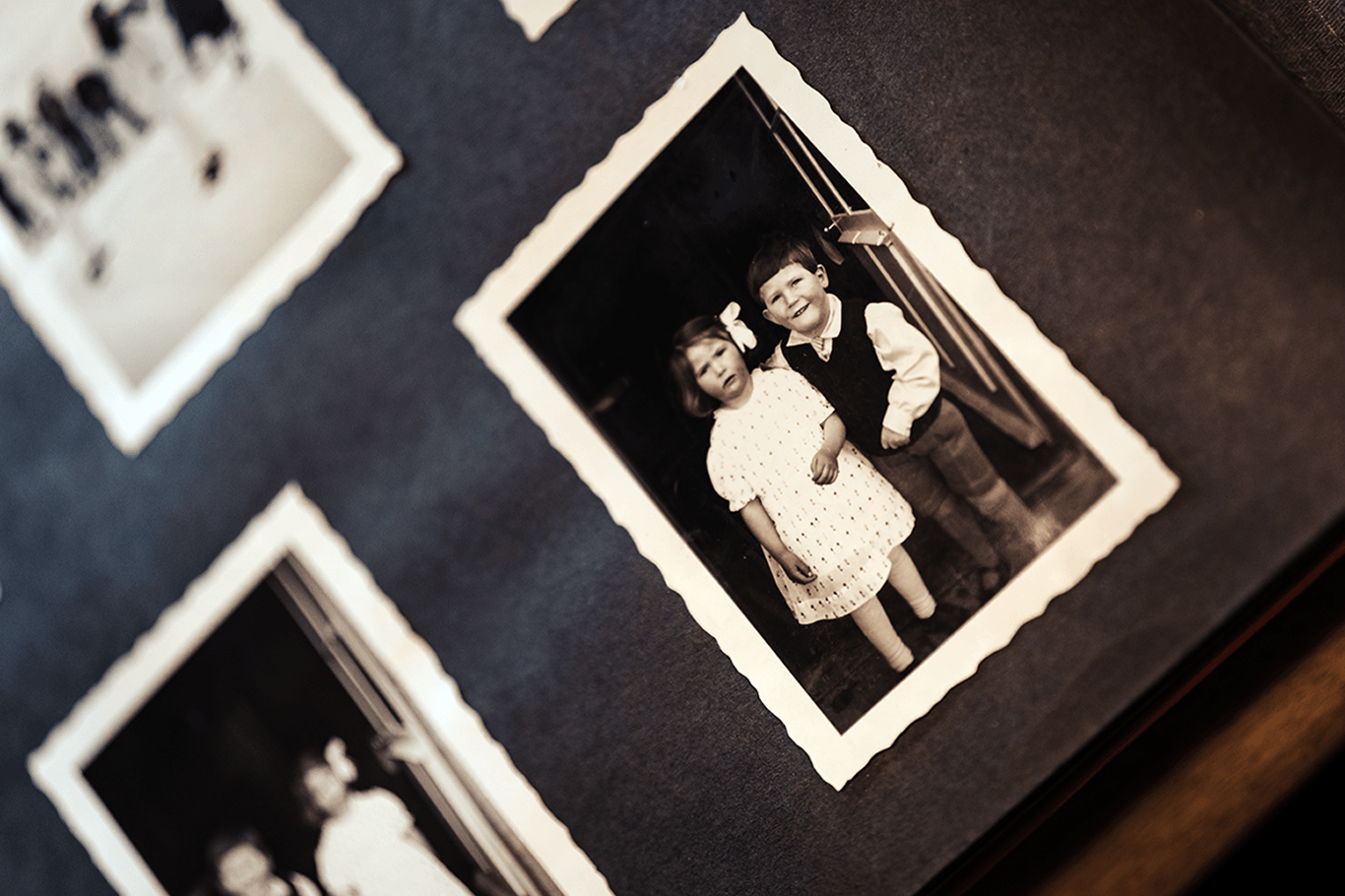
I always had braids, because of my curly hair…
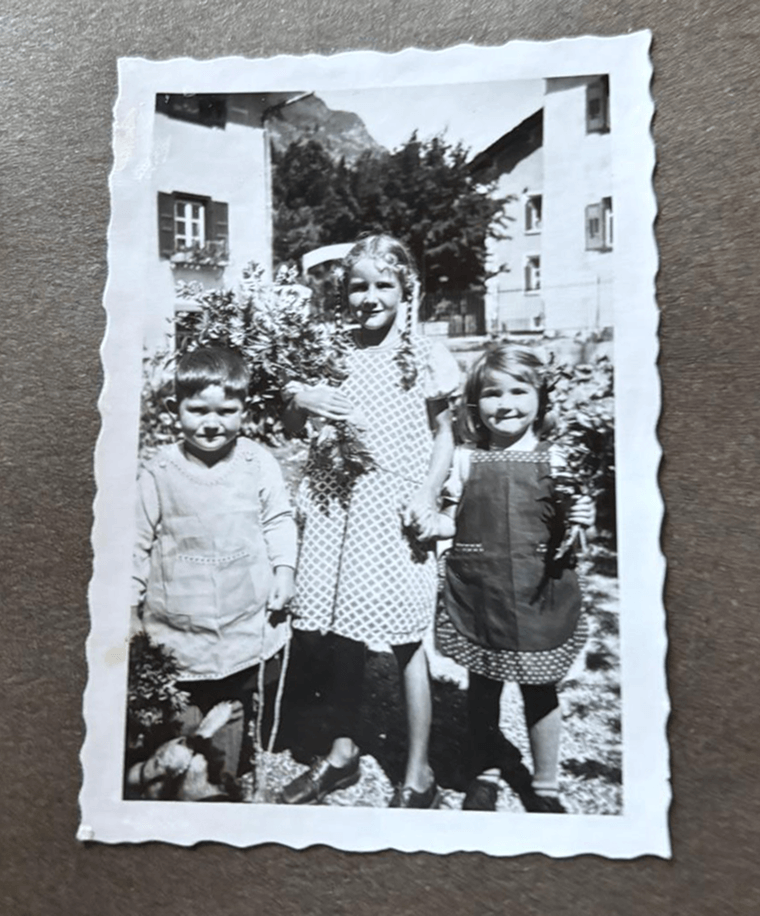
Federica: Were you a happy family?
Godly: Sure, we were happy, very happy.
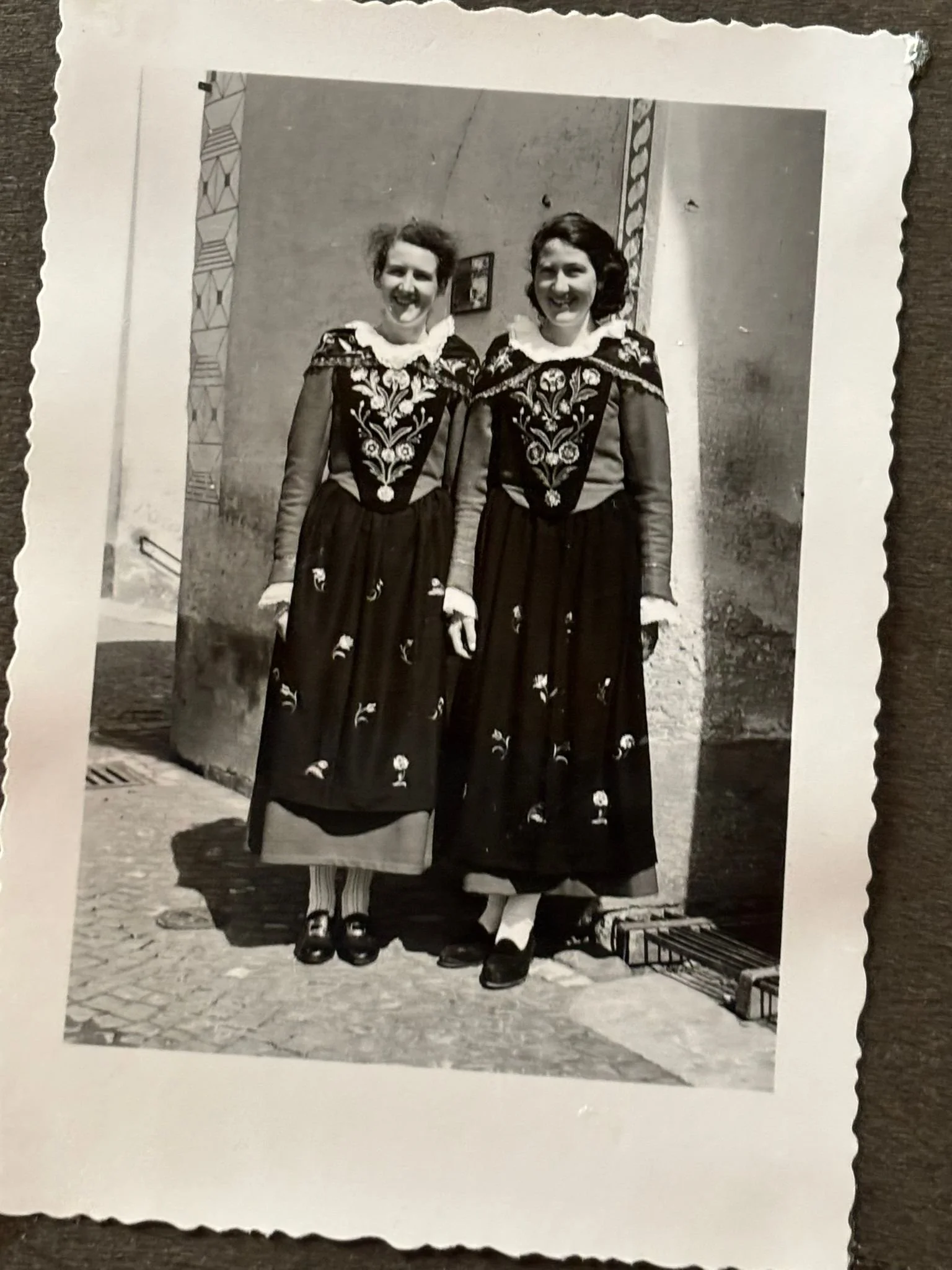
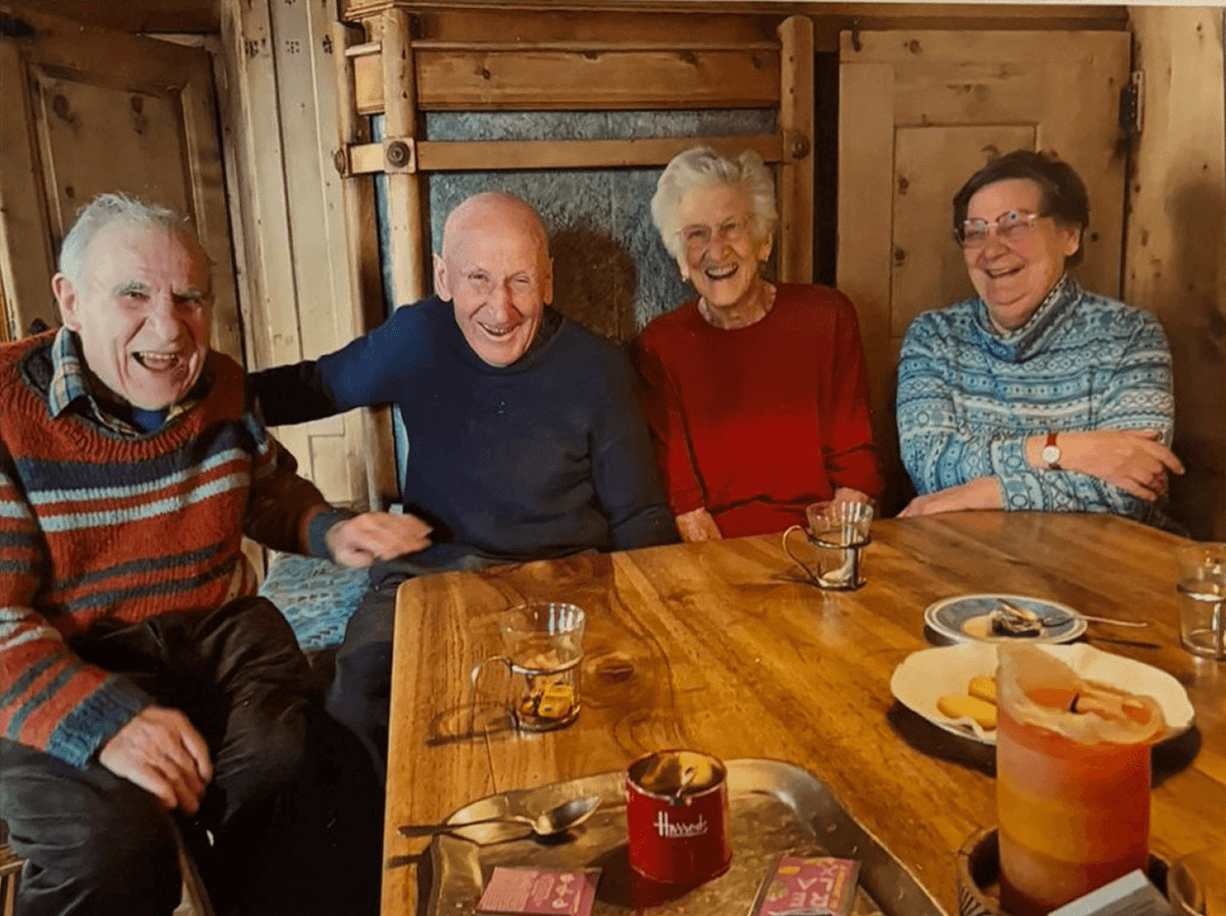
When I was 16, my parents sent me to learn home economics in Lucens to improve my French. I studied there over the winter, and when school finished in April, it was beautiful.
Federica: Your parents have always been very supportive and motivated you to learn more, haven’t they?
It’s something really special, particularly as few parents at that time would have been so open-minded with their children.
Godly: Yes, well, they didn’t really have the time to spoil us. But yes, they were very open-minded. We grew up learning different languages.
Federica: Yes, that’s right. So you grew up speaking three languages: Italian, Romansh, and German, right?
Godly: Italian, not so much. Well, Chiavenna is really close, and we had Italian staff. So that’s how we learned the language.
Learning languages made me curious about other places.
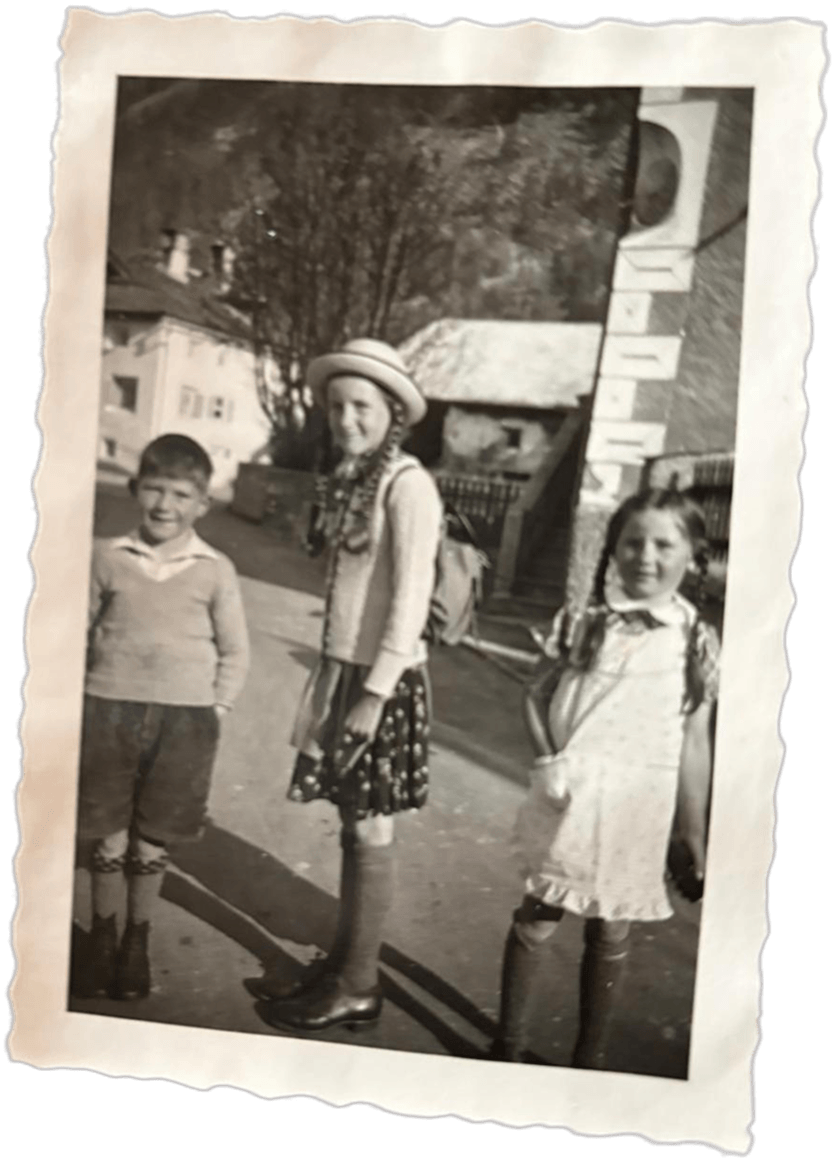
Federica: So when your parents bought Chesa Marchetta and Pensiun Andreola in 1947, you were already in Zurich. Did you then come back to Sils to help your parents?
Godly: After Lucens, I moved first to Geneve where I was working in a private house and experienced the celebrations for the end of the war. Then I moved to Zurich to attend another course where I learnt how to run a shop.
In 1948, when I finished my apprenticeship, I returned. I knew I had to help my mother immediately with the new business.
I was the oldest. Both my sister and I were very practically minded, but had different skills.
Federica: Did your brothers also help the family?
Godly: Linard studied agriculture in Landquart, so he and my father worked in the fields.
Gian Pol, the youngest, learned construction drafting in St. Moritz, then at a technical school in Burgdorf, then in Zurich, then in Canada, where he stayed for six years. He came back when we needed help.
Federica: I want to ask about you and Christina–have you ever thought about doing something else? Was there ever a rebellious phase?
Godly: No. After my sister finished hotel school, she thought that she still had too little experience. Although she had already learned a lot, she worked one season in the bursar’s office in the Chantarella hotel in St. Moritz.
So if I was at home, I would work in the restaurant, and my sister would go there.
We had already been running the guest house for years, but only started opening in winter around 1958. It wasn’t ready for Christmas, so we only opened in February. One day, a German guest arrived with his dog. He had booked a room at the nearby Hotel Maria, but they didn’t accept pets at the time.
We took him in and said, “Let’s begin.” From then on, we stayed open in winter as well.
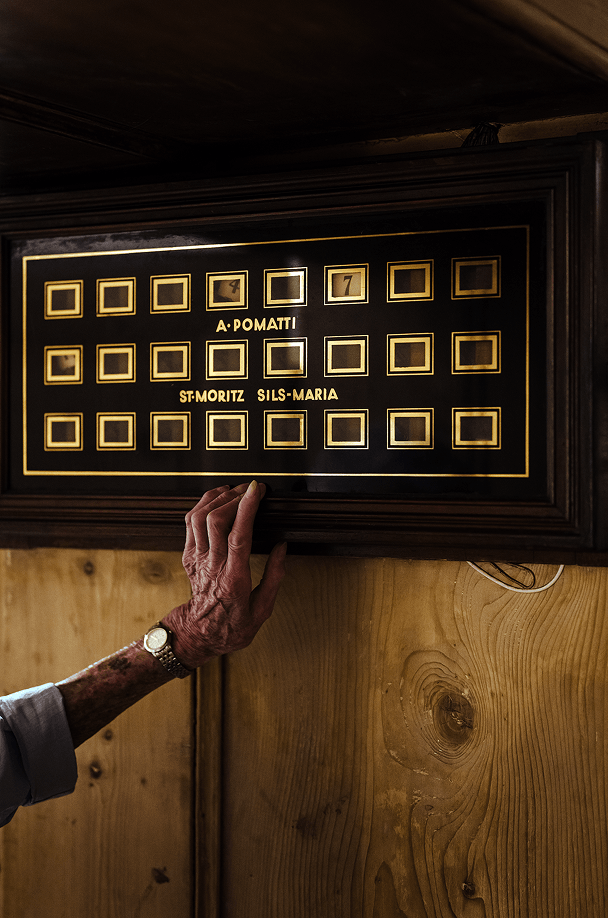
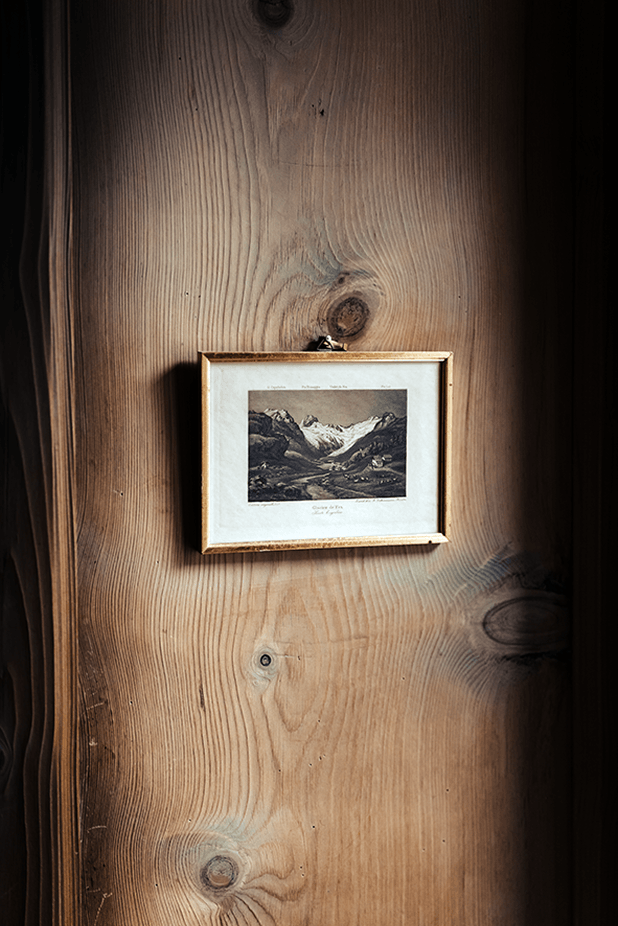
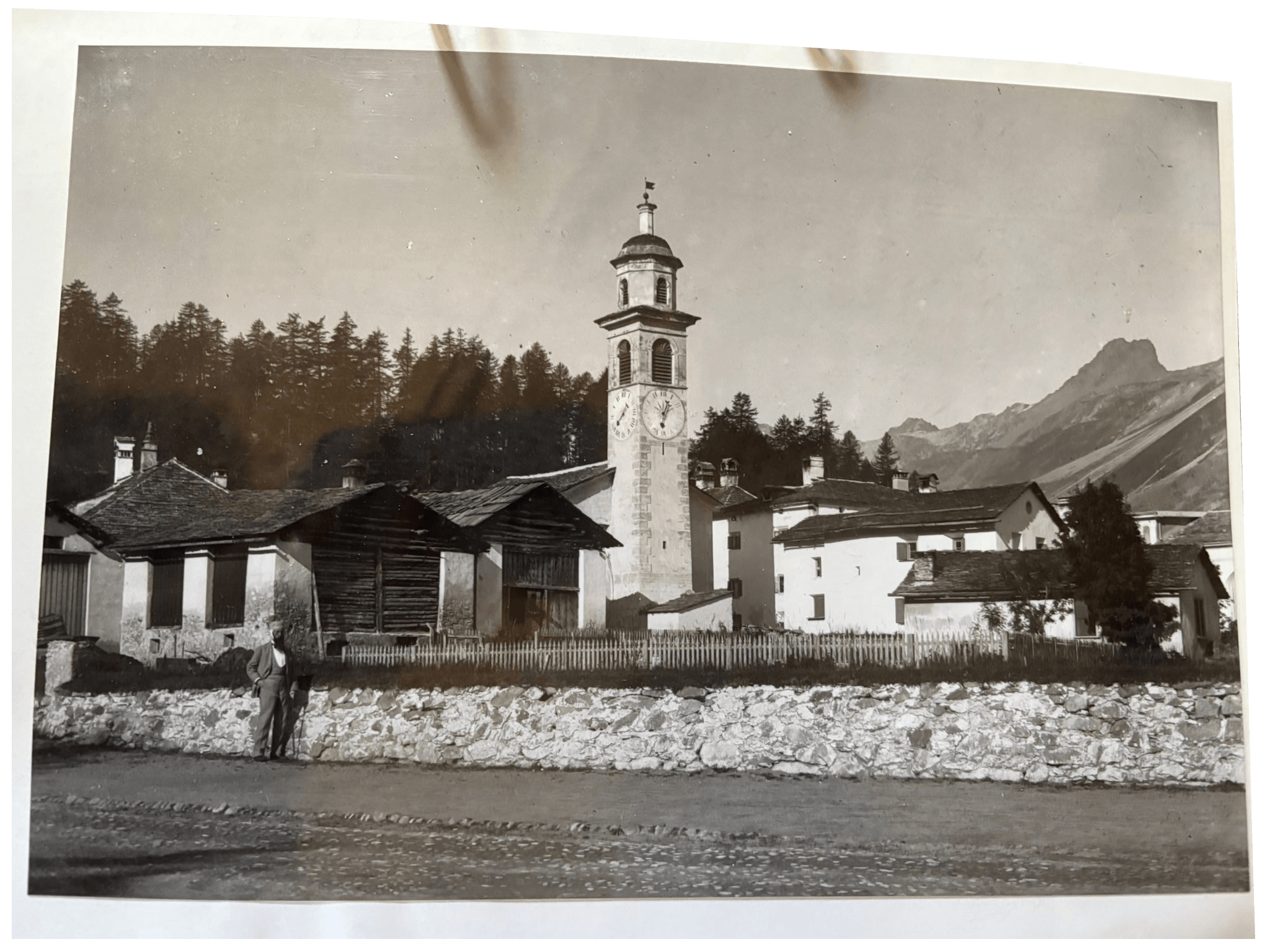
Godly: Around 1951-1952, I left for London to work in a private house. London was beautiful, not long after the war.
I explored the city as much as I could, and I looked after three children, aged 11, 5, and 3 years old.
I worked in the house in Chelsea. The owner was Mr Evans, I believe he was a lawyer.
Federica: How did you meet him?
Godly: A guest of Pensiun Chastè, Mrs Kink from Nurnberg. She knew them and arranged for me to go there.
Federica: Okay, but you were very international in that case, because not everyone went to London in the ’50s.
Godly: It was my first flight—Zurich to London.
Federica: Alone?
Godly: Yes, alone. But when I was in London, Mrs Kink picked me up at the airport to take me to where I was going to work; otherwise, I would have had no idea how to get to their house.
She and her family had stayed with us for much of the war, and we are still in contact with her son, who now lives in Canada.
Federica: What was it like to live in Pensiun Chastè during the war?
Godly: We lived well. It was really peaceful, even though food was rationed, I still have the stamps we used to get food.
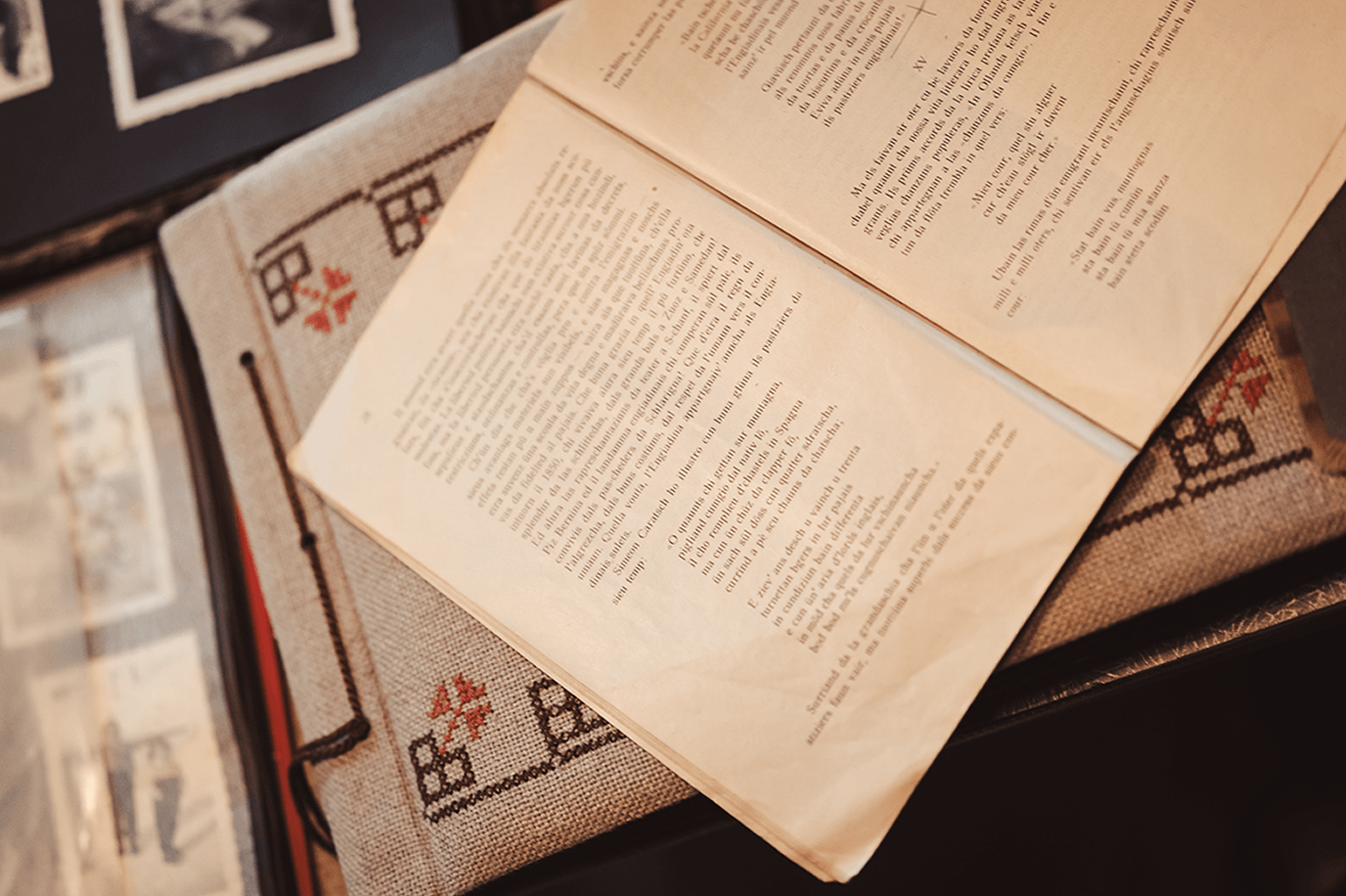
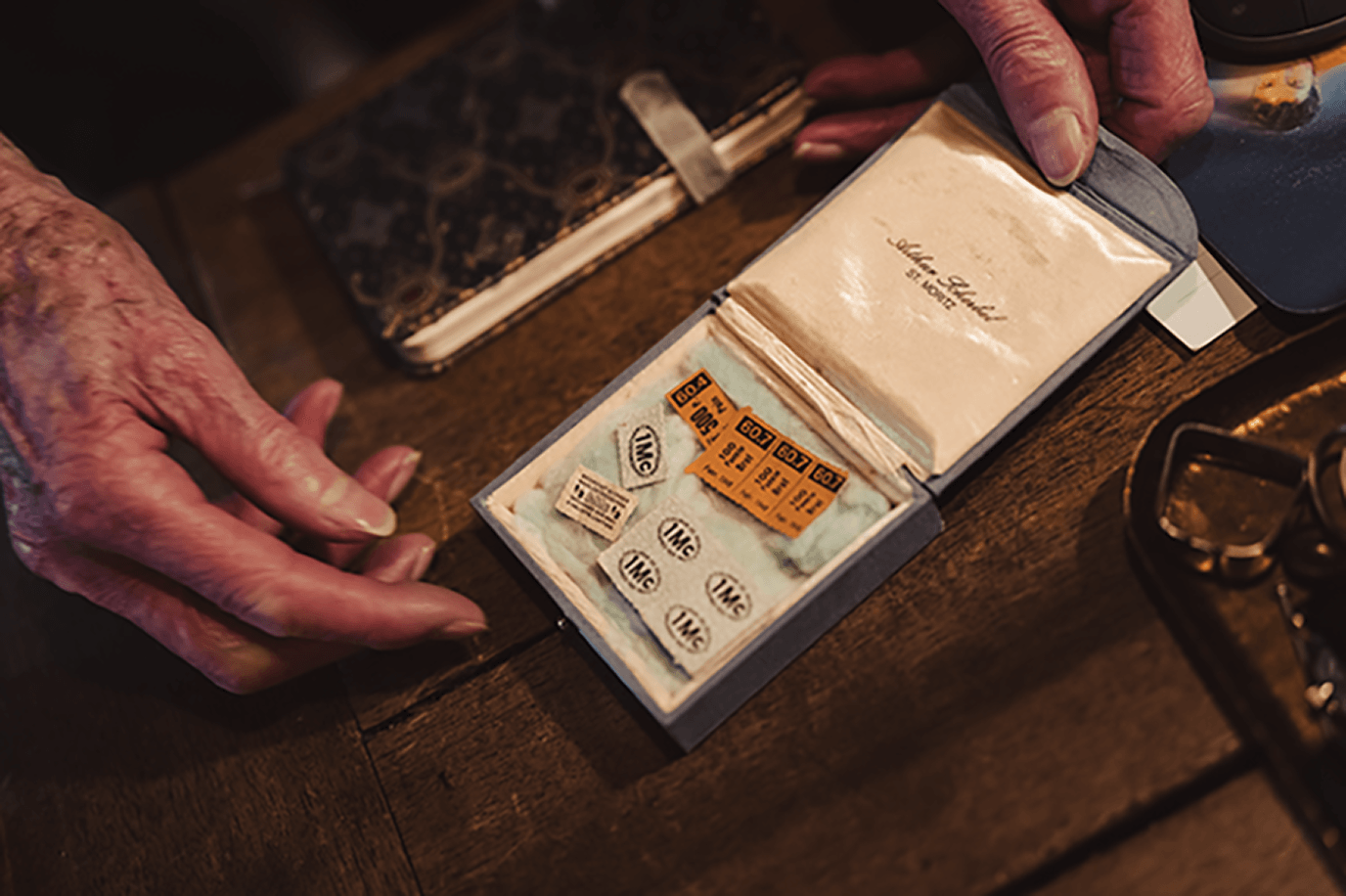
The meat was rationed, too. We received meat coupons and bought what we couldn’t produce ourselves.
We had a fountain in the stable. The fishermen caught trout in the lake with nets and sold them to the hotels, and we let them keep the live fish in our fountain. Sometimes I found dead fish in it, others still alive. We had to kill the fish when they were sold to the hotels.
Federica: Did you kill them with a stick? Or, how did you kill the fish?
Godly: We killed them by knocking them on the edge of the trough.
I also remember that during the war, in 1941, the first Engadiner Konzertwochen took place.
I remember a violin concert in the church in Silvaplana with a famous violinist. My sister and I gave the program to the people attending the concert. It was wartime, and a lot of Jewish refugees and intellectuals from Germany and Austria fled to Switzerland.
Big international artists had nothing to do, so some started to organise concerts. We had many clients attend because people from Switzerland couldn’t travel abroad at the time.
Federica: And did you host them? Or did the preacher host them?
Godly: No, I think they paid with the money they earned from the concert.
Perhaps the hotels also offered them a special price for their attendance.
In this way, they could work and stay somewhere beautiful, and the clients had public entertainment.
I also found my own travel book the other day!
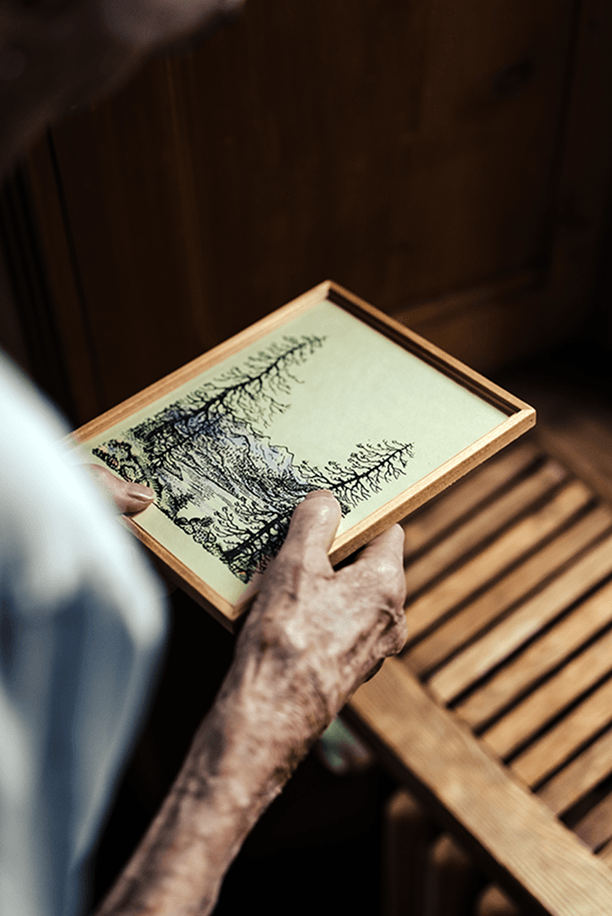
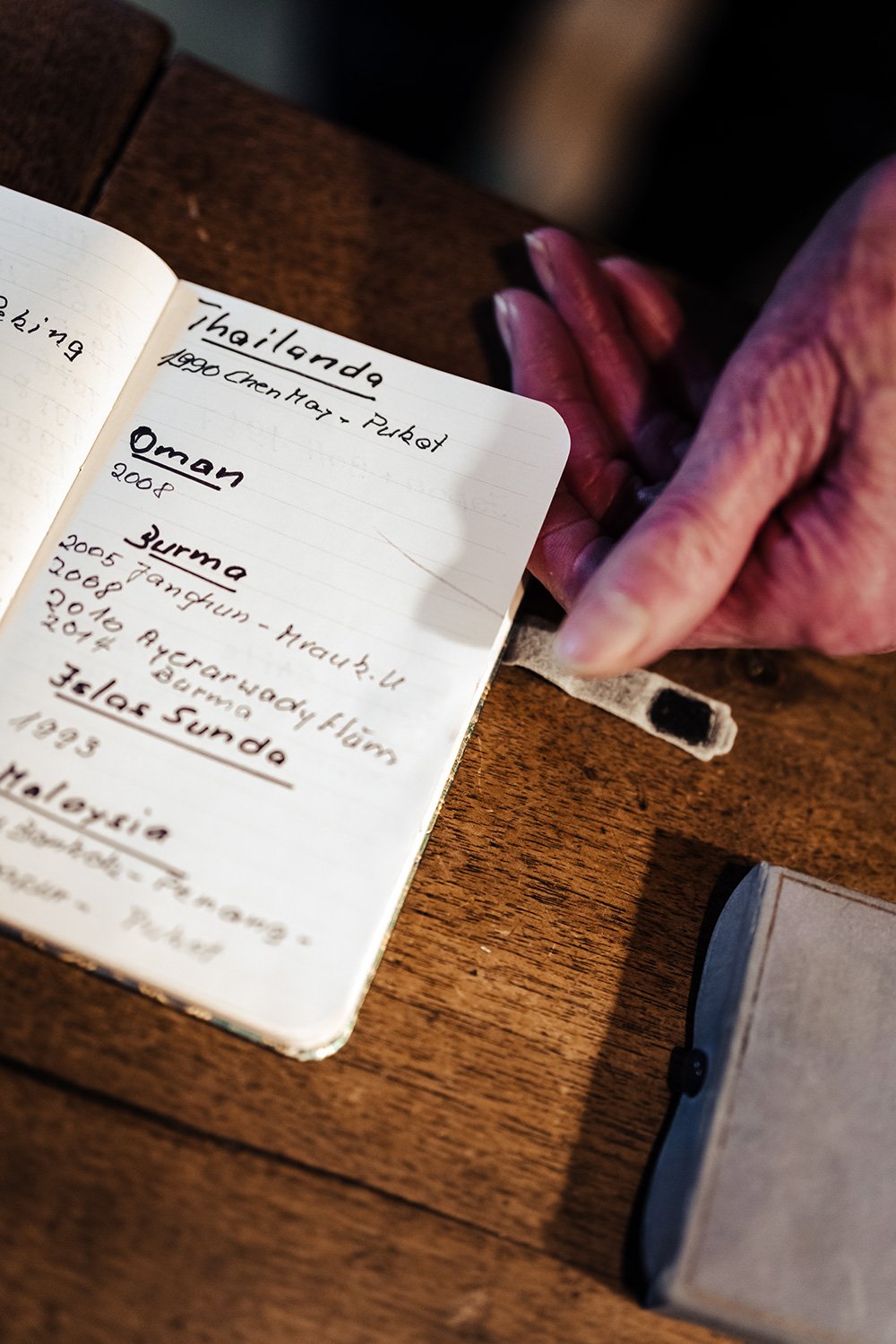
Federica: Wow, it shows you have been everywhere: Italy, England, Scotland, the Netherlands. Also, Armenia and Georgia, Yugoslavia, Venice, Athens, Asia and even all over Africa. This is incredible!
Godly: Also Burma, Cuba, other places in South America, Chile, Cancun, Mexico.
Federica: Even Australia and New Zealand!
Godly: And thanks to these trips, it happened that I saw guests from Chesa Marchetta in places around the world. It happened once in Doha, Qatar. Such a small world!

Cooking at Chesa Marchetta
Sils Maria . Switzerland
Topics of Conversation

Service & Menu
Federica: Was the restaurant open only in the summer?
Godly: No, it was always open for both the summer season and the winter season.
Federica: I want to ask you about the menu. I presume there was a fixed menu, or did the menu change? For example, once a week, you cooked polenta and another week, there was something else.
Godly: We didn’t prepare the same thing all week.
Federica: So people arrived, and you served them right away. You had already brought wine, then the salad came first, right?
Godly: The kitchen was informed of the guests’ arrival, and so they immediately prepared the salad, which was brought to them at the start of the meal.
Federica: And...was it the same salad for everyone?
Godly: Yes, it was.
We have never done table service. We have always prepared large serving dishes.
Federica: So you went to the table with a large plate and put the food on the customer's plate?
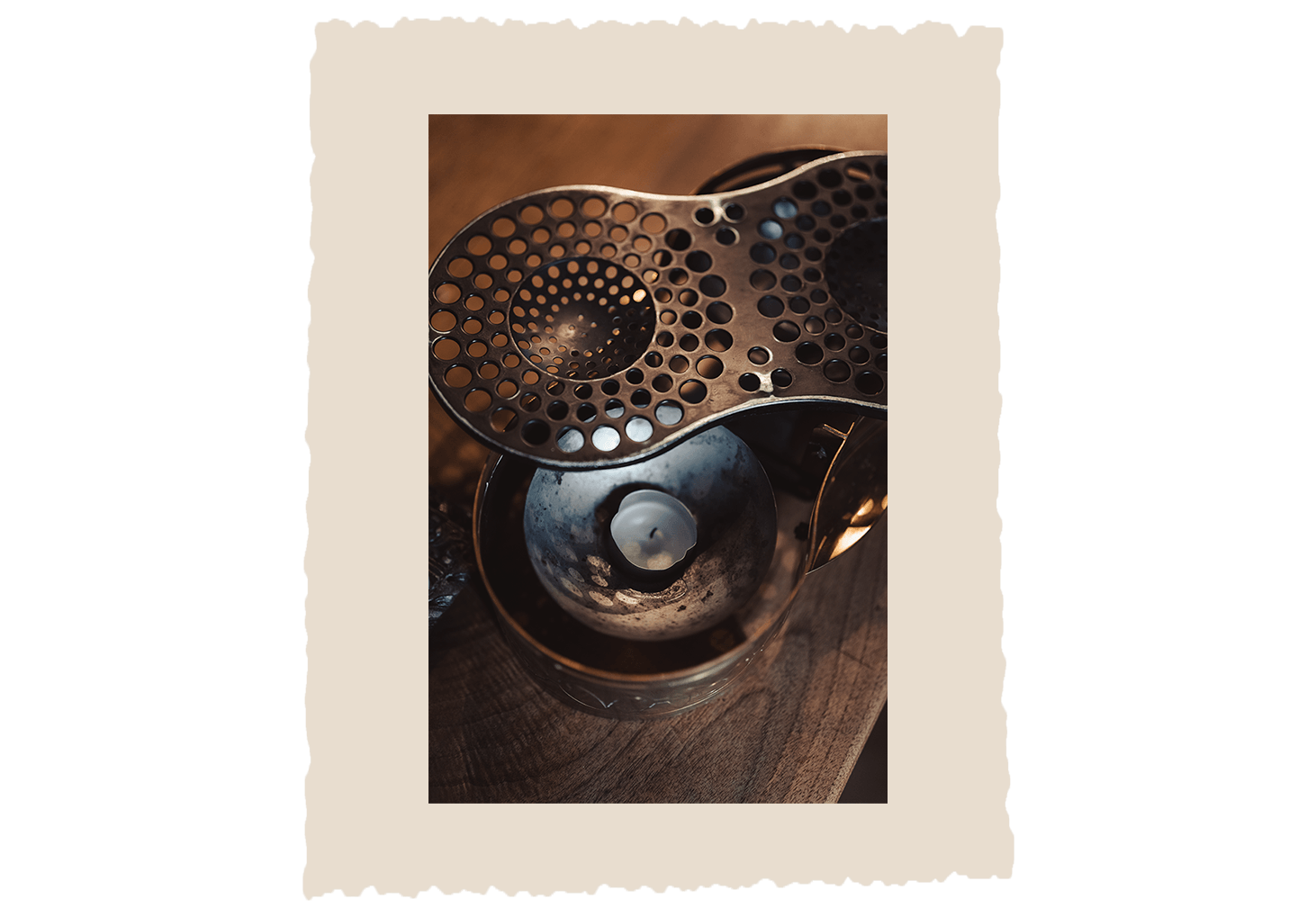
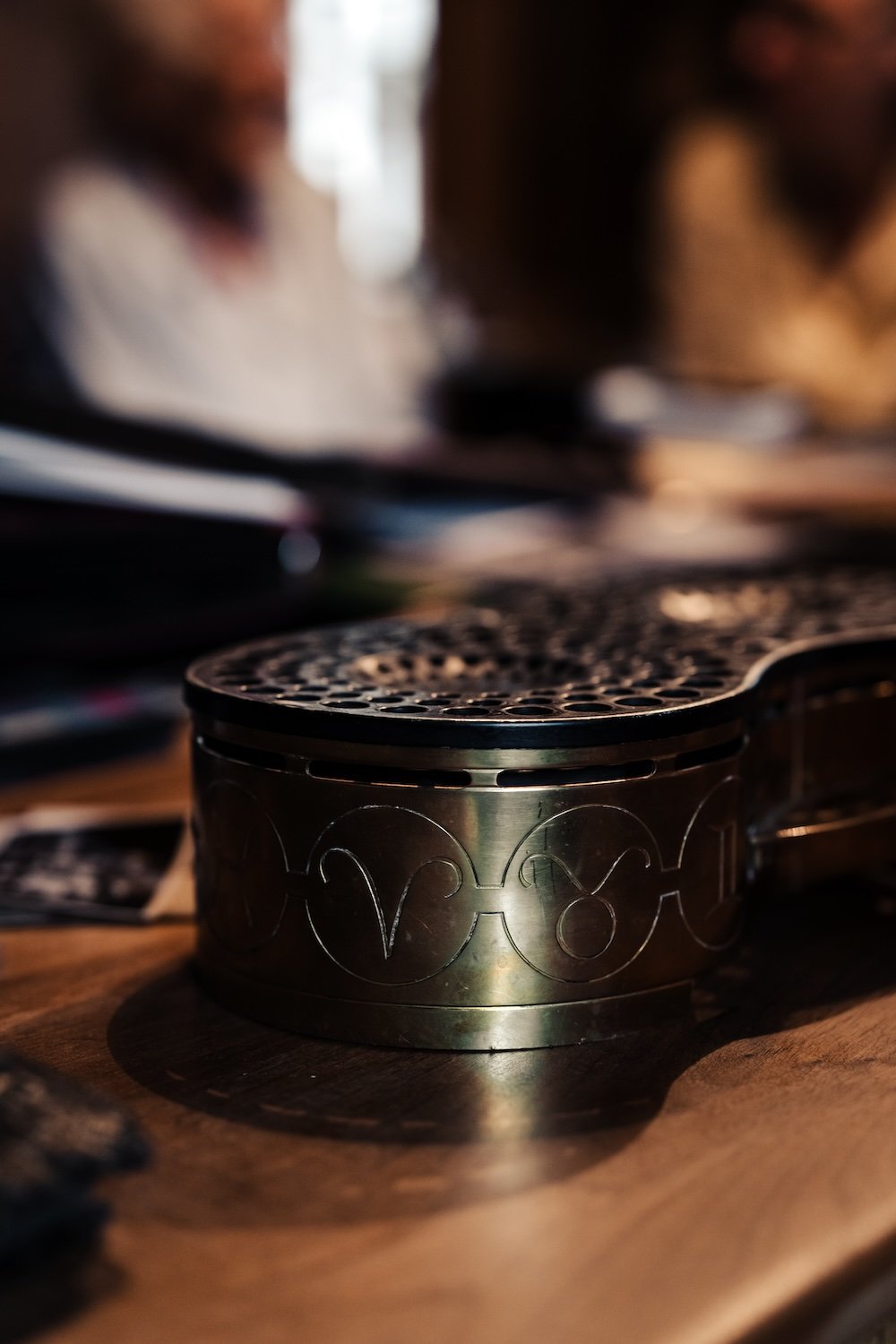
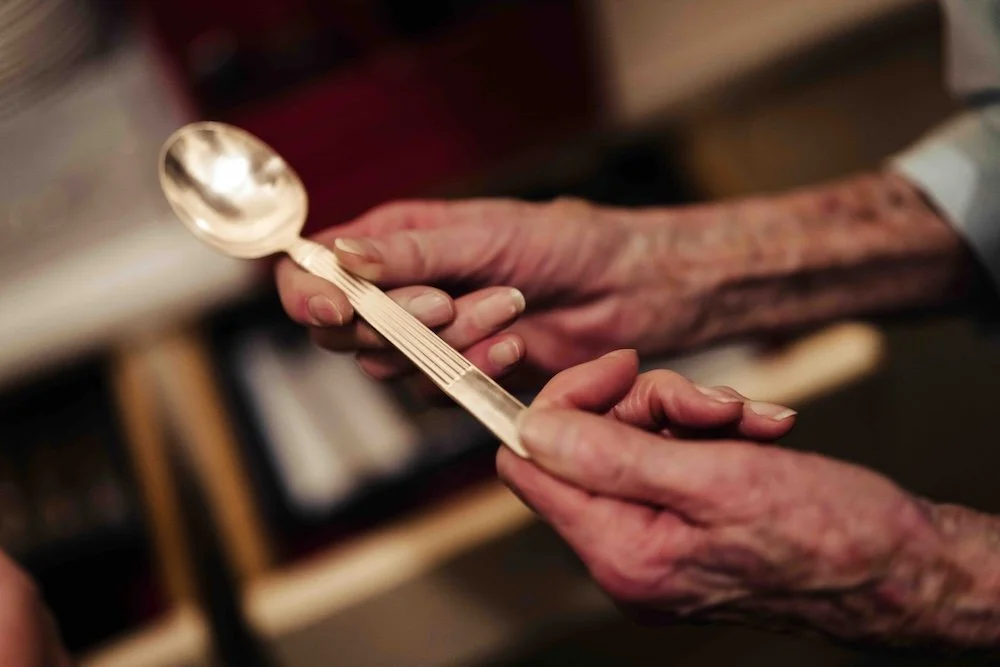
Godly: We put the warm food in front of them on a plate warmer. We had beautiful plate warmers with two candles in them.
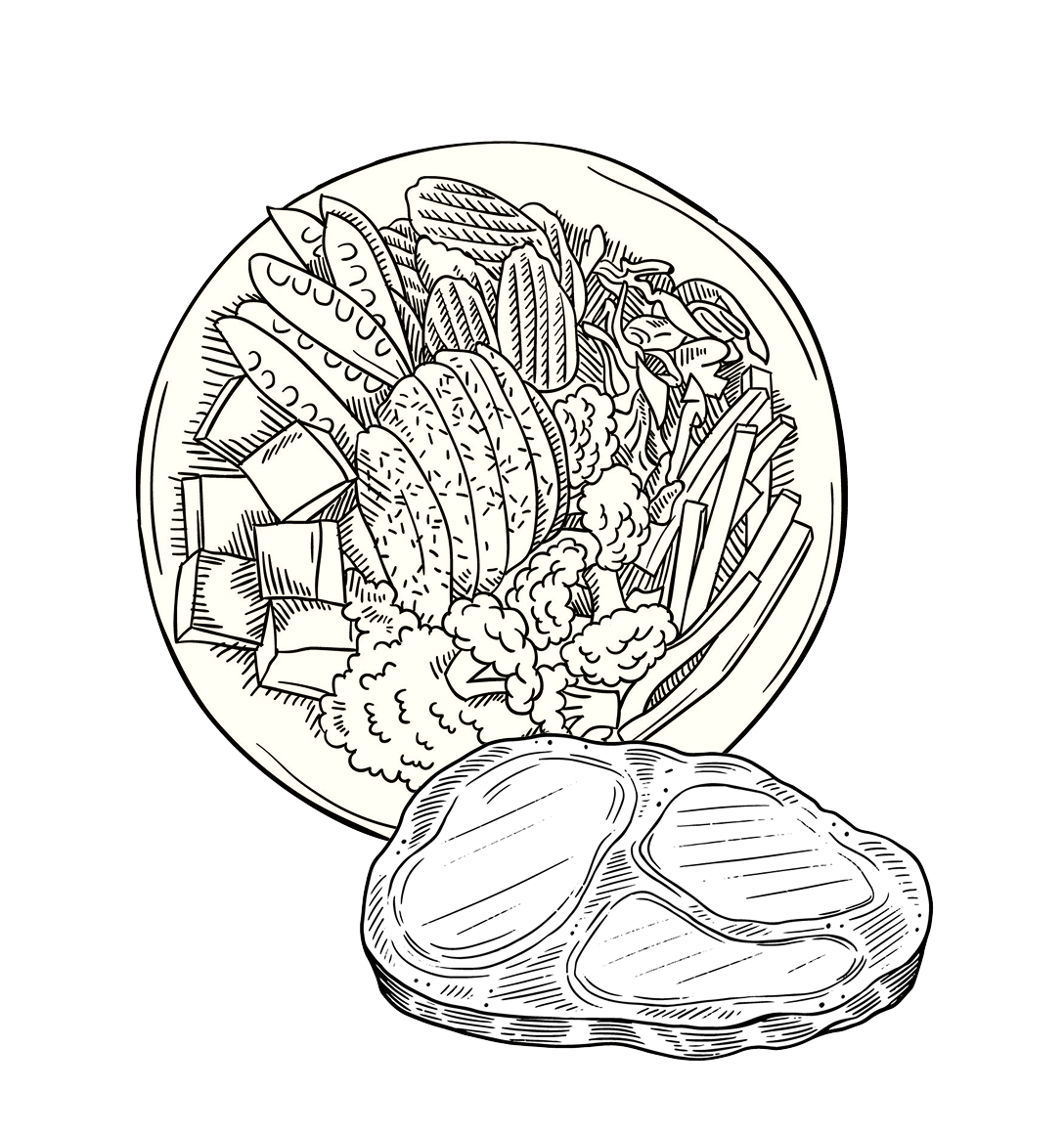
Customers started with salad while we cooked the rest of the meal. The batter for the Knöpfli was already prepared, and the meat was already cut for everyone. Everything was prepared to meet our customers' needs promptly.
Fondue Chinoise
Federica: And every evening, how many dishes were there?
Godly: There was a fixed menu, and the only alternative was the Fondue Chinoise.
Federica: So, if someone didn’t want to eat what you had prepared, they could pre-order the Fondue Chinoise.
Godly: Our Fondue Chinoise was quite well known; it wasn’t like the others.
Federica: Why is it called chinoise?
Godly: I don’t know… initially, we served the Fondue Bourguignonne, which is made with oil. We cooked it a few times, but the entire house was made out of wood, and since the bourguignonne is prepared with hot oil, everything–the curtains, the pillows–smelled of oil afterwards.
When we discovered the Fondue Chinoise recipe, we changed to it immediately. We said, “Enough with this smell of oil”, and we started to prepare the Fondue Chinoise. The chinoise was prepared with a good broth. People said it was delicious, and we answered, “Ah, of course it is, the broth is homemade!”, but that wasn’t entirely true; it was prepared with a little bit of Knorr (the broth stock). Well… it was a mix.
Federica: Did you always add a little bit of vegetable stock cube?
Godly: It was necessary to add a bit of stock cube. So, we added a bit of legume stock cube to prepare a good broth.
Federica: Did you make a vegetable broth?
Godly: Not only vegetables, but also some chicken, some meat, and some vegetables. It had to be seasoned enough because it needed to season the meat too. Salt and pepper were always on the table, and people could add a little bit.
Federica: So, after being cooked in the broth, does it need to be seasoned?
Godly: It must be seasoned, but not too much.
Federica: Not too salty because...
Godly: …afterwards, you drink the broth.
Federica: Yes, exactly, I understand.
Meat and Sauces
Godly: I ate Fondue Chinoise in other restaurants and hotels too, but I didn’t like it very much. Other hotels tended to serve three types of meat: veal, chicken and beef, cut into very small pieces.
Federica: On the contrary, you served a very generous portion.
Godly: We prepared 150 grams of beef, cut into slices using the slicer. Half was cut frozen because it could be cut thin. And then we prepared the sauces.
We made sauces with recipes I sourced from magazines. I don’t know why we don’t find as many homemade sauces nowadays.
Federica: It makes all the difference!
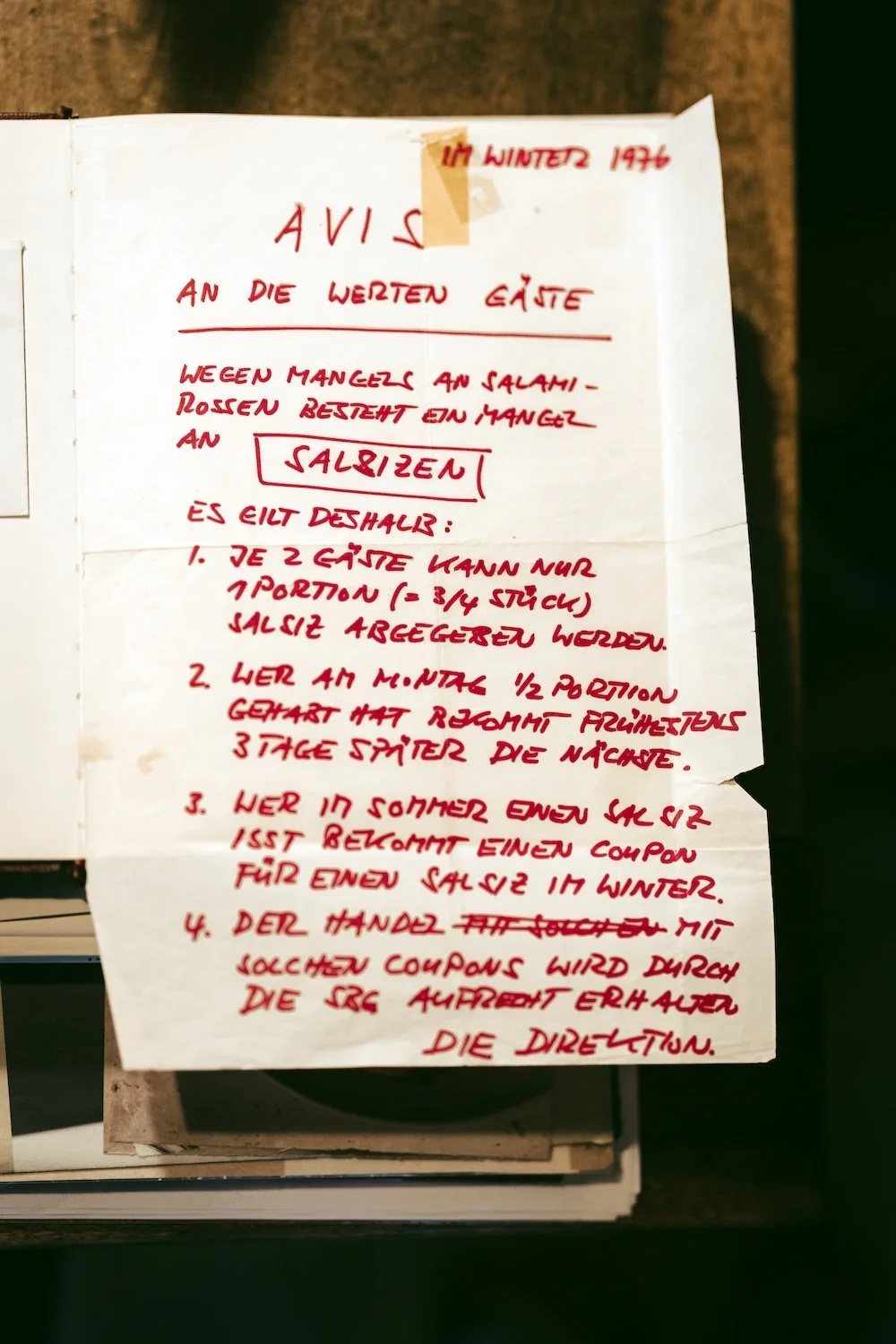
Godly: You know, we also produced sausages. We had the pig slaughtered in December.
The sausages were better than those of the butchers, and obviously, because we only had one pig, we reached a certain moment towards the end of the season when there weren’t any more sausages.
Fish and Polenta
Federica: Did you also serve fish at Chesa Marchetta?
Godly: Sometimes for clients.
Federica: And when you made spinach spätzli, did you ever use that wild spinach that they told me is called Guter Heinrich?
Godly: For us, yes, but not for the clients. This year I wanted to make it, but no,
I didn’t realise that everything grows faster these days, and they are already flowering.
It’s already too late for Guter Heinrich.
But the fish was purchased elsewhere.
Federica: Where did you get your fish from?
Godly: We purchased the fish and many other products from Rageth in Landquart, an excellent supplier who is still trading.
Federica: Did you also follow the custom of not eating meat on Fridays? I remember having to do so as a child.
Godly: We were not Catholic, so we did eat meat sometimes on Fridays.
Federica: And how did you prepare polenta at Chesa Marchetta?
Godly: We made polenta with cream.
Federica: Oh, polenta with cream sounds so good. In Friuli, where I am from, we always make it very plain!
My mother always has to light the fire when she makes polenta, or else she doesn’t make it. She only makes it in winter when the fire is lit.
Godly: Our grandmother made polenta with whipped cream, sugar, and cinnamon. We still make it sometimes.
Federica: Really?
Godly: But it’s not as good because it’s made on the electric stove.
Federica: My mother always has to light the fire when she makes polenta, or else she doesn’t make it. She only makes it in winter when the fire is lit.
Godly: Yes, it’s not the same thing. Polenta must be made in a copper pan on a wood fire.
Desserts
Federica: What else did you prepare?
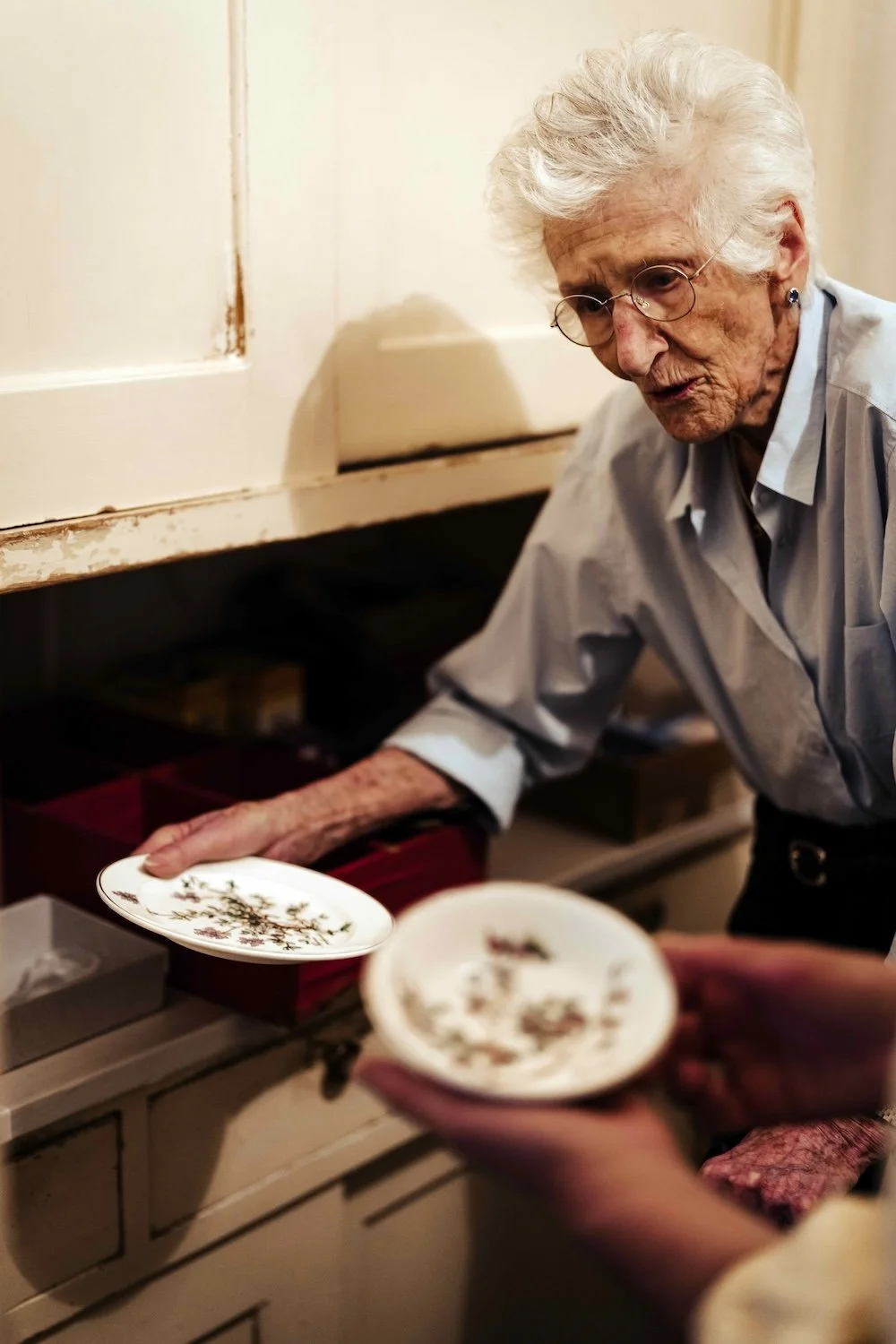
Godly: Plum cakes, amongst other things.
Federica: They’re delicious. Did you prepare the plum cake in the sense of a tin cake with fruit and raisins?
Godly: We prepared it with candied fruit.
Federica: In Italy, we also call this a plum cake—a rectangular tin cake with candied fruit inside. But when you go to England, this would be called a fruit cake. A plum cake would be prepared with only plums.
I find this very interesting about language. This cake is called using an English name in Italy and Switzerland, but if you go to England and say, “Can I buy a plum cake?” you would get a completely different cake!
Godly: Everything is special in England.
Seasonal Dishes
Godly: To avoid eating meat every day, we sometimes prepared chestnuts with cream.
Federica: I bought a lot of dried chestnuts and have started eating them, but I don’t think I’m preparing them properly.
Godly: They are a little bit hard; you need to keep them in your mouth longer.
Federica: They need to melt…
Godly: Yes. They’re cooked under pressure with a little water and a bit of salt, for about eight minutes. Later, you melt some butter, add breadcrumbs to bind everything together, and use the liquid left from the chestnuts.
There is no precise recipe; you can add more or fewer ingredients, and there is always an element of estimation involved.
I also like to eat asparagus during the spring. I cook them with butter and breadcrumbs. It’s very delicious.
Federica: I like Spargel [asparagus] a lot too. My mother used to be able to grow them. She planted them in a strip of land, and when I was a child, I picked them with a small iron tool. We always ate them with hard-boiled eggs.
I don’t eat asparagus all year round, even if they’re available in the supermarket. Good things are good because they are only available in a certain time of the year, right?
They are seasonal. That means you must wait.
But can you grow asparagus here in the Engadin?
Godly: No. I buy them because I like them too much. I also love tomatoes.
When I buy tomatoes, I freeze them so I can enjoy them all year-round.
Federica: So you freeze them whole, and then do you grate them? I know that some people grate frozen tomatoes in their salads.
Godly: No, not whole tomatoes. In the summer, I used to buy ‘peretti’ tomatoes, which are sweet and flavoursome. I boil them, peel them, blend them, and then I put the passata into empty four-litre ice cream containers.
Federica: I understand. Freezing is an amazing way to preserve food.
More Than a Recipe
Godly: We even had famous chefs come eat at Chesa Marchetta, like Philippe Rochat and Frédy Girardet. We also had many children who came to Sils to study German, because schools in the Bregaglia valley mainly taught in Italian.
There were even children from Val Fex at the top of the pass. They would come to Chesa Marchetta to eat their lunch before going home.
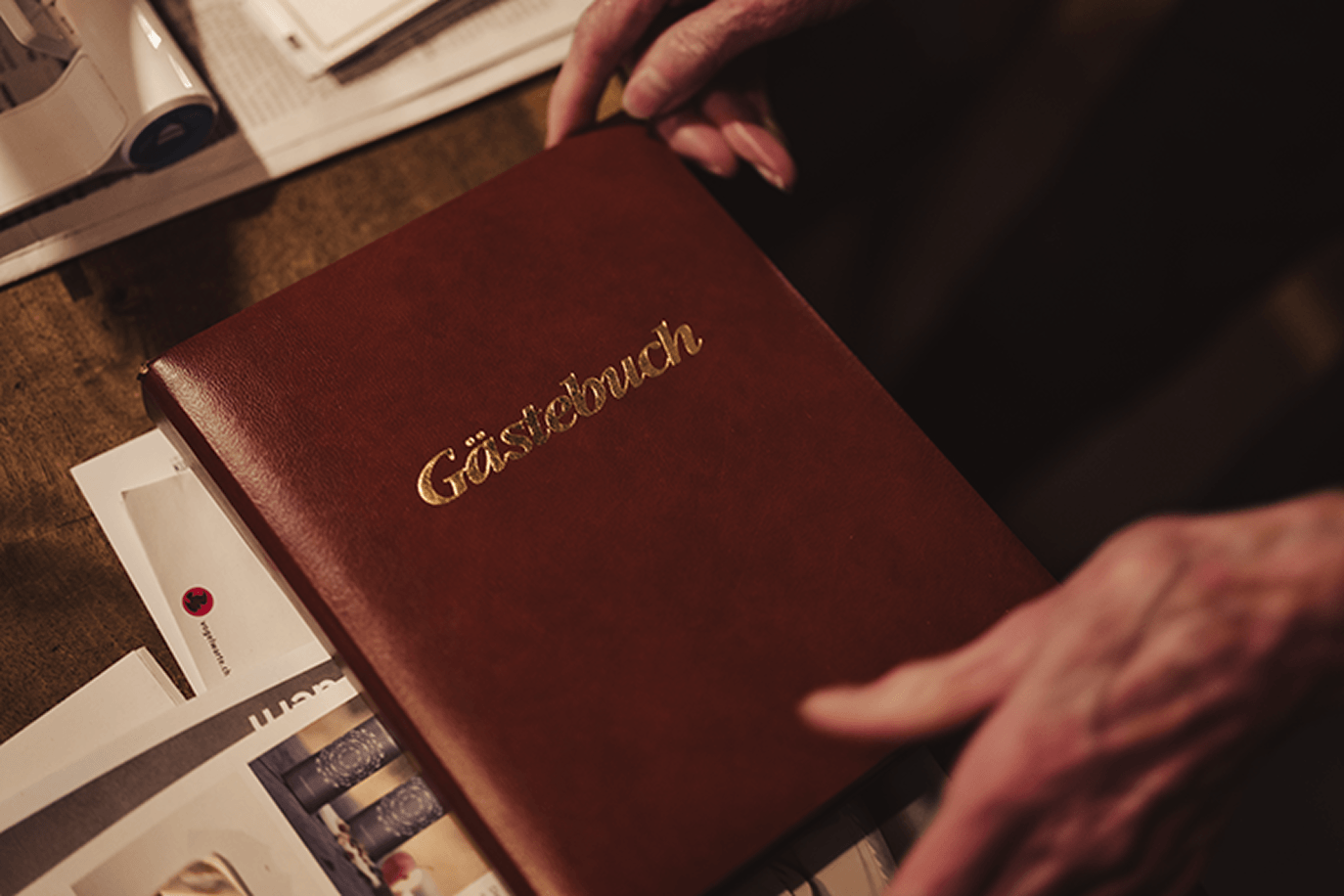
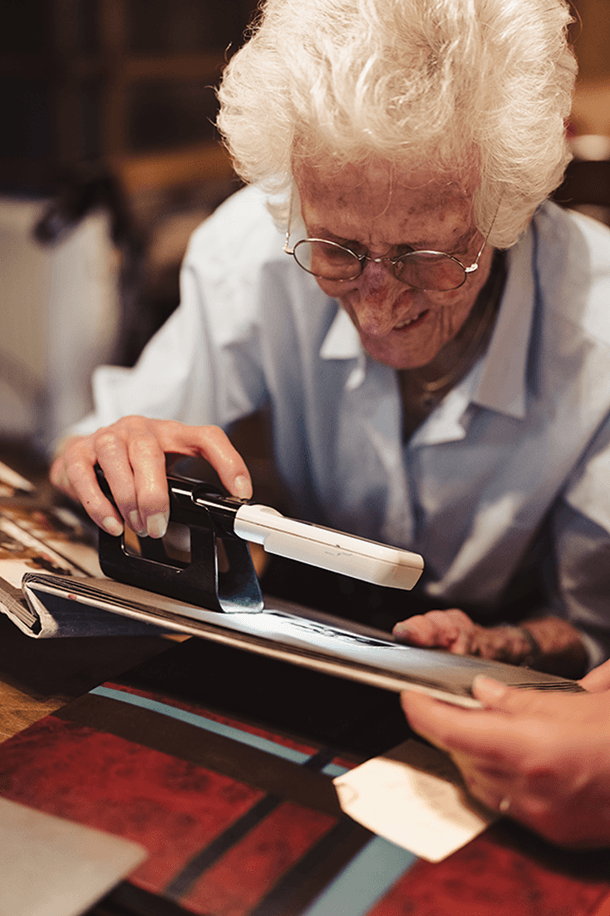
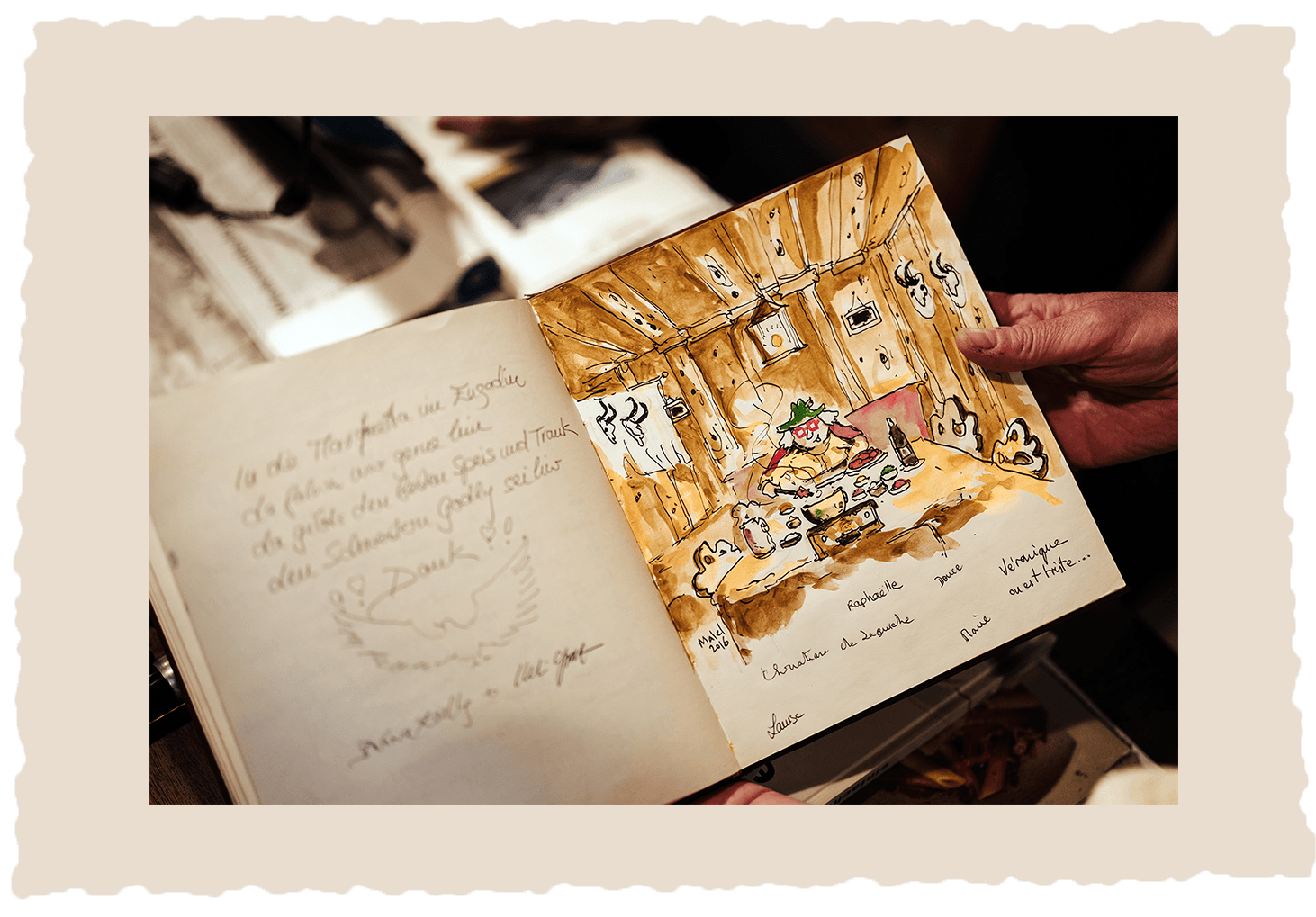
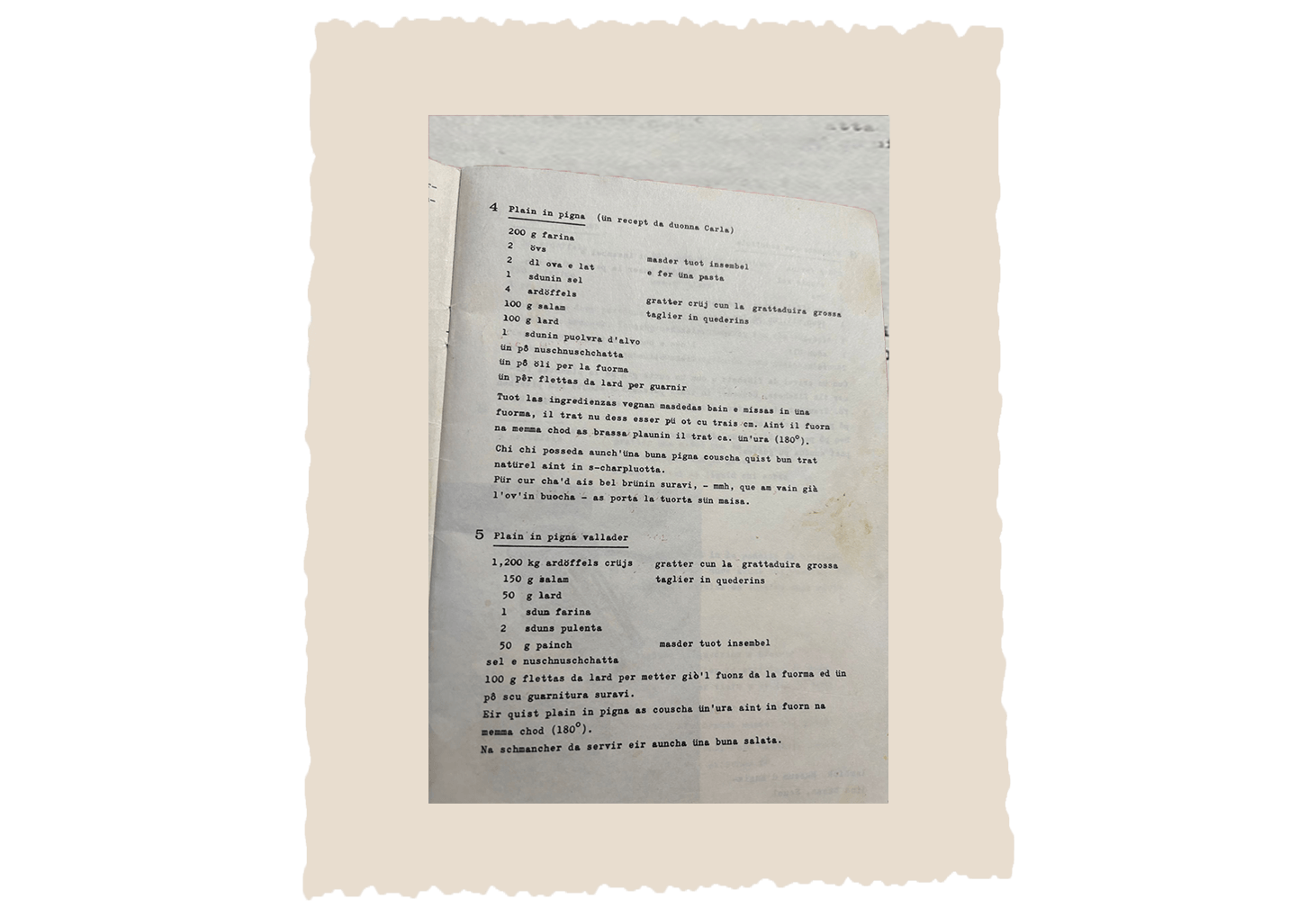
Federica: I saw in your guest book that someone ate Plain in Pigna (oven-baked potato rosti).
Godly: Yes, it’s my recipe because when I first wanted to prepare it, I found two books with two different recipes.
As you said, everyone has their own recipe. This was a homemade recipe, one used by all the special houses.
Federica: Every family has its version of the recipe.
I think there is something about the individual touch, don’t you?
I remember when I worked in a restaurant many years ago, I realised that two people can use the same recipe, but the results can be different.
Godly: Yes, exactly. Eventually, I tried a different recipe, and I made my own. It was good!
50 -100 grams of potatoes, 50 grams of lardons, 50 grams of bacon sliced into small squares, and 50 grams of Luganega.
Federica: Oh, the sausage!
Godly: The sausage is cooked. It’s like a fresh Luganega, but smoked.
Federica: Then “lard” will be the butter for the pot. So, you place a layer of lard, then a layer of thinly sliced potatoes, another layer of lard, and then another layer of very thinly sliced potatoes.
Godly: Yes. And of course, we had our cook, who worked here for almost 20 years.
Federica: Did your cook use your mum’s recipes, or his own?
Godly: Some of my mum’s, and some of his.
Federica: And did you taste it together? Did you decide what to cook together?
Godly: Yes. I sometimes worked in the kitchen when needed. It was simpler that way.