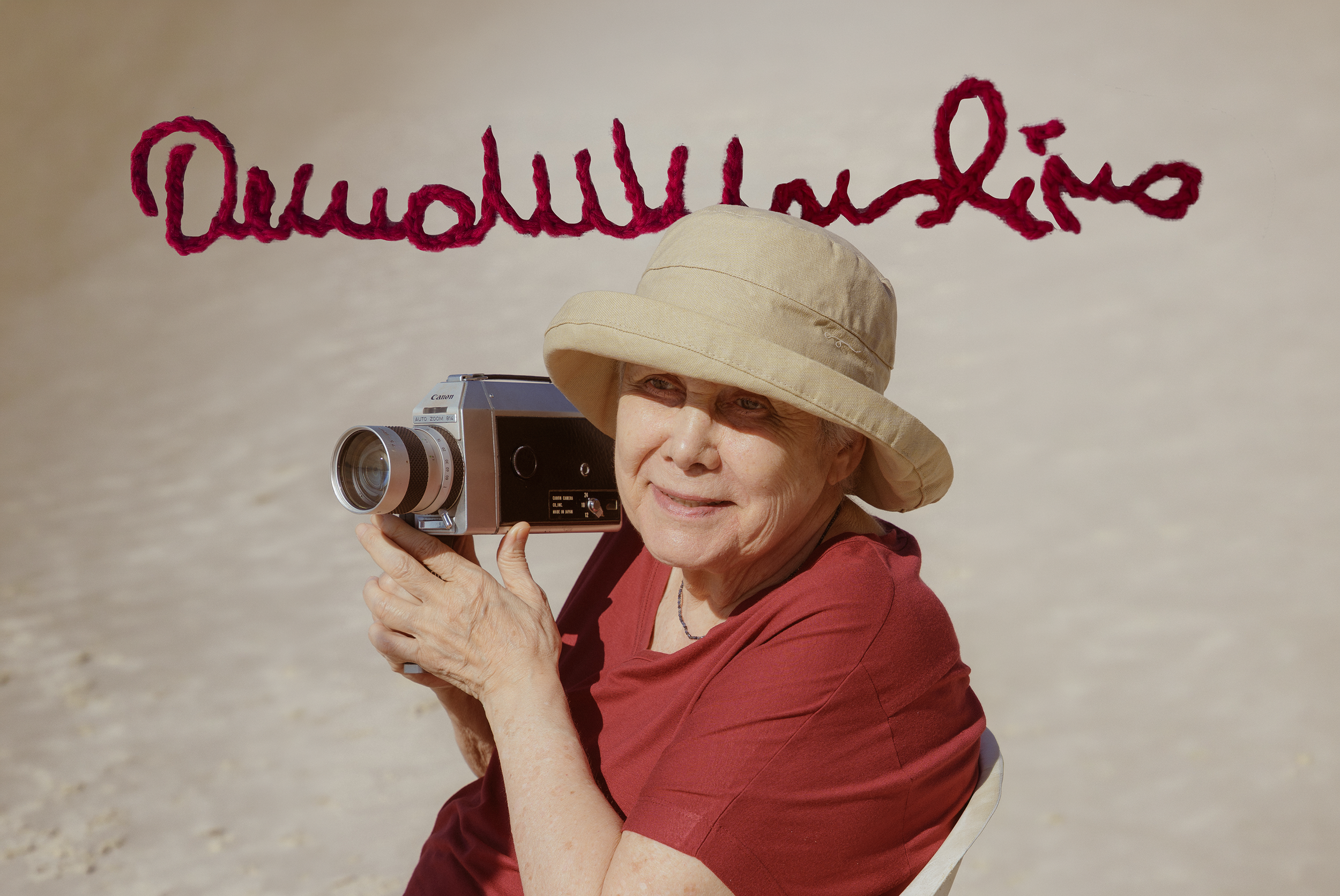
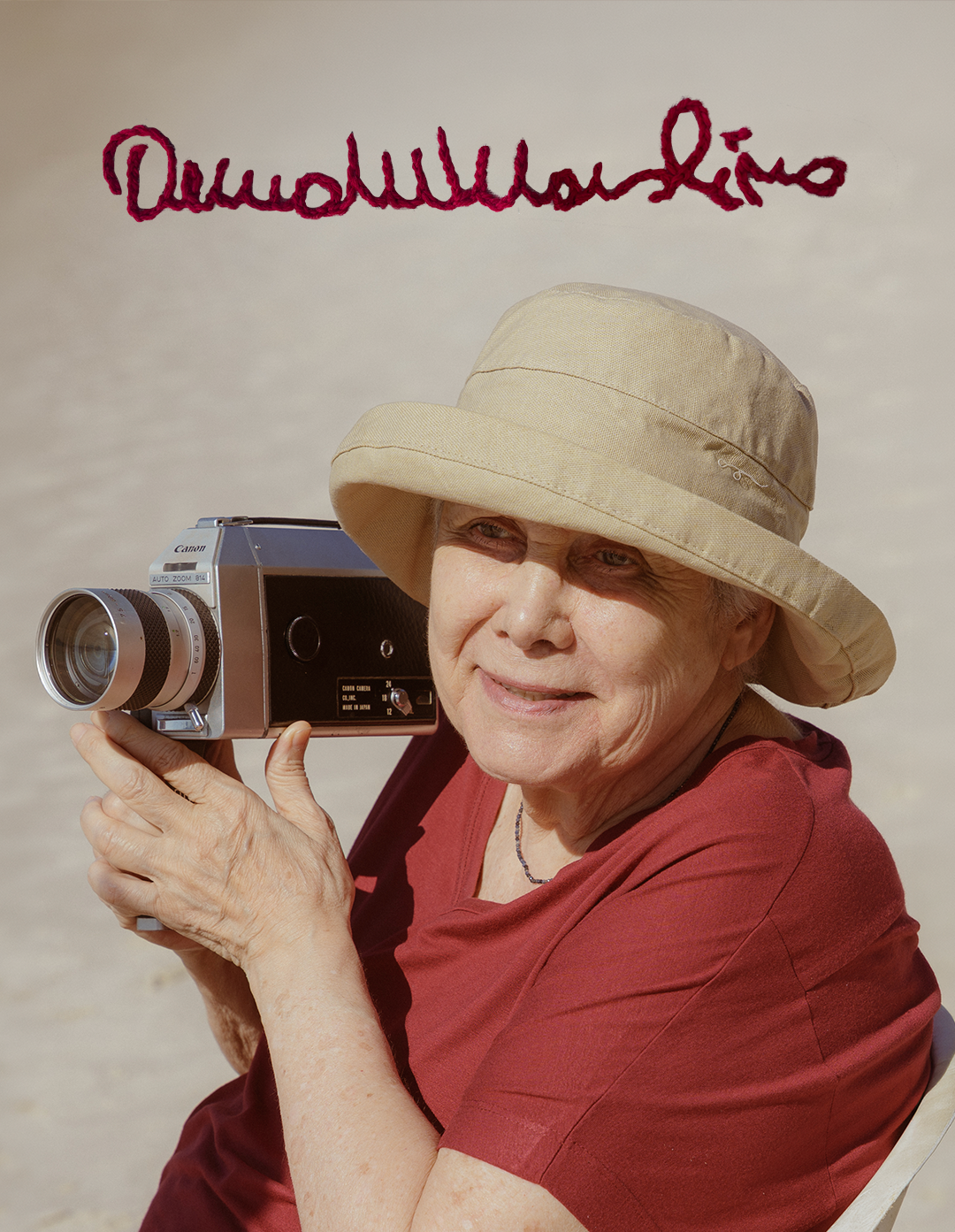
‘My work arises from the processes of everyday life, later from the technical process. I steal procedures and incorporate them, adding my own voice. ’
Anna Maria Maiolino
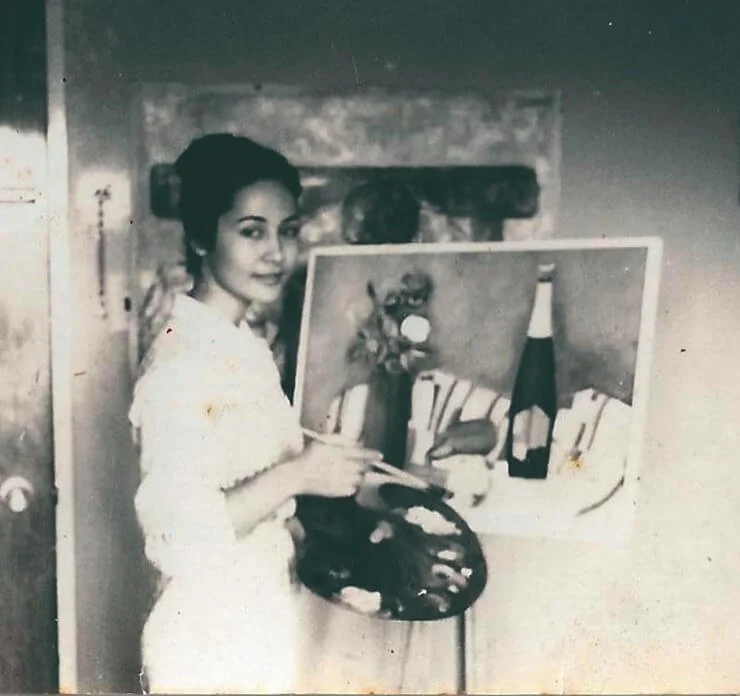
Anna Maria Maiolino is among Brazil’s most influential artists. Born in Italy in 1942 to an Italian father and an Ecuadorian mother, she emigrated first to Venezuela in 1954, and then, aged 18 in 1960, to Rio de Janeiro – a city which would have a transformative effect on her life and work.
Drawing, printmaking, poetry, film, performance, installation, and sculpture have all featured in Anna’s more than sixty-year practice. Themes emerge from her experience as an immigrant and a woman, her approach also having been profoundly shaped by years of military dictatorship governing Brazil. Recognition was slow to arrive: early critics dismissed her work as ‘obvious’. This so-called obviousness was however the precise element Anna employed in finding her language of resistance.
Once settled in Rio, Anna became immersed in the city's art world, studying at the School of Fine Arts, and forming close ties with artists including Antônio Dias and Rubens Gerchman, whom she went on to marry. Through this circle she also came to know Hélio Oiticica and Lygia Clark, whose radical ideas around the period would leave a lasting mark on her artistic philosophy.
In 1968, Anna moved to New York with Gerchman and their children, remaining until 1971 when the couple divorced and she returned to Rio with her two children, Verônica and Micael. The decade that followed was one of intense experimentation, as Anna extended her practice into Super 8 film, photography and installation, including her performance Entrevidas, in which eggs become a fragile symbol of precarious existence under dictatorship.
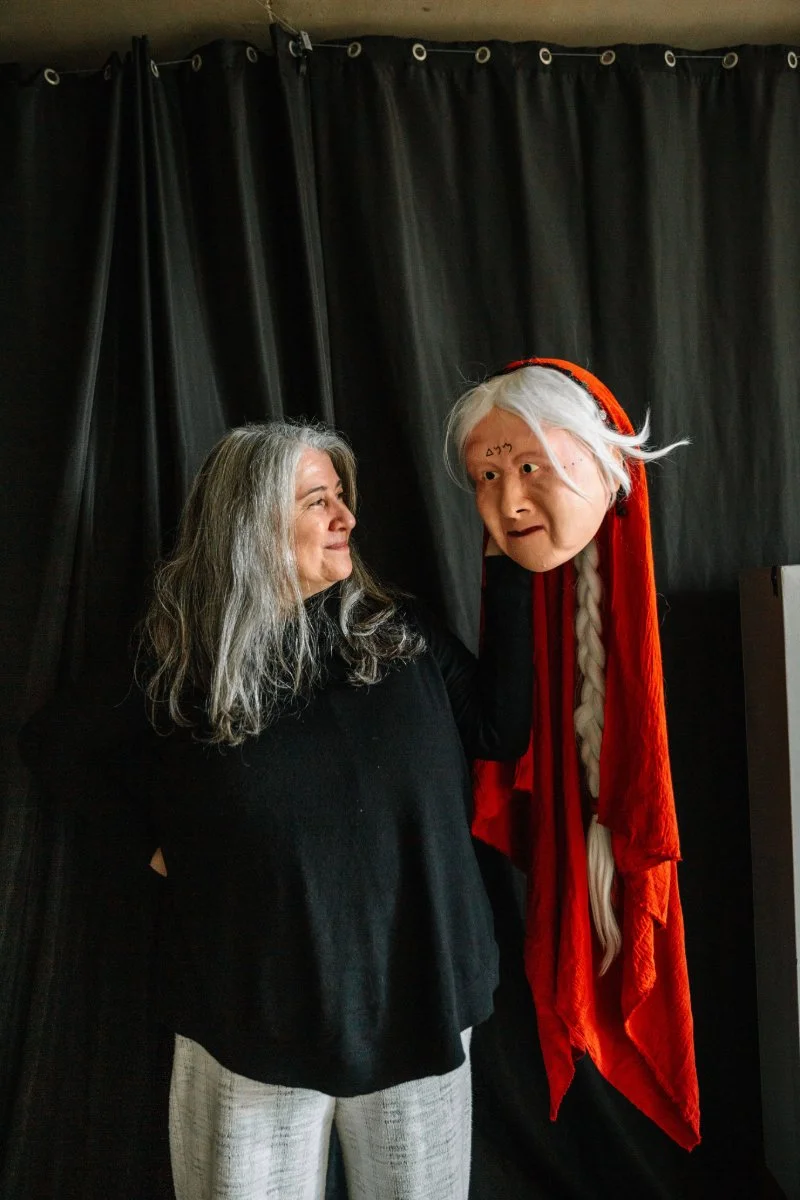
Verônica, Anna's youngest child and only daughter, was born in 1966, when Anna was 24 years old. She is an actress, writer, director, producer, and researcher in puppet and mask theatre, having begun working in the field at the age of 13.
Since the early ’80s, Anna has worked increasingly with malleable materials – clay, dough, plaster – emphasising unconscious gesture, daily ritual and the sensory rhythms of being.
Read the full conversation between mother and daughter, in which they reflect on family, memory, and creative practice. The conversation took place in Anna Maria Maiolino’s home in São Paulo where she resides with her daughter and grandchild. Also presented are excerpts from Eu sou eu (I Am I), Maiolino's poem first presented at dOCUMENTA (13) in Kassel, Germany, in 2012.
ANNA — And the Infinite Line
Premiering October 9, 2026 at Artecinema Festival, Naples

Eu sou eu
Parte I
“Deus engendrou um ovo
o ovo engendrou a espada, a espada engendrou Davi
Davi engendrou a púrpura
a púrpura engendrou o duque, /
o duque engendrou o marquês
o marquês engendrou o conde”
eu sou a condessa
“eu nasci louca
os normais tinham inveja de mim que era louca
eu sobrevivi do nada, do nada
eu não existia
não tinha uma matéria
comecei a existir com quinhentos milhões /
e quinhentos mil anos
logo de uma vez, já velha
eu não nasci criança
nasci velha
depois é que virei criança
e agora continuei velha
me transformei novamente numa velha
voltei ao que eu era, uma velha”
Anna Maria Maiolino, 2011
I Am I
Part I
“God begat an egg
the egg begat the sword, the sword begat David
David begat the royal purple
the royal purple begat the Duke, /
the Duke begat the Marquess
the Marquess begat the Count”
I am the countess
“I was born crazy
normal people were envious of me, who was crazy
I survived out of nothing, out of nothing
I did not exist
I had no matter
I began existing at five hundred million and /
five hundred thousand years of age
all of a sudden, old already
I was not born a child
I was born old
then I became a child
and now I’m still old
I’ve transformed into an old woman again
I’ve gone back to what I was, an old woman”
Anna Maria Maiolino, 2011
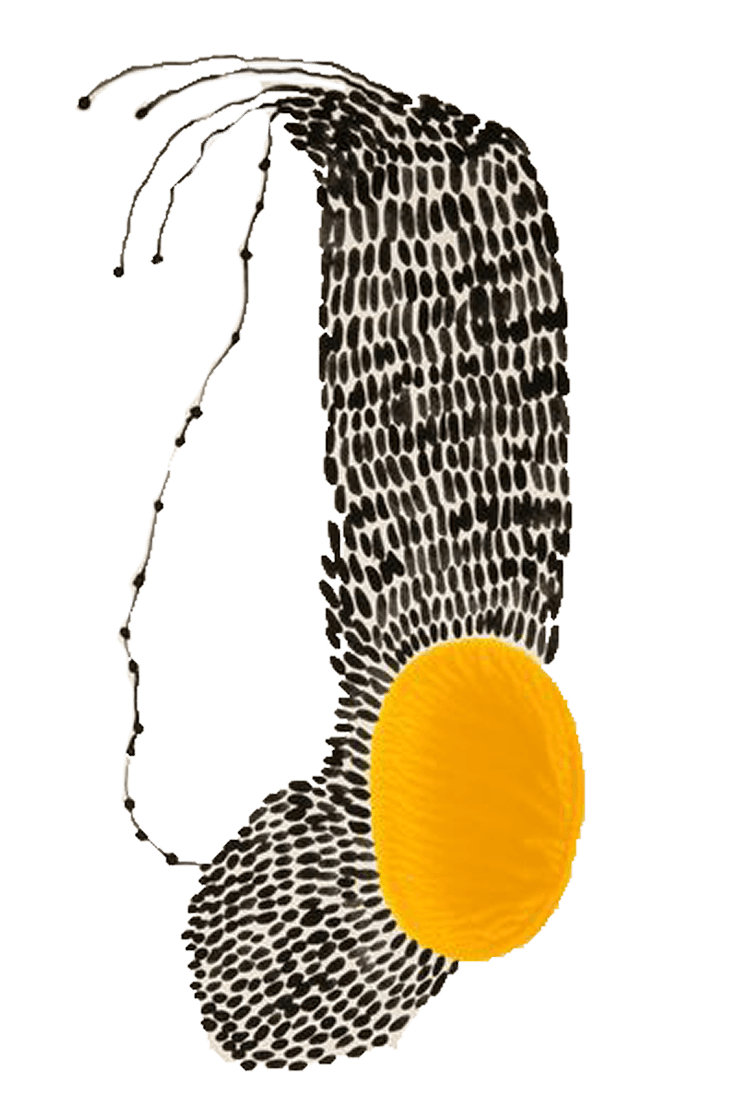
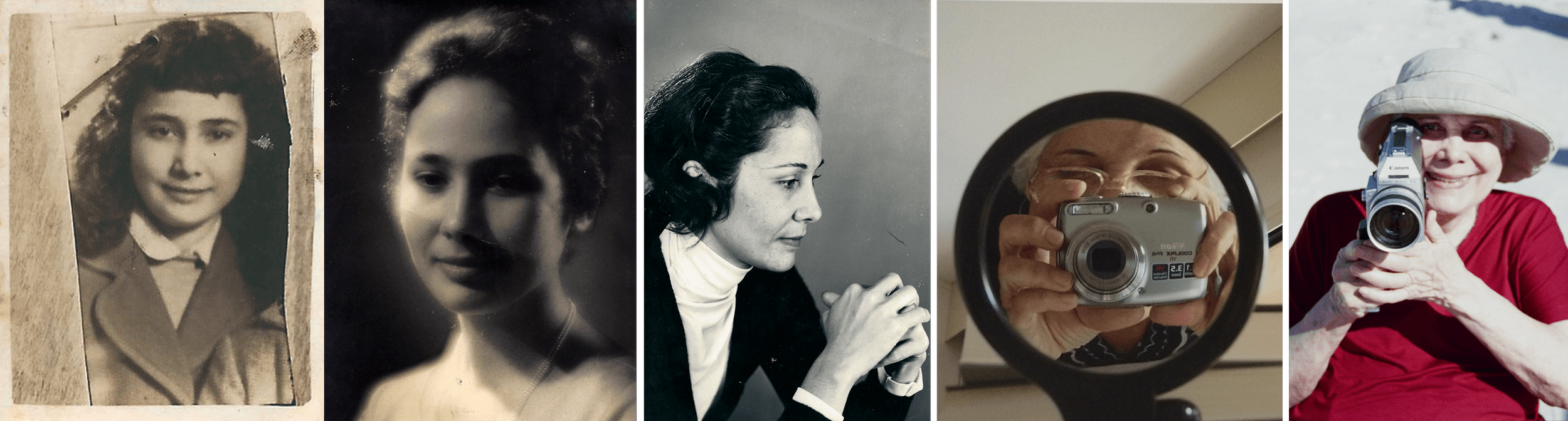
Portraits of Anna Maria Maiolino, from left to right: Italy, 1940s; Caracas, 1958; Buenos Aires, 1987; São Paulo, 2010s (courtesy of the artist); Rio de Janeiro, 2025 (photo: Giovanna Aguiar).

Eu sou eu
Parte II
eu sou eu
nascida pela fenda ao mundo /
e impressa à dor
a ferro e fogo fui cunhada na angústia do / entendimento
escolhi viver e vivo morrendo
optei por ser artista
ser mãe
constantemente equaciono fantasia com a realidade
entre o eu sou e o eu não sou
há de se ter em conta que não sou de aqui
nem sou de lá, estou de passo
qualquer caminho me levará a outro lugar
das experiências, eu vivo
quero poder terminar de contar /
todas as estrelas do firmamento
mas não consigo
mais fácil é esculpir pensamentos
cada dia um novo
tenho destreza com as ferramentas
cozinho
também lavo e passo a ferro
grito de prazer e de dor
o meu sexo é um oco
no oco gozo
Anna Maria Maiolino, 2011
I Am I
Part II
I’m I
born to the world through the cleft /
and stamped with pain
by iron and fire I was coined in the /
anguish of understanding
I chose to live and live dying
I chose to be an artist
to be a mother
I constantly equate fantasy with reality
between the I am and the I am not
you must consider that I'm not from here
I’m not from there either, I’m passing by
any path will take me somewhere else
of experiences, I live
I want to be able to finish counting /
all the stars in the heavens
but I can’t
it’s easier to sculpt thoughts
a new one each day
I’m skillful with tools
I can cook
also wash and iron
I scream out with pleasure and pain
my sex is a hollow
in the hollow I climax
Anna Maria Maiolino, 2011
Anna Maria Maiolino & Verônica Gerchman
in Conversation
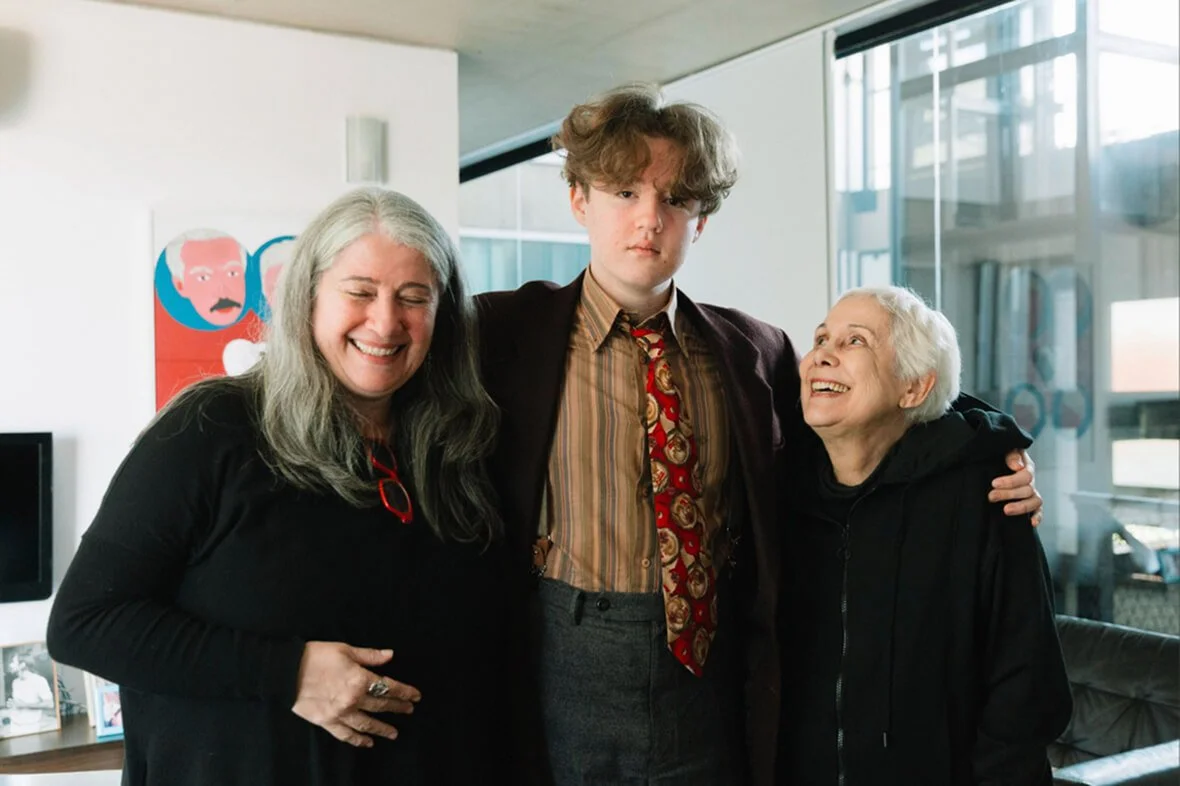
Anna Maria Maiolino with her daughter Verônica Gerchman and her grandson Samuel Herschmann Araujo, São Paulo, 2025. Photo: Bruna Bento.
Verônica: When you took the first photograph on Cardoso Júnior Street, of Entrevidas – that was the first time I felt the urge to document something.
That day, you and Henri Virgil Stahl set up the scene with the eggs on the pavement, in front of where we lived and your studio.
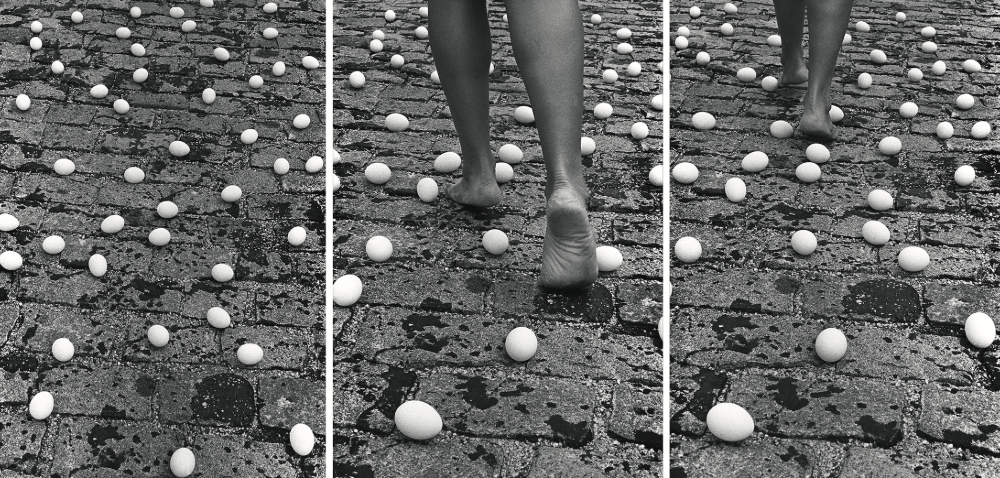
Anna Maria Maiolino, Entrevidas, from the Fotopoemação (Photopoemaction) series, 1981.
I remember wanting to have a camera in my hands, because when I looked up, there were two Portuguese neighbours looking down from the window. It was so funny. They'd watch you arranging the eggs, Henri adjusting the camera, and they'd exchange glances with me, sharing their amusement.
They'd give me this look like, “What's going on here?” And I’d politely give them a little smile, shrug, and look at them as if to say, “Let's see what's going to happen.”
So there I was, those women watching all of this, and soon enough, you’d start walking between the eggs.
Entrevidas emerged in 1981, right at the political opening – the transition from dictatorship to democracy in Brazil. People were literally walking on eggshells. How did you bring people together at your place for the gatherings?
Anna: During the dictatorship, there was no art market, which made us freer and more honest.
So bringing people together was easy. When your grandmother, Nonna, wasn't sending over lasagne for everyone, I’d make spaghetti. It was like “Hey Anna, throw some pasta together before we go.” It was that sense of freedom that came from not having money involved.
I chose to live with freedom, but not recklessness, because I never allowed anyone to smoke weed at my place. Actually, one night I kicked everyone out. They criticised me, saying, “Can you believe it?” and I said, “No, I have a teenage daughter. If they want to smoke, they can do it far from here. I'm not going to offer them the thrill of breaking the rules.” They were really upset when I sent everyone home.
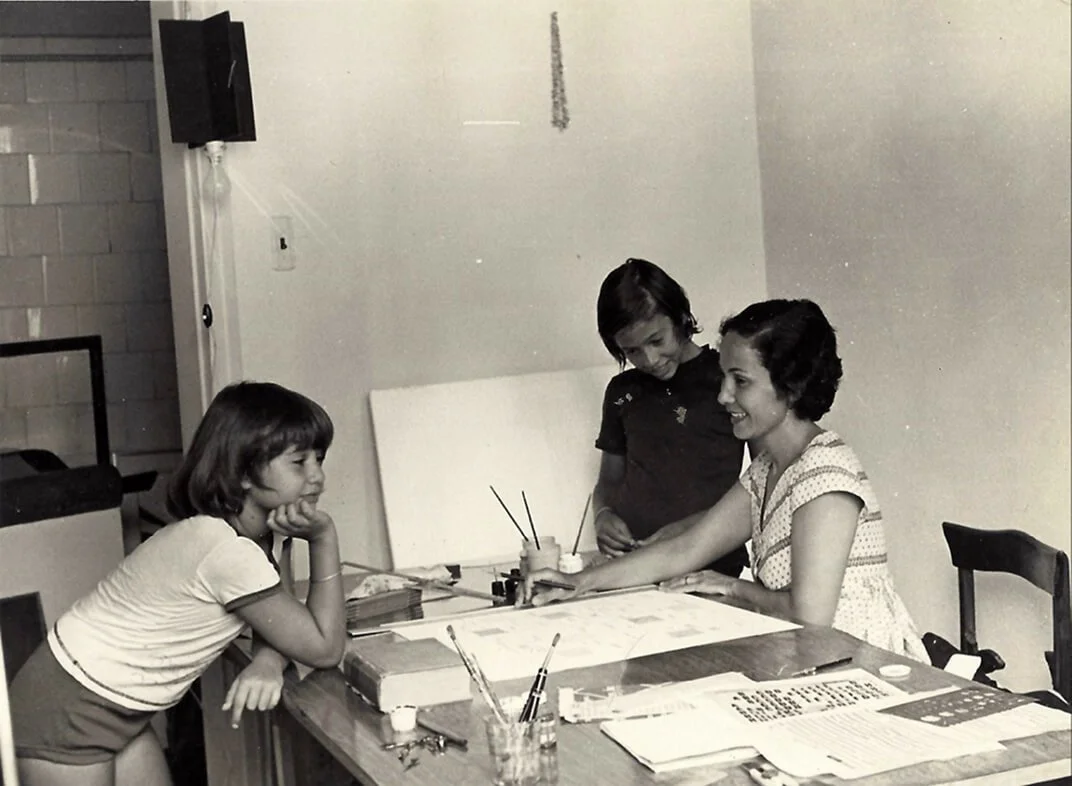
Anna Maria Maiolino with her children Verônica Gerchman and Micael Herschmann, 1970s. Courtesy of Anna Maria Maiolino.
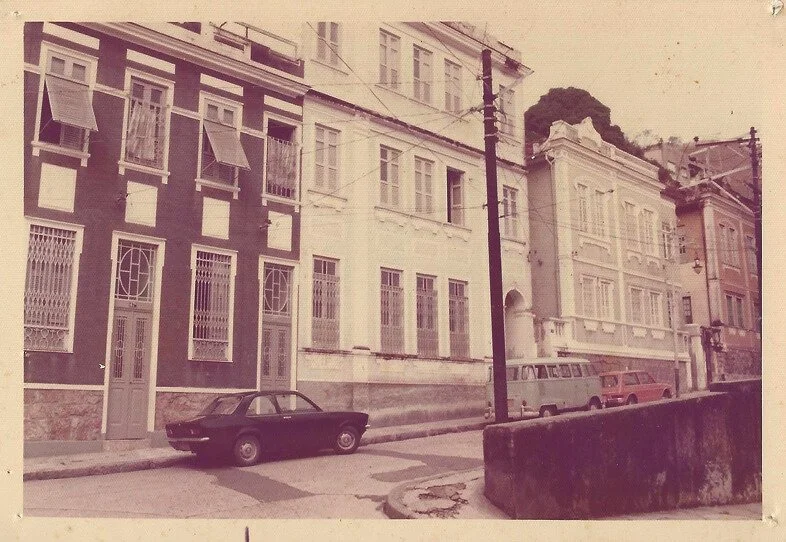
Cardoso Júnior Street, 1980s. Courtesy of Anna Maria Maiolino.
Verônica: During that time, you were also part of ABAPP, Associação Brasileira de Artistas Plásticos Profissionais.
Anna: The association was important back then, because we would meet.
Of course, the men called the shots, and the women were the chorus. When it came to the meeting minutes, since I didn't know how to write in Portuguese, I managed to avoid writing them because they always picked the women to do it. But I never minded that. Maybe it's because I came from a southern macho culture, where the first plate on the table always went to the man.
Verônica: We lived on a very Portuguese street – those big Portuguese houses, women who wore headscarves, gold earrings, big hoops. You were the only divorced woman on the street. How did they treat you?
Anna: They weren’t my friends, but they'd greet me: “Good morning, good evening”.
I didn't have a phone. The telephone was a real problem for many people in Brazil. So Luzia, the owner of the house, would lend me hers every now and then, she was the one who protected me.
One day I told her, “Who knows what these women think of me – separated with two kids?” Because back then, in the ’70s, if you were separated, you were considered a whore. And she said, “No, your children are always the cleanest, well-dressed, well-fed. Nobody can say anything about you.” I realised she defended me to her friends. Nobody could come for me, because my kids were well taken care of.
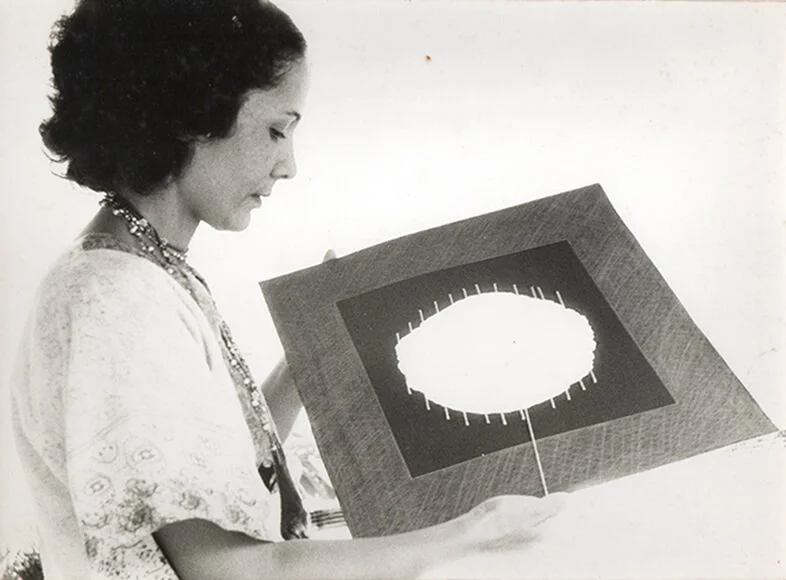
Anna Maria Maiolino in her studio at Cardoso Junior, 1973. Photo: Paulo Fogaça.
Verônica: I keep thinking about how women are always so judged. You created this incredible piece of feminine logistics because you had the privacy to make your work, and at the same time, you could keep an eye on us playing outside. I loved visiting your studio. It was so tiny. To me, it felt like a little dollhouse.
I'd watch you working; I remember laughing, with my childish logic, that you were sewing paper, not fabric. To me, you went somewhere else, drifting away from reality – like when I played.
And there was the Moviola and the Super 8, a forbidden item for us.
Anna: I loved the Moviola. I love anything that's artisanal. I bought it with Maria do Carmo Secco.
Verônica: And the Super 8, was it only yours?
Anna: The Super 8 camera was mine. I lent it to Maria do Carmo's husband. Tools should never be lent out. He ended up ruining the Super 8 my mother, Nonna, had bought me.
Verônica: You know what, I never asked you why you got into Super 8.
Anna: Critics always say that artists just want to follow trends. But it's not about being trendy. There are different ideas, and you want to experiment with a medium that expands what you can say.
Verônica: What was your first Super 8 piece?
Anna: In-Out Antropofagia. Because the power of art lies in the metaphors.
I wanted to talk about the dictatorship. The thread was a statement: I start with a black thread in the mouth, which I keep working with through metaphors.
The people from the dictatorship don’t understand metaphors.
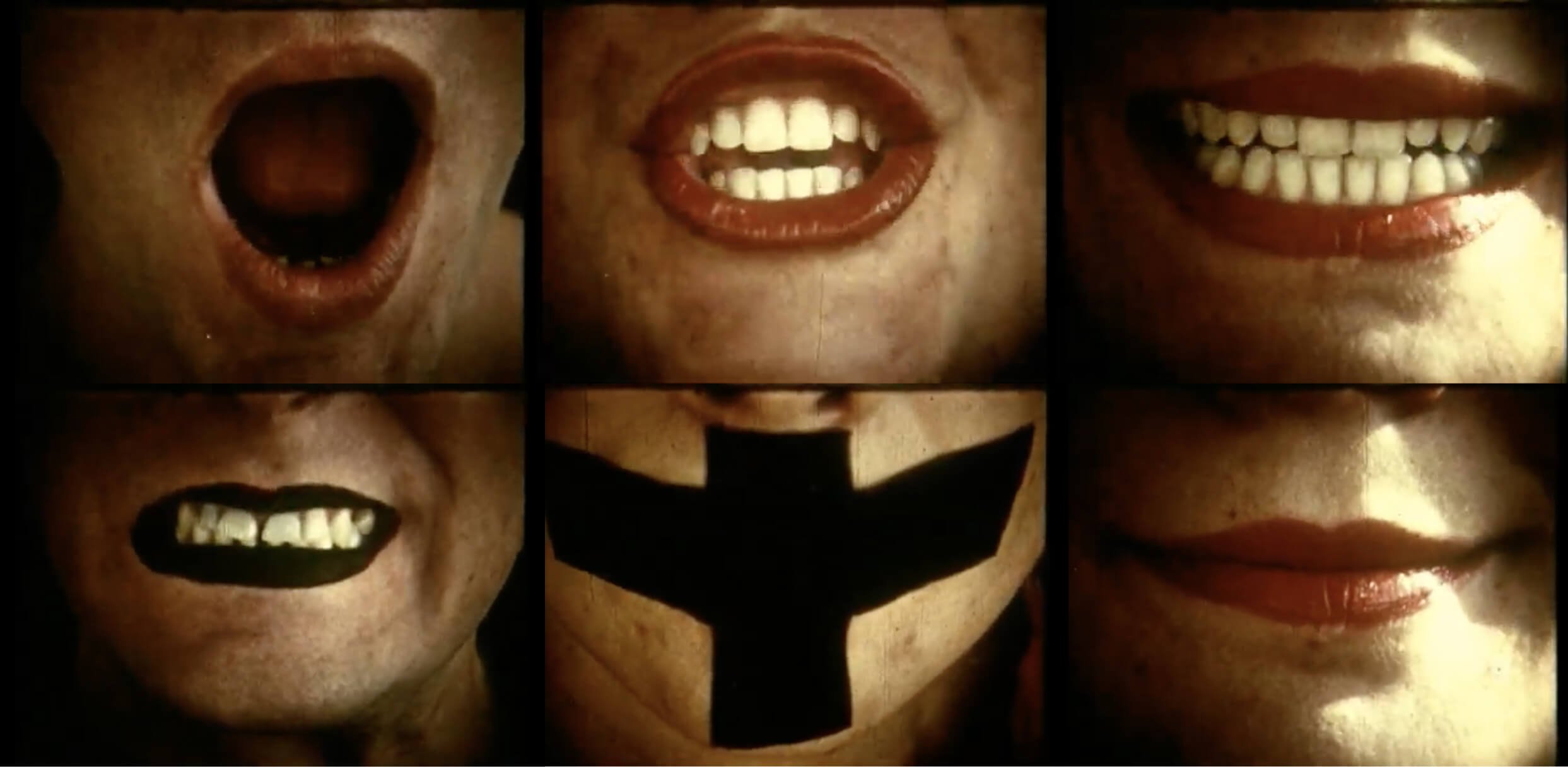
Stills from Anna Maria Maiolino's In-Out (Antropofagia), 1973/74.
Verônica: I have a memory of the tape you used when you spliced the film. You wouldn't let me get near it.
Anna: I remember that. Developing was so expensive. The Super 8 film had to be sent to the United States. So I had to choose: either send the film to the States or buy the little present you kids needed to take to a friend's birthday.
Verônica: I always loved when you'd get us to participate in your work.
Anna: I did that a little, but not very often.
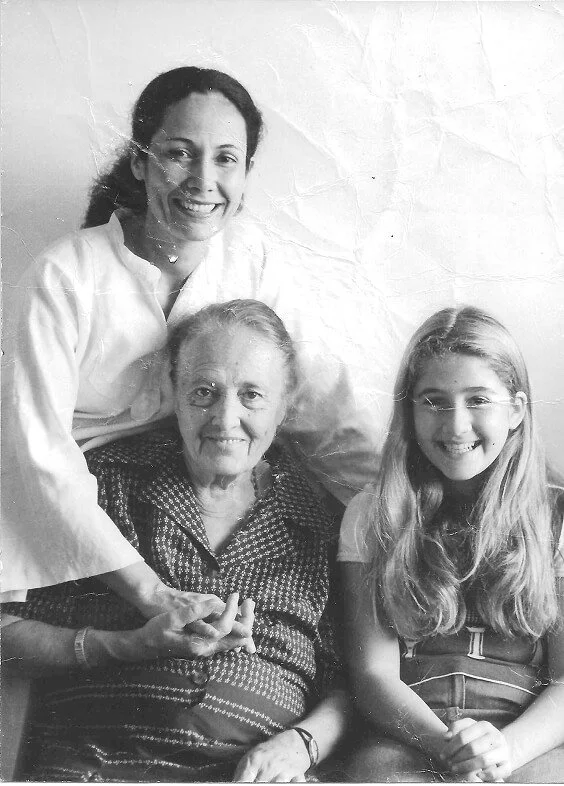
Anna Maria Maiolino with her mother Vitália and daughter Verônica, Rio de Janeiro, 1976. Photo: Regina Vater.
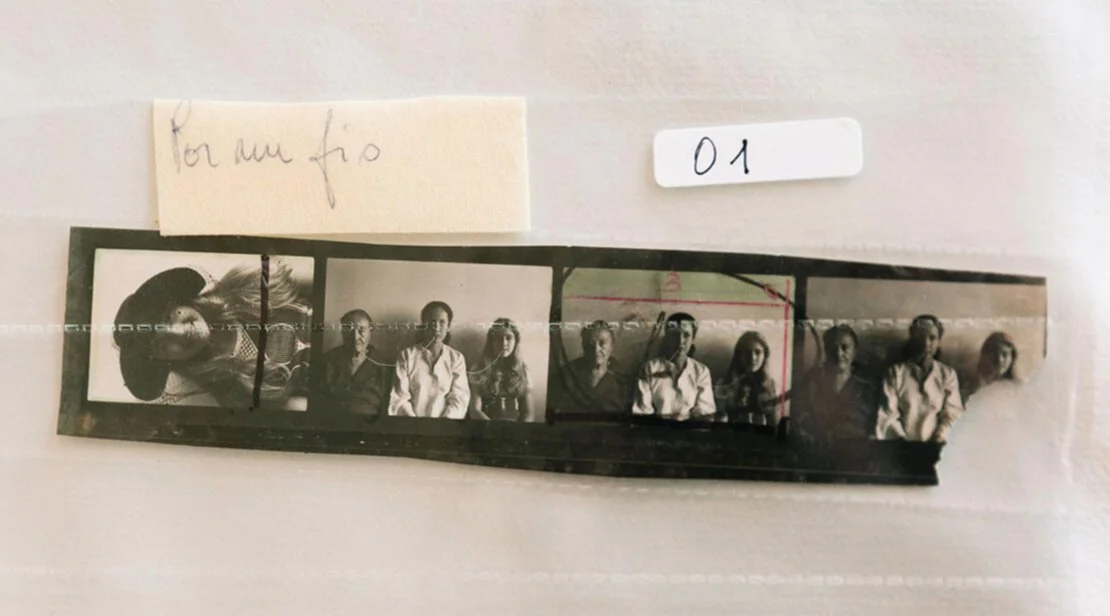
Negatives of Por um fio (By a Thread), from the Fotopoemação (Photopoemaction) series, 1976. Photo: Bruna Bento.
Verônica: Por um Fio (By a Thread), with Nonna, you, and me, became an image that's been everywhere. I joke that it's your Mona Lisa. There are people with this work tattooed.
Anna: Regina Vater shot it; she captured the poetry of the moment.
Anna: I boiled the string, otherwise she wouldn't have put it in her mouth, no way.
Verônica: You'd tell her, “Mama, I'm going to put this thread coming out of your mouth.” Did she ask any questions?
Anna: No, never. She just went along with it, because Italians always have art in them. I might be prejudiced saying that, but it's true. When you go to Italy and someone asks what you do, you say: “I'm an artist.” And they say, “Me too”.
Everyone is an artist.
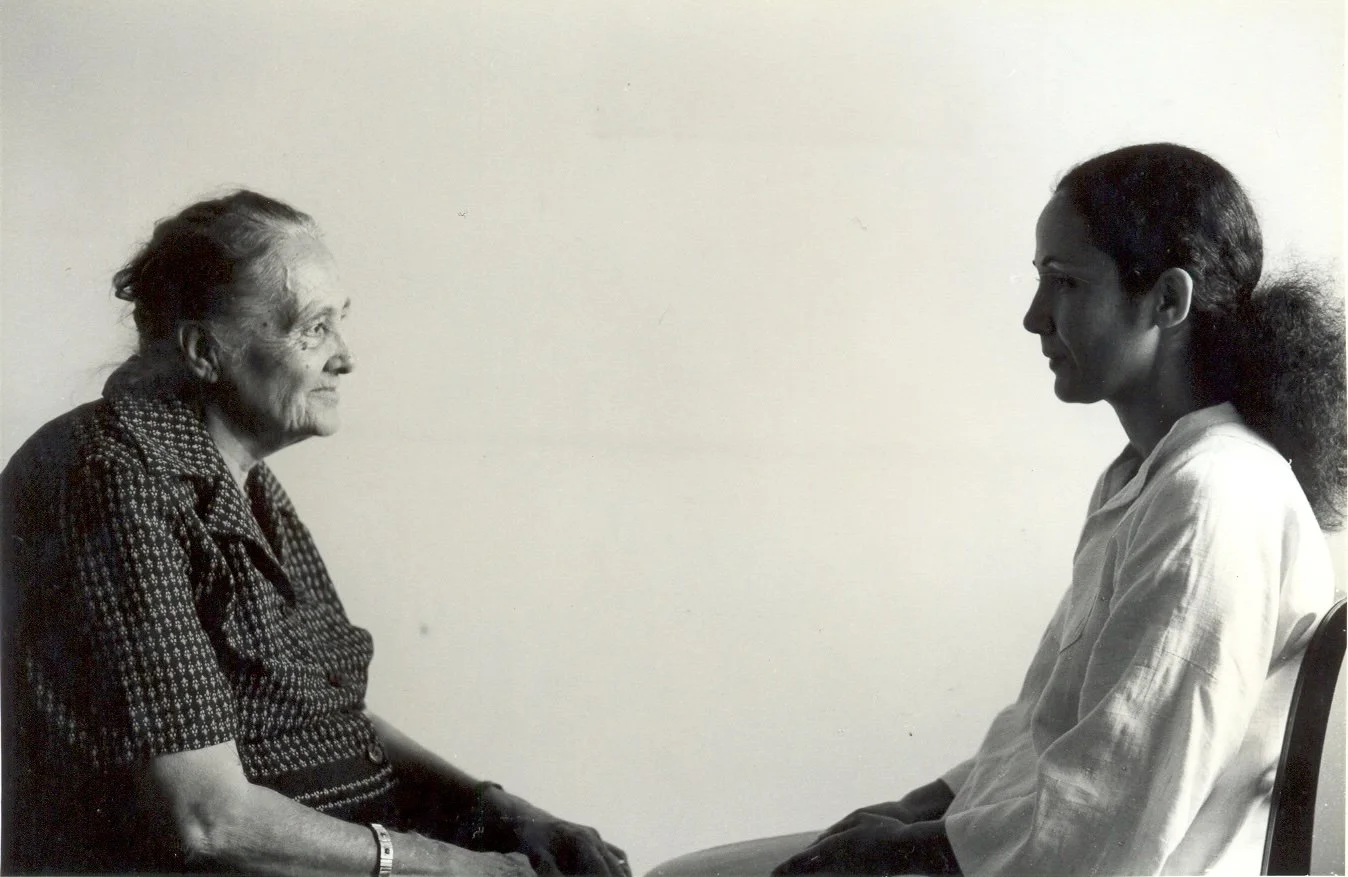
Anna Maria Maiolino with her mother Vitália, Rio de Janeiro, 1976. Photo: Regina Vater.

Eu sou eu
Part III
“sois sangue do meu sangue /
e corpo do meu corpo!”
exclama a mãe
o que é aquilo?
um grande ovo está preso à linha do horizonte
é um ponto
sou eu
sou aquela com quem o silêncio fala
aquela que tenta agarrar a realidade que /
diminui e a multiplica ao infinito
aqui
quem manda é o instante
para ele tudo é possível
hoje é festa no Xingu
é o dia em que a lua menstrua
o silêncio teima em conversar comigo
sussurra baixinho
mas eu sou surda
Anna Maria Maiolino, 2011
I Am I
Part III
“Thou are the blood of my blood /
and bodies of my body!”
the mother exclaims
what’s that?
a large egg is stuck to the horizon line
it’s a dot
it’s me
I am she with whom silence speaks
she who tries to grasp diminishing reality and
multiplies it to infinity
here
the moment is in charge
with infinite possibilities
today we celebrate on the Xingu
the day the moon menstruates
silence insists on talking to me
quietly whispering
but I’m deaf
Anna Maria Maiolino, 2011

Verônica: How did Por um Fio (By a Thread) come to life?
Anna: My work arises from the processes of everyday life, later from the technical process. I steal procedures and incorporate them, adding my own voice. There's a very subjective side to it, and my whole life has revolved around the mouth because I was born during the war.
In Scalea, where I was born, we didn't go hungry. My grandmother owned land that produced wheat, and the sea close by gave us fish. But when we moved to Bari in 1948, we really starved. We went hungry so my older siblings could study at university.
Nonna always wanted everyone seated at the dinner table before dividing the food. And because there were thirteen of us, she'd say: “Remember, two are missing. Blas and Maria still aren't here.” You couldn't have seconds. Many times I left the table still hungry. How do you divide one chicken among thirteen people?
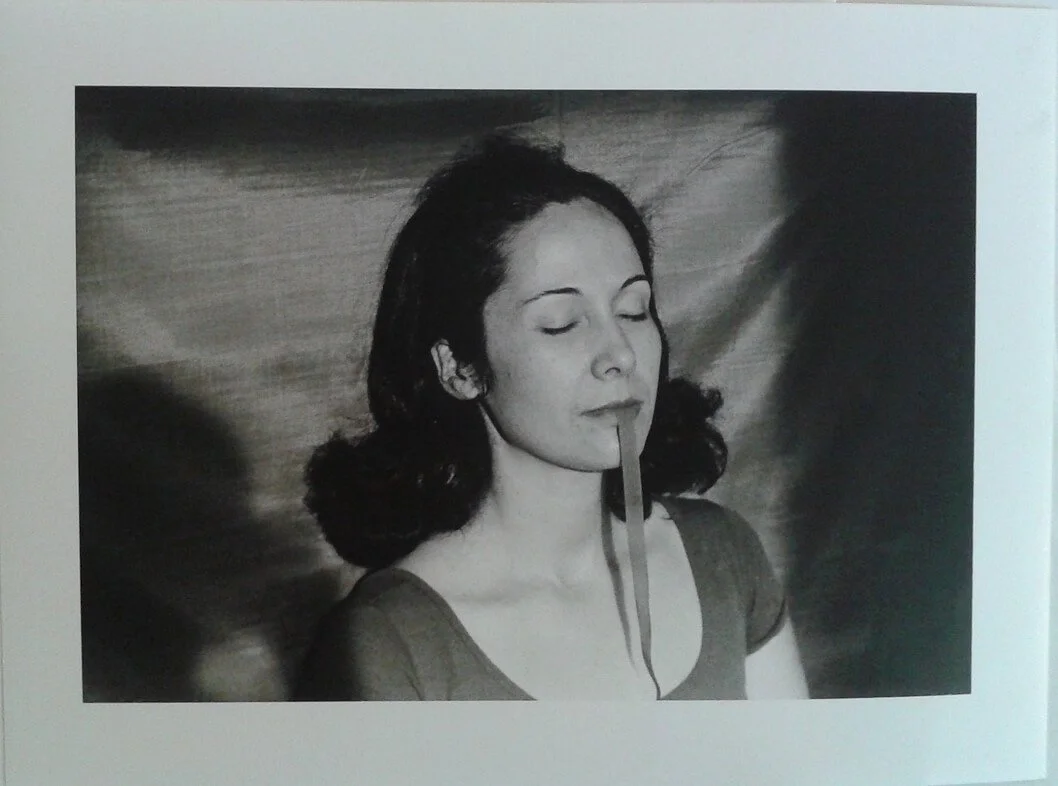
Anna Maria Maiolino, De: Para: (From: To:), from the Fotopoemação (Photopoemaction) series, 1974–2016.
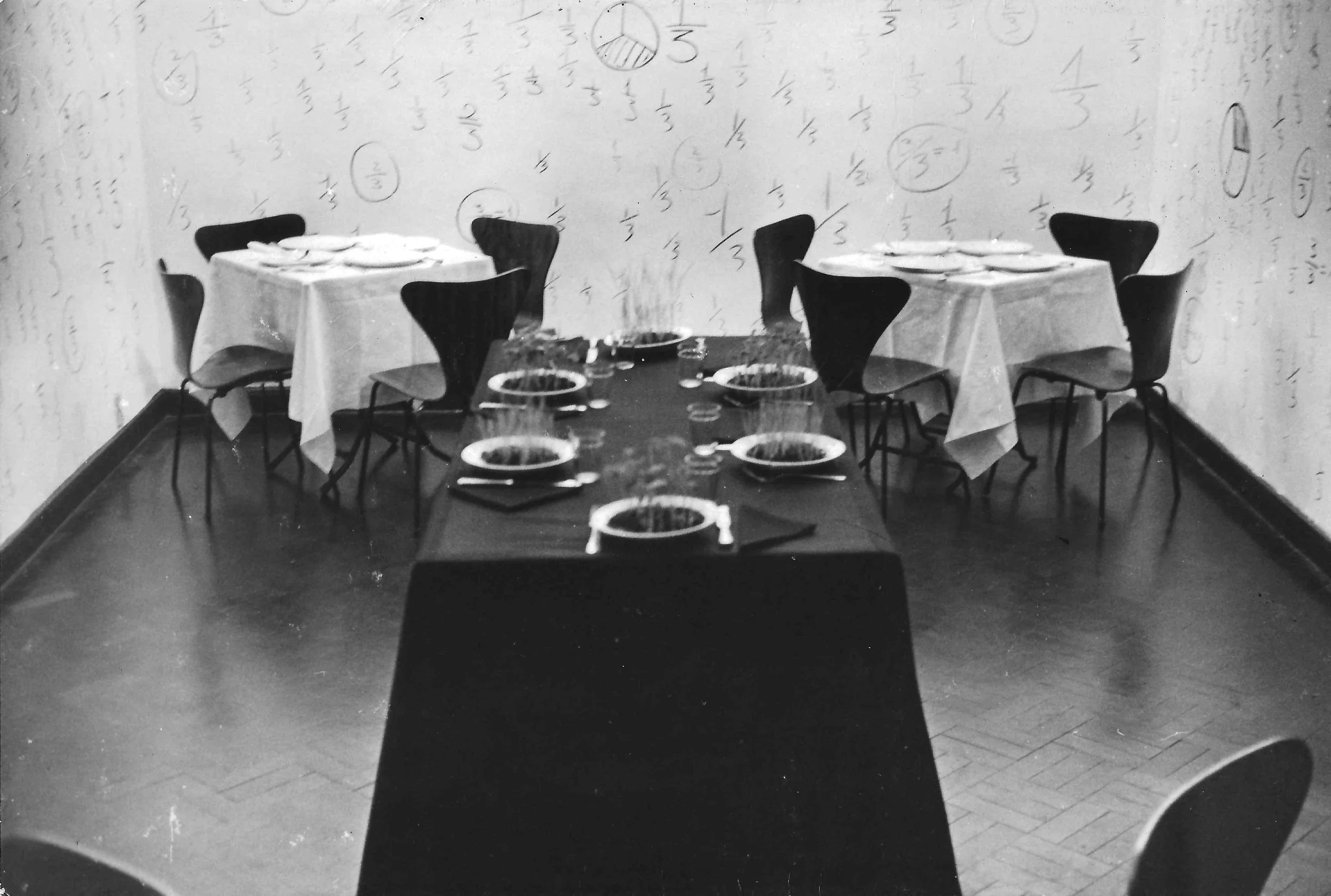
Anna Maria Maiolino, Arroz & Feijão, Aliança Francesa, Botafogo, Rio de Janeiro, 1979.
Verônica: The other day, I remembered something you once said:
“I wanted to be everything.” You wanted to be a person, an artist, a woman, a mother…
Anna: I didn't pull it off. I wasn't a good wife. But then again, marriage is hard. I had prepared myself for it, but neither marriage worked out.
Verônica: But you tried, didn't you? You tried to be all those things.
Anna: I had to follow Nonna’s example.
Verônica: But you didn't have ten kids, Mum!
Anna: No. But Nonna would shout: “You, my children, are the blood of my blood, the body of my body.”
I never saw anyone being intimate in that house; I have no idea where my parents found the privacy. I used to think I was a little piece of my mother's body, because I didn't know how babies were born.
I think my segmented work comes from there – the line, the points. A line is made of points, extending to infinity. I think it was all a fantasy. Much of it came from my unconscious, mixed with intellect and the philosophy I was reading.
I always believed in Spinoza – God and nature being the same. And southern Italy, where I'm from, with its ancestral memory, it’s a pantheistic culture.
Verônica: I always think of that scene you’ve described: you’re holding on to the bow of the ship, crossing the Strait of Gibraltar, with the waves crashing violently. You were twelve years old.
Anna: It was horrible, because suddenly, you have to leave.
I remember before we immigrated to Venezuela, the last country that would accept legal immigration, we went to Naples for the medical examination, which felt like a concentration camp. A horrible memory.
My mother, a wise and brave woman, went to the director in charge and said, “Either you treat everyone with respect, or I'll go to the press and cause a scandal.”
We left Italy having to wear a badge that said “immigrant” on our chest, which I never put on. When we disembarked in Venezuela, I was supposed to wear it, but I said I'd lost it when, in fact, it was in my pocket … Immigration was a burden

Anna Maria Maiolino, Prato do Dia, Artist Space, Aliança Francesa de Botafogo, 1979.
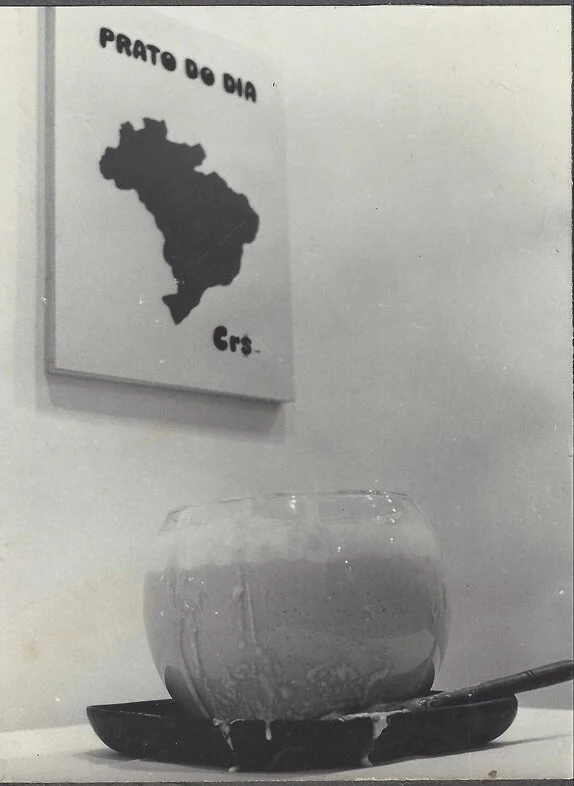
Anna Maria Maiolino, Prato do Dia, Artist Space, Aliança Francesa de Botafogo, 1979.
Verônica: Anyone who goes through immigration, or as a refugee, carries that as a mark.
And for me, when I started paying attention to your artworks, I could identify a sense of territory in many of them.
I’ve realised: your artwork became your territory. And today I'd even say it's become a kind of camp, because it gave you a place in the world, and that was something you were searching for.
Anna: Oh, I'm really glad you told me that.
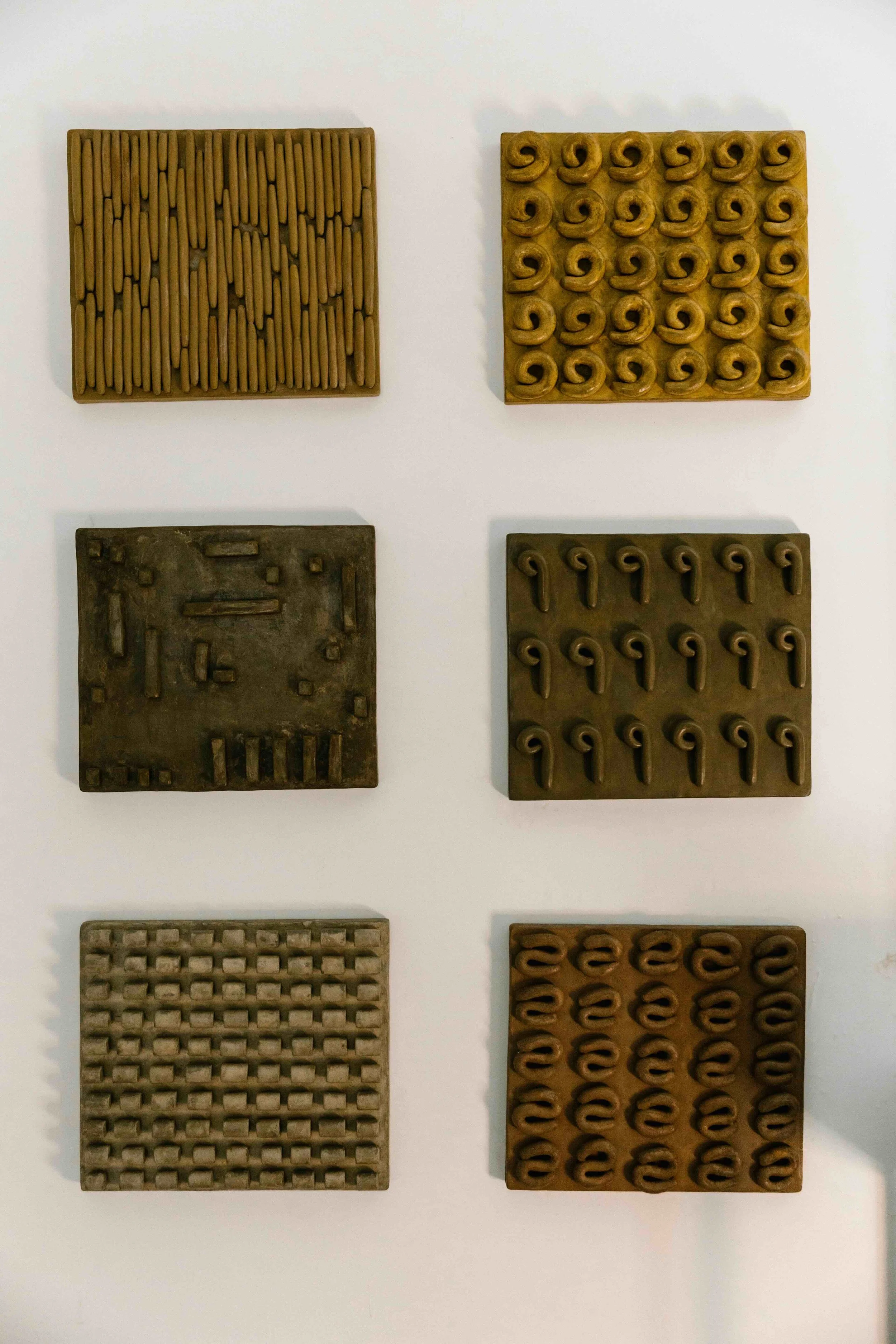
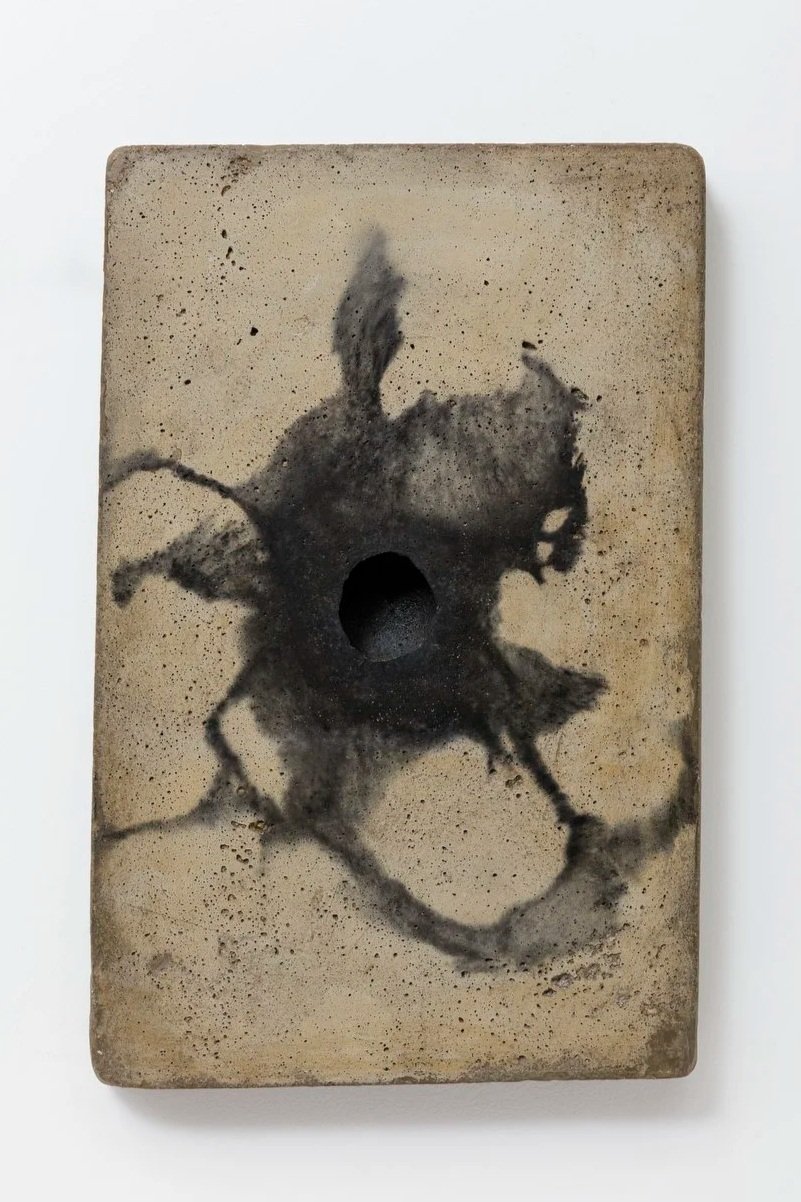
Artworks from the Codicilli series, 1994, photographed at Anna Maria Maiolino's studio, São Paulo, 2025. Photo: Bruna Bento.
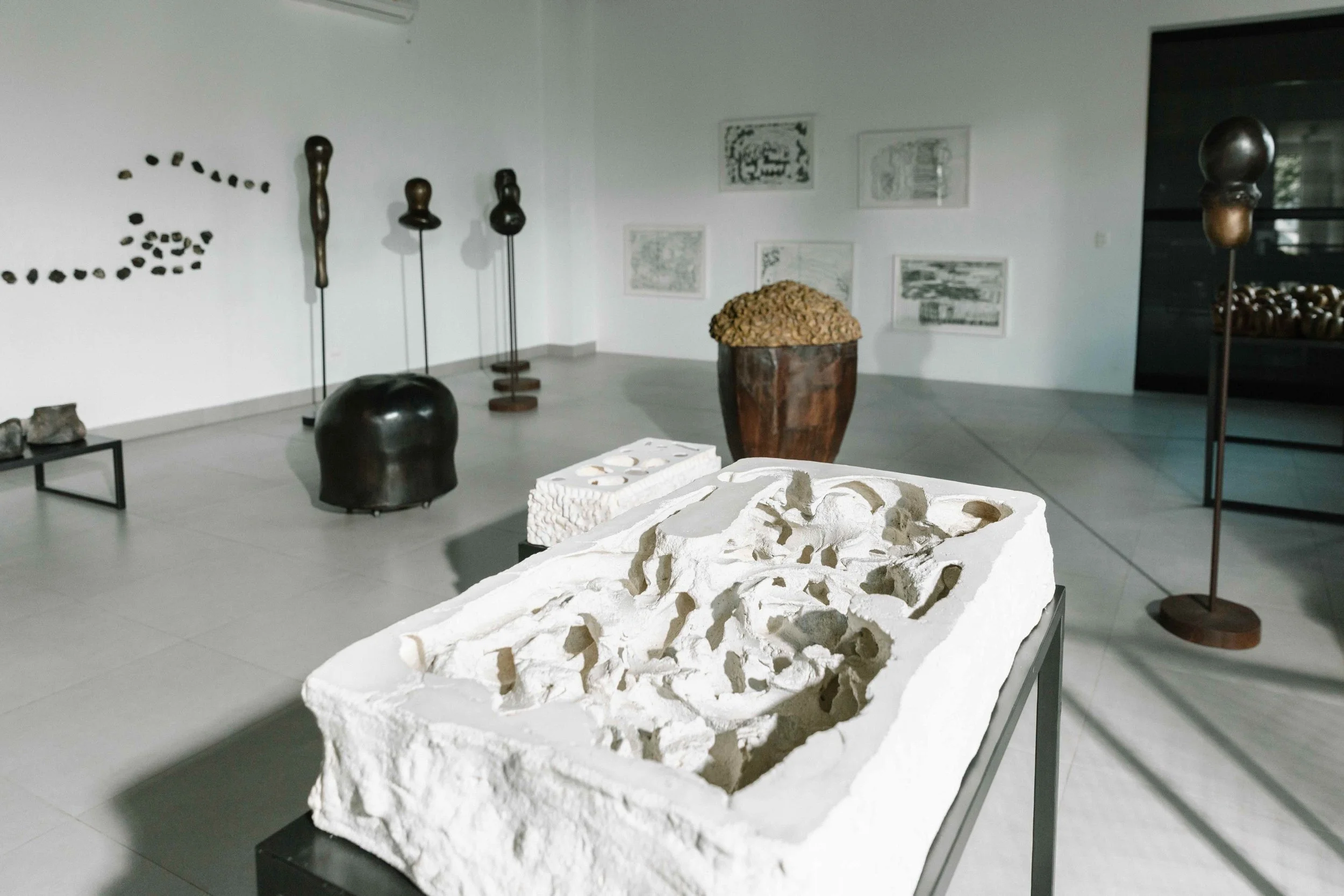
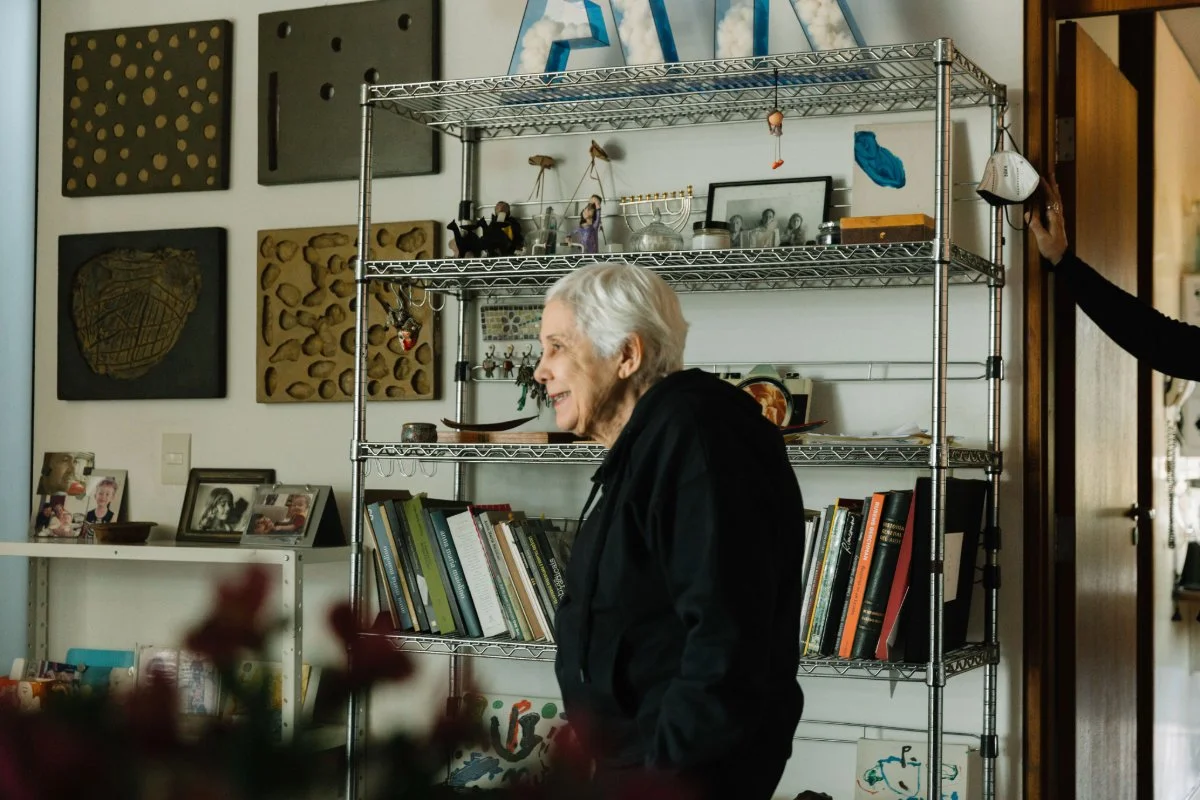
Anna Maria Maiolino's artworks in her studio, São Paulo, 2025. Photo: Bruna Bento.
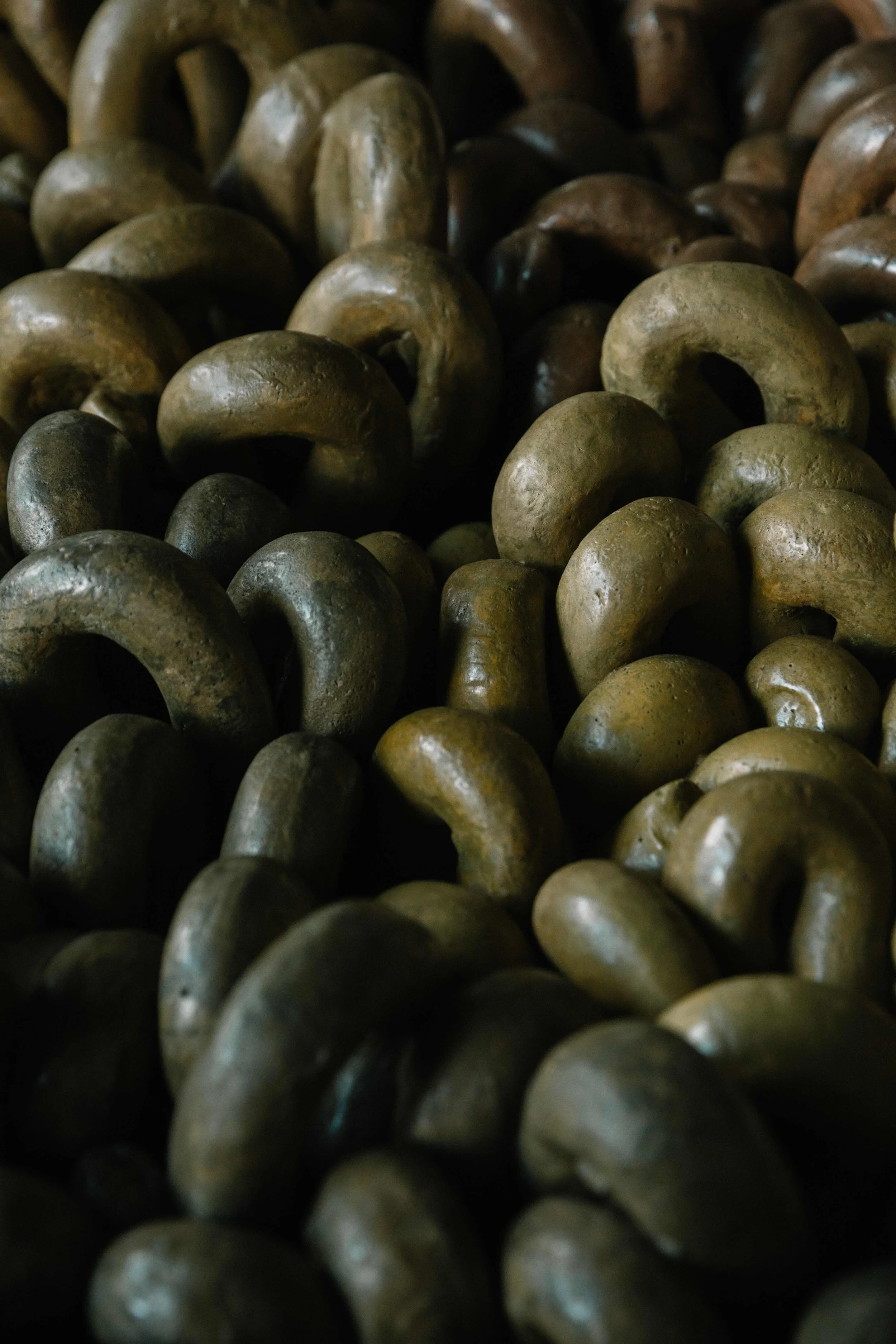
Close-up of Nove Segmentos, 1998, photographed at Anna Maria Maiolino's studio, São Paulo, 2025. Photo: Bruna Bento.

Eu sou eu
Parte VIII
Sim!
eu sei que
para a casa do pai não tenho porque voltar
portas e janelas foram muradas
não há como entrar
exalam pelas frestas dos velhos muros pútridos odores
são espaços abandonados, há anos desabitados
memórias vivas, encerradas
hesito entre o esquecimento e as lembranças
o tempo do recordar perde-se num apagar de luz
e estica-se no balançar doce da consciência /
indo e vindo
o presente é contra o passado
fiscaliza a memória e a revisa
só faz aflorar à mente o que foi vivido
eu sei da vida vivida na casa do pai
é melhor seguir adiante
para que voltar?
Anna Maria Maiolino, 2011
I Am I
Part VIII
Yes!
I know that
there’s is no reason to return to /
my father’s house
walled doors and windows
no way in
the cracks in the old walls exhale putrid odors
abandoned spaces, uninhabited for years
vivid, closed memories
I waver between forgetting and memories
the time for recollection is lost /
snuffed out with the light
and stretches in consciousness’ sweet swaying
the present is against the past
scrutinizing and reviewing memory
ensuring that only the lived blooms
in the mind
I know about life lived in the father’s house
it’s better to move on
why go back?
Anna Maria Maiolino, 2011
Verônica: I don't think I ever told you this, but I had a dream about a scene I wanted to create for the theatre. The stage floor was like a chessboard, and a female figure was moving forward through moments of life. Then I realised: it’s about your Mapas Mentais (Mental Maps).
I was so happy that you decided to be present at the Venice Biennale as a Brazilian artist, because this is where you created most of your work. Your work also travelled the world, while you also used your work to shape this very free, nomadic way of thinking.
I’ve been thinking about how our ancestors related to the land through walking and belonging, not by owning it, and how that later changed. You have a very grounded, earthy, maternal way of living, but your mind is very nomadic.
Anna: Beautiful. I don't think I could escape that, dear. Because my family was already a tribe of nomads. Just think about it:
My father was an aviator and married Dona Vitália [Nonna], whom he met after he graduated from the seminary. She was a young lady from a village in the Italian countryside. They decided to come to Brazil together.

Anna Maria Maiolino, Capítulo I (Chapter I), from Mapas Mentais (Mental Maps) series, 1971.
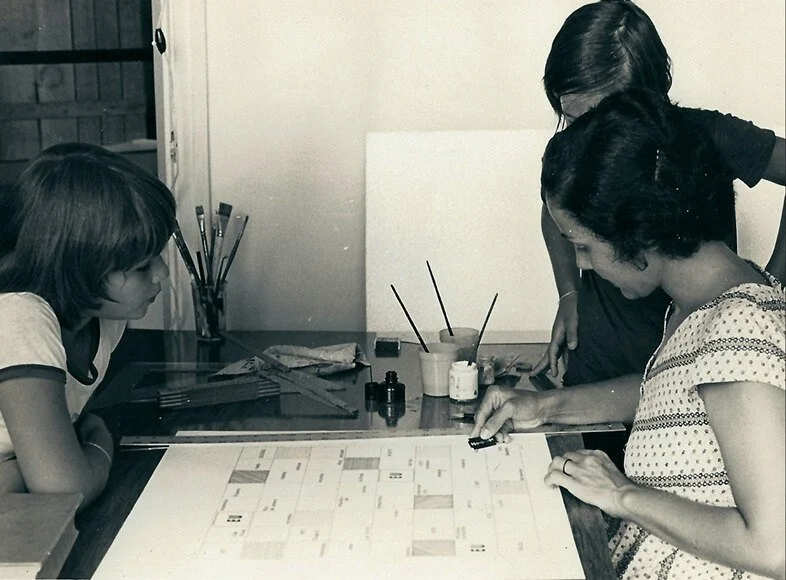
Anna Maria Maiolino with her children Verônica Gerchman and Micael Herschmann while working on one of her Mapas Mentais (Mental Maps), 1970s. Courtesy of Anna Maria Maiolino.
When they arrived in São Paulo, they invested in a coffee-roasting business with Dona Vitália's dowry money. Later, the roasting facility was burnt during the Tenentista uprising. She used to tell how she made a trench with mattresses and put my older siblings, Betina, Vera, Wanda, and Blas, behind them, because bullets were coming in through the window. As a consequence, my father sent Nonna back to Italy with the four children.
All of this was so long ago. I didn't even exist in God's mind yet; I wasn't born. But these stories and figures were so important to my formation, especially Nonna.
I’ve also realised I am very much like Nonna. When I was with Victor Grippo in Argentina, during a crisis with my work, he suggested I take some clay and make something.
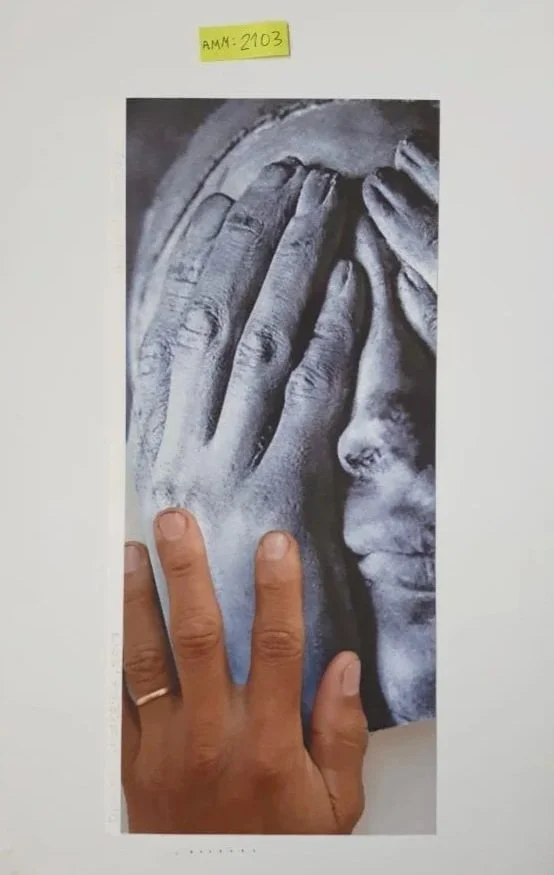
What do artists usually do when they work with a new material? Self-portraits. So I sat at the table and sculpted my face.
When I decided to leave Argentina, I left the sculpture on the table – a death mask. When you handle material too much, it loses its life force; it dies.
That's why something too polished is always dangerous.
You need to know exactly what you want and when to stop. I took a bus back to Brazil and left that mask behind.
When Nonna was sick, I went to Caracas to visit her. I looked at her and I saw the death mask I'd left on Victor's table.

Eu sou eu
Parte IX
eu sou artista
ele é artista
antes de ser artista é preciso ser
a obra de arte é uma comoção da consciência
é viver na essência
mas
eu vivo na toca
vivo em um estado de transição
às vezes eu sou insignificante, outrora imperecível
meu território é a imaginação
presenteio a vida vista com meus desejos
sem data,
no nada, onde tudo inicia
falo e escrevo
minha voz vai além da simples nomeação das coisas
o que importa é o humano
a paixão infinitamente humana do verbo
um dia após outro me exercito /
na intimidade das palavras
combino-as na pretensão de criar poemas
logo mais
sou tudo e não sou nada
mas tenho corpo
menstruo todo mês
sou mulher
Anna Maria Maiolino, 2011
I Am I
Part IX
I am an artist
he is an artist
before becoming an artist you have to be
the artwork is a commotion of conscience
it’s living the essence
but
I live in the lair
live in a transitional state
at times I'm insignificant, others indestructible
imagination is my territory
I offer up life seen with my wishes
without deadlines
in nothingness, where everything begins
I speak and write
my voice goes beyond simply naming things
what matters is the human
the infinitely human passion of the verb
day after day I’m immersed in the /
intimacy of words
combining them with the intention /
of creating poems
soon after
I’m everything and nothing
but I have a body
I menstruate every month
I am a woman
Anna Maria Maiolino, 2011
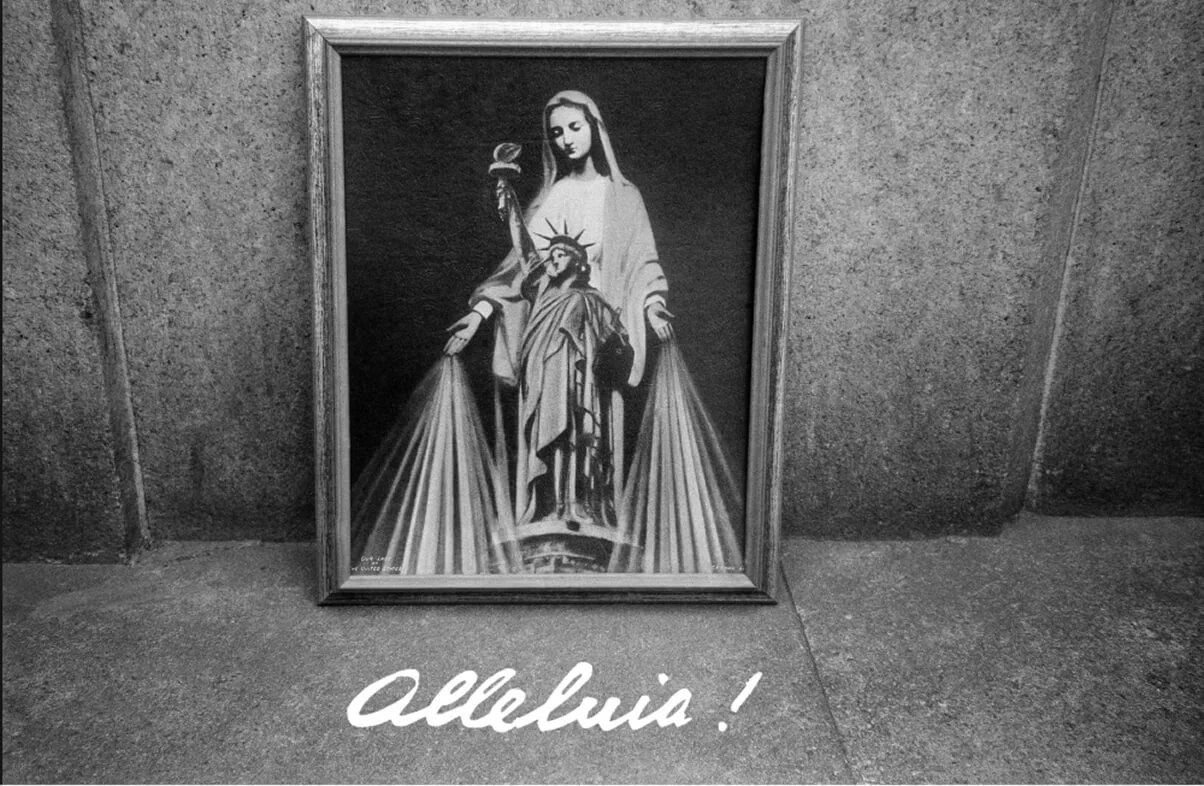

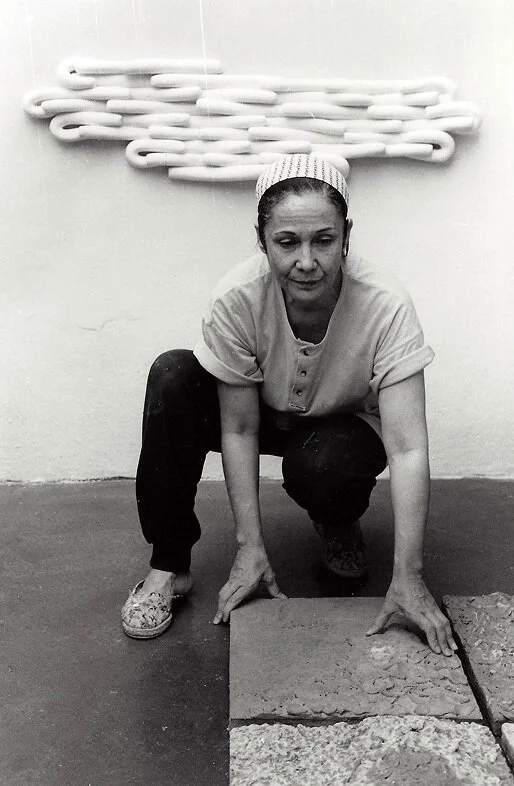
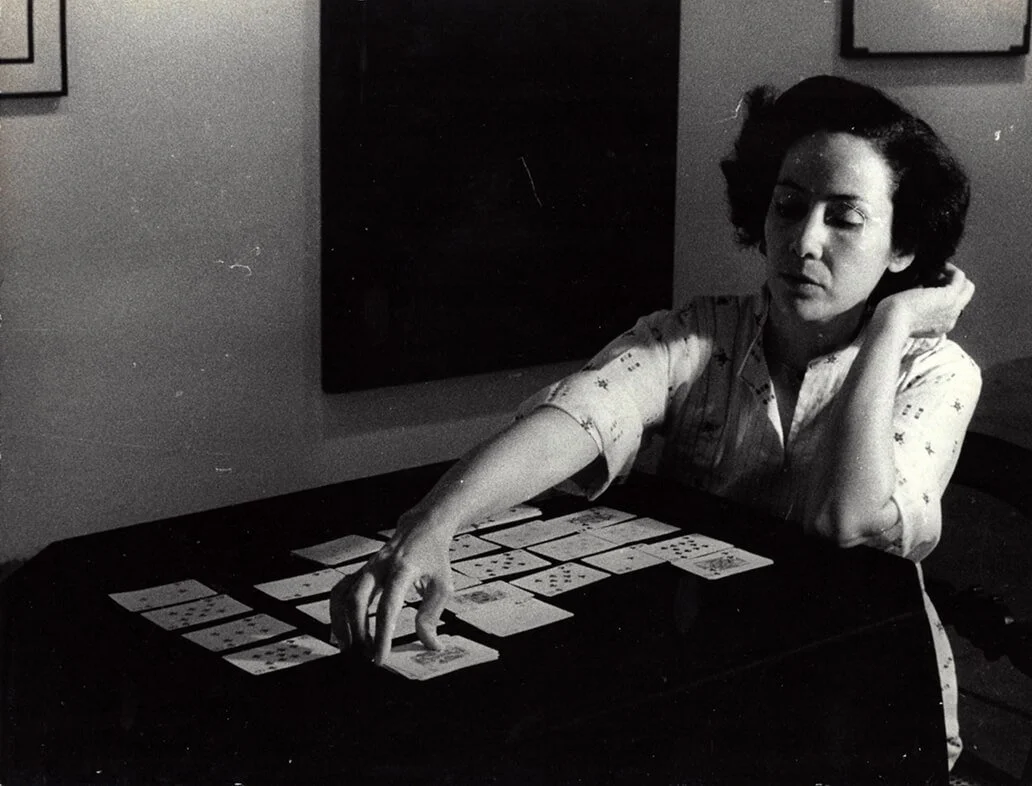
Anna Maria Maiolino’s profile includes three more conversations.
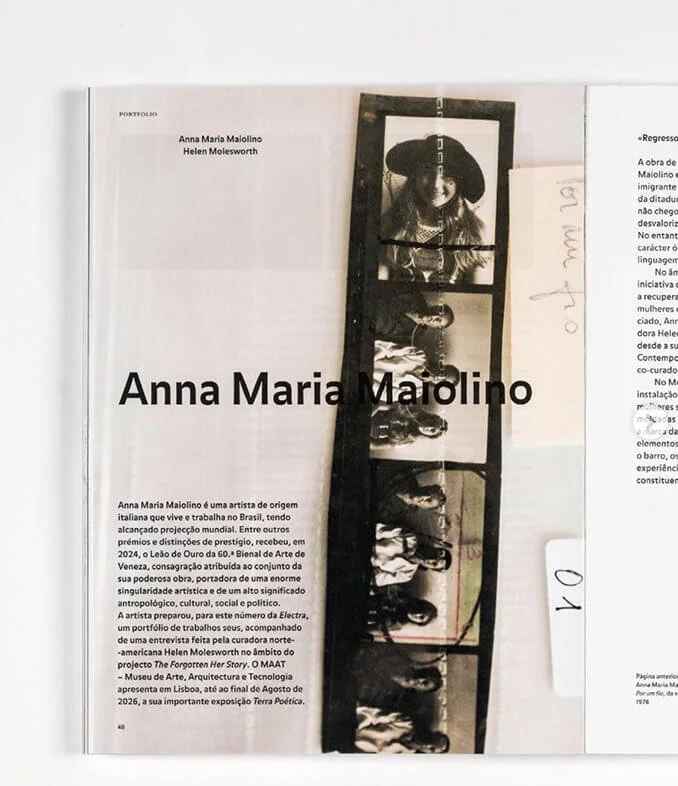
Anna Maria in conversation with Art Curator Helen Molesworth.
Available at Electra Magazine.
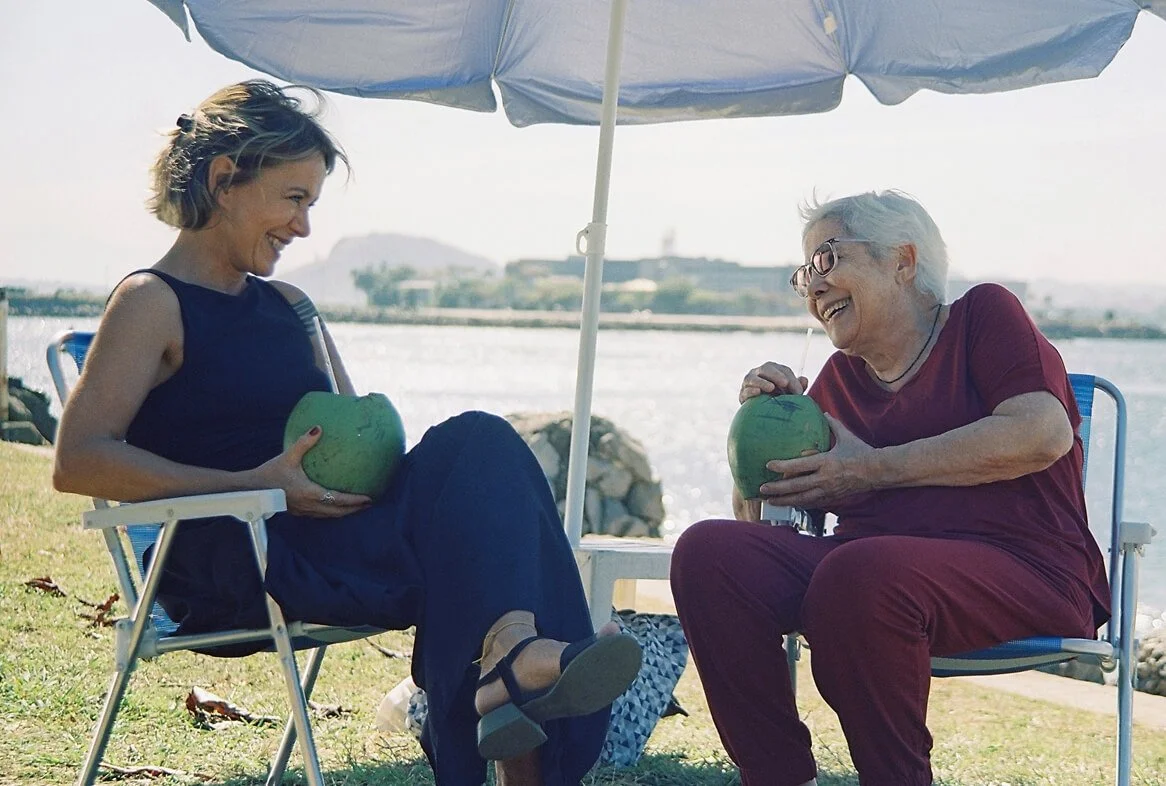
Anna Maria in conversation with friend and psychoanalyst Tania Rivera.
Available at Ursula Magazine
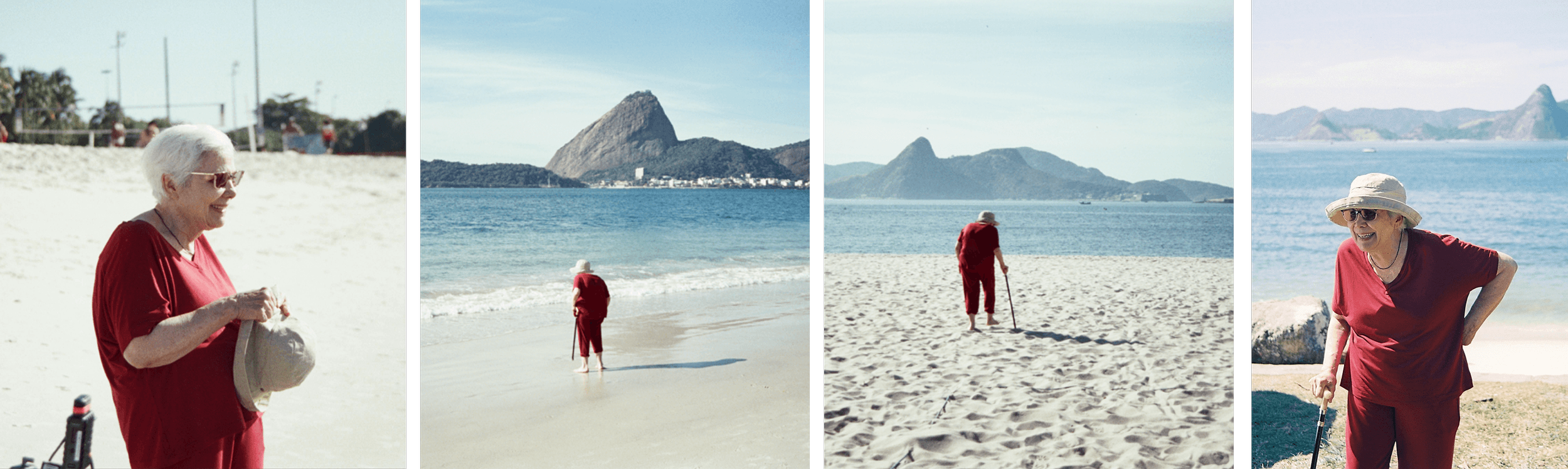
Anna Maria Maiolino in Rio de Janeiro, 2025, while being photographed for The Forgotten Her Story. Photos: Giovanna Aguiar.
‘Art allowed me to establish a connection with life, and it healed me.
I believe that working with art transcends the real. Art is sacred.’
Anna Maria Maiolino
ANNA—And the Infinite Line
A new documentary from The Forgotten Her Story, directed by Clara Peltier. It follows Maiolino through the installation of her solo exhibition at the Picasso Museum, in her studio, and within her domestic sphere — combined with a series of intimate conversations, in the project's signature style, and her own short films.
The film's release coincides with Hauser & Wirth's exhibition 'ANNA—And the Infinite Line,' on view at their New York, 18th Street location from September 10 through October 31, 2026,
celebrating Maiolino's six-decade practice.